From Non-League to Nobbs: Inside Newcastle United’s WSL Revolution
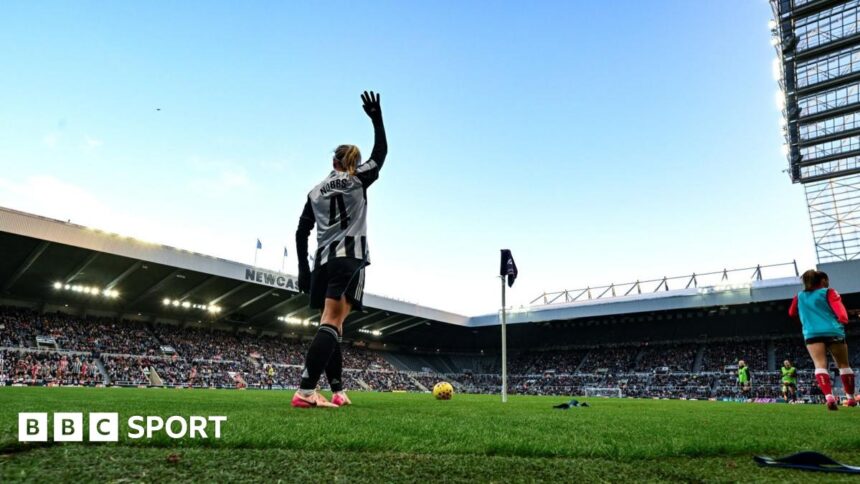
The air at Newcastle United’s training ground carries a familiar, potent mix of ambition and history. But in a newly constructed players’ lounge, a different kind of revolution is brewing. England international Jordan Nobbs, a marquee signing with 71 Lioness caps, surveys the space with a smile. “A few weeks ago, we didn’t have this room – it didn’t exist,” she says. In the corner, next to a gleaming coffee machine, sits a smoothie maker, still boxed and ready for use. It’s a seemingly minor detail, but in the world of women’s football, it’s a profound symbol of intent. This is the new reality for Newcastle United Women, a club plotting a meticulous, well-funded course from the depths of the fourth tier to the bright lights of the Women’s Super League.
A Phoenix from the Ashes: Rebuilding from the Ground Up
For years, Newcastle United Women existed in the shadows. Operating independently from the men’s club, they languished in the FA Women’s National League Division 1 North, the fourth tier of English football. The gulf between their reality and the professionalizing top flight was a chasm. That all changed in 2022, when the club’s new ownership, led by the Public Investment Fund of Saudi Arabia, made a pivotal decision: to fully integrate the women’s team. This wasn’t mere lip service; it was a structural and philosophical overhaul.
The integration meant access. Suddenly, the women’s team had:
- Full access to the club’s world-class training facilities at Benton.
- Dedicated medical, sports science, and analysis support from the men’s first-team infrastructure.
- A strategic plan authored by the same board overseeing the men’s storied ascent.
- Financial backing to attract top-tier talent and build a professional environment.
This shift transformed the club’s trajectory overnight. Back-to-back promotions followed, catapulting them into the FA Women’s Championship, the second tier, by the 2024-25 season. The pace has been dizzying, a deliberate acceleration to make up for lost time.
The Nobbs Effect: Signalling Intent with Elite Talent
Ambition in football is best communicated through action, and Newcastle’s signing of Jordan Nobbs at the start of the 2025-26 season was a statement heard across the women’s game. Nobbs isn’t just a talented midfielder; she is a winner, an England international with vast experience at Arsenal and Aston Villa, accustomed to Champions League nights and title races. Her arrival sent an unequivocal message: Newcastle are not here to make up the numbers in the Championship; they are here to dominate and ascend.
“You don’t bring in a player of Jordan’s calibre without a very clear, short-term goal,” notes a seasoned WSL analyst. “She is the on-pitch conductor, but just as importantly, she is a standard-bearer in the dressing room. Her daily habits, her professionalism, her expectation of excellence—that rubs off on every young player in that squad. It accelerates the cultural shift from semi-professional to elite.”
Nobbs’ presence validates the project for other potential signings. It proves that Newcastle’s WSL dream is a credible one, backed by the resources and seriousness that top players demand. The smoothie maker in the new lounge may seem trivial, but it’s part of creating the elite ecosystem that players like Nobbs expect—a world away from the days of carrying your own kit and paying for your own travel.
Blueprint for Ascent: The Sustainable Path to the WSL
Promotion to the WSL is not simply won on the pitch; it is earned through a rigorous off-field process governed by the FA’s licensing criteria. Newcastle’s strategy appears to be a masterclass in meeting these demands head-on, building a sustainable model rather than a flash-in-the-pan project.
Infrastructure First: The club is investing in the foundations. The new dedicated players’ lounge and integration at Benton are just the start. Plans for enhanced matchday facilities and growing the commercial and marketing arm of the women’s team are underway, crucial for generating the independent revenue the WSL requires.
Strategic Squad Building: The recruitment has been astute, blending elite experience like Nobbs with promising young talent and hardened professionals who have thrived in the lower leagues. This creates a balanced squad with the technical quality to play attractive football and the physical resilience required for a gruelling Championship season.
Cultural Integration: Perhaps the most significant change is the palpable sense that the women’s team is now Newcastle United, full stop. Wearing the same badge, sharing the same iconic stripes, and tapping into the city’s unparalleled passion creates a powerful force. The potential to play in front of a packed St. James’ Park is a motivator and a future revenue stream that few clubs can match.
St. James’ Park on the Horizon: Predictions for the Future
The road to the WSL is fiercely competitive, with established Championship powerhouses and fellow ambitious projects like Liverpool and Manchester United having navigated it recently. Newcastle’s timeline, however, looks aggressive and achievable.
Expect the 2025-26 and 2026-27 seasons to be defined by a sustained promotion push. The squad will likely be strengthened further with signings that possess top-flight experience. The key will be consistency; the Championship is a league where depth and mentality often trump fleeting moments of brilliance.
Long-term, the ceiling for Newcastle United Women is staggering. The club possesses:
- A global fanbase desperate to engage with a successful women’s team.
- The financial capability to compete at the very top of the women’s game, both in transfer fees and salaries.
- A stadium in St. James’ Park that could become a fortress for women’s football, drawing crowds that rival any in Europe.
Within five years, it is entirely plausible to see a Newcastle side featuring international stars, competing in the top half of the WSL, and making deep runs in domestic cups. The ultimate goal, mirroring the men’s ambition, will be to challenge for the WSL title itself and secure a return to European competition.
Conclusion: More Than a Project, A Destiny
The journey of Newcastle United Women is a microcosm of the modern women’s game: rapid, ambitious, and fueled by serious investment. But in Newcastle, it feels different. It is woven into the fabric of a club and a city defined by its sporting passion. The unpacked smoothie maker in the new lounge is more than a perk; it is a promise. A promise of professionalism, of equality, and of a future where the roar at St. James’ Park echoes for both the men’s and women’s teams.
With Jordan Nobbs guiding the play on the pitch and a bold board driving progress off it, Newcastle United are not just plotting a course to the WSL—they are building a superhighway. The pace of change is no longer just rapid; it is inevitable. The Magpies are coming, and the WSL would be wise to prepare for their arrival.
Source: Based on news from BBC Sport.