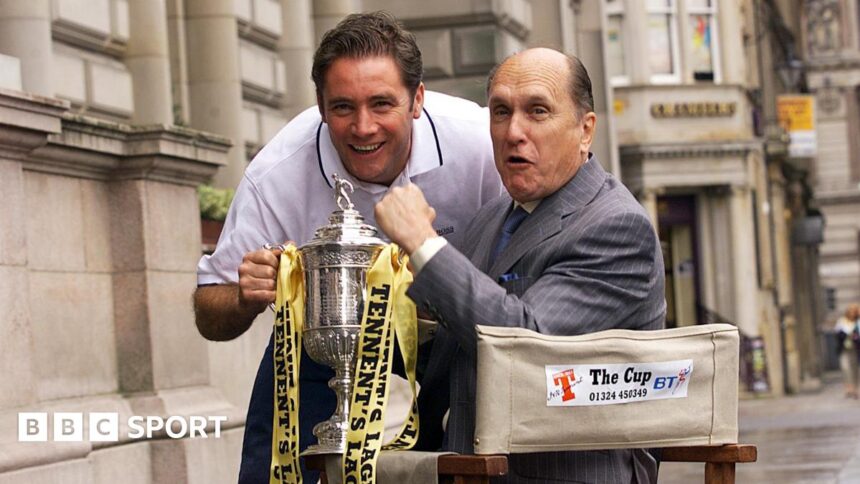
From The Godfather to Goals: How Robert Duvall Became a Scottish Football Cult Hero
In the pantheon of Hollywood greats, Robert Duvall’s legacy is carved in granite. Tom Hagen’s quiet authority in The Godfather. Lt. Col. Kilgore’s napalm-scented bravado in Apocalypse Now. These are the performances that define cinematic history. Yet, in the rain-lashed stands and bustling pubs of Scotland, Duvall, who passed away at 95, is remembered for a different kind of role: Gordon McLeod, the gruff, beleaguered manager of fictional minnows Kilnockie FC in the 2000 film A Shot at Glory. This unlikely intersection of Oscar-winning talent and Scottish football passion forged a unique cult hero status for Duvall, a testament to his profound respect for the game and its culture.
A Hollywood A-Lister in the Land of Fitba’
On paper, A Shot at Glory was an intriguing curiosity. A football film shot in Scotland, starring Rangers icon Ally McCoist as fading star Jackie McQuillan, and featuring a supporting cast of real-life football figures like Owen Coyle, Didier Agathe, and Derek Ferguson. At its helm, however, was a genuine Hollywood legend. Duvall didn’t just show up to collect a paycheck. He immersed himself. He spent time in Scotland, absorbing the atmosphere of real matches, listening to the cadence of supporters’ banter, and understanding the profound, often painful, relationship a community has with its local club. He wasn’t playing a caricature; he was studying to embody the weight of expectation on a Scottish manager’s shoulders.
His co-star, Ally McCoist, often recounted how Duvall, even off-camera, would stay in character, barking instructions in a practiced Scottish brogue. This commitment bled into the performance. Gordon McLeod wasn’t a flashy technical genius; he was a man frayed at the edges, trying to hold together a team, a family, and a dream against the predatory interests of a slick American owner, played by Michael Keaton. Duvall brought a palpable authenticity to the role, a gravitas that elevated the film beyond its modest budget. For Scottish audiences, used to cringing at Hollywood’s often clumsy portrayals of their game, here was an actor of immense stature treating their football with seriousness and soul.
Why Duvall’s Performance Resonates with Fans
The cult status of Robert Duvall in Scotland isn’t merely about star power. It’s rooted in the specific, resonant truths he captured about Scottish football’s psyche.
- Authentic Gravitas: Duvall’s McLeod carried the weary dignity of a man fighting for something pure—his club’s identity—against commercialism. This struggle mirrors real fears in Scottish football.
- The “Fitba’ Man” Persona: He looked and sounded the part. The weathered coat, the hands thrust in pockets against the cold, the exasperated yet passionate touchline presence—it was a performance that rang true to life.
- Shared Screen with Legends: His scenes with McCoist had a genuine chemistry, blending Hollywood drama with a footballer’s naturalism. Sharing the frame with beloved domestic figures like Brian Cox and real players lent the project a credibility Duvall amplified.
Furthermore, the film itself, while not a global blockbuster, found its niche. It played frequently on television, becoming a staple for a generation of fans. In the pre-social media age, this repeated exposure cemented Duvall’s face as a quirky, beloved part of the football-watching furniture. He became, in a sense, “one of us”—an honorary Scot who understood that football here is more than a sport; it’s a repository of community hope and heartache.
The Enduring Legacy: More Than a Quirky Footnote
To dismiss Duvall’s Scottish football chapter as a mere trivia question is to miss its significance. In an era where football films often veer into slick fantasy or broad comedy, A Shot at Glory and Duvall’s performance remain a grounded, affectionately regarded artifact. His passing prompted an outpouring of tribute not just from film critics, but from Scottish clubs, journalists, and fans on social media, all sharing clips of Gordon McLeod’s best lines and remembering the Hollywood giant who walked among them.
His legacy in this sphere is twofold. First, he set a high-water mark for authenticity in football cinema. He demonstrated that portraying this world requires an understanding of its emotional texture, not just its mechanics. Second, he embodied a rare cross-cultural bridge. Robert Duvall became a unique touchstone—a name that could equally spark a debate about Method acting brilliance or a nostalgic conversation about a film where Kilnockie nearly won the Cup.
Predictions: Will We See His Like Again?
Looking forward, the phenomenon of a Robert Duvall in Scottish football seems increasingly unique. The film and streaming landscape has changed, with global audiences demanding different narratives. However, the ingredients for a similar cult connection remain.
A future project would likely need:
- An Actor of Unquestionable Integrity: Not a movie star slumming it, but a performer willing to deep-dive into the specifics of the culture, much like Duvall did.
- Authentic Collaboration: Genuine involvement from footballing figures, ensuring the on-pitch and boardroom dynamics feel real.
- A Story Rooted in Truth: The most enduring sports stories are about identity and community—the very themes Duvall’s McLeod championed.
While another Hollywood titan may not don a Kilnockie scarf, the blueprint Duvall inadvertently created—respect, immersion, authenticity—is the only one that will ever resonate with the discerning, passionate Scottish football fan.
Conclusion: An Unlikely, But Earned, Scarf
Robert Duvall’s filmography is a map of American mythmaking. Yet, in a quiet corner of that map, there exists a small, passionately defended territory called Kilnockie. His portrayal of Gordon McLeod was a gift to Scottish football—a serious, respectful, and deeply human portrait from one of the great artists of his age. He showed up, he learned, and he cared. In return, he received something money can’t buy and critics can’t bestow: a permanent place in the stands of a nation’s footballing heart. So, while the world rightly remembers Tom Hagen and Lt. Col. Kilgore, in Scotland, they’ll also raise a glass to the gaffer who loved the game as they do. Robert Duvall, Hollywood legend and unlikely Scottish football cult hero—a title worn with a quiet, earned pride.
Source: Based on news from BBC Sport.