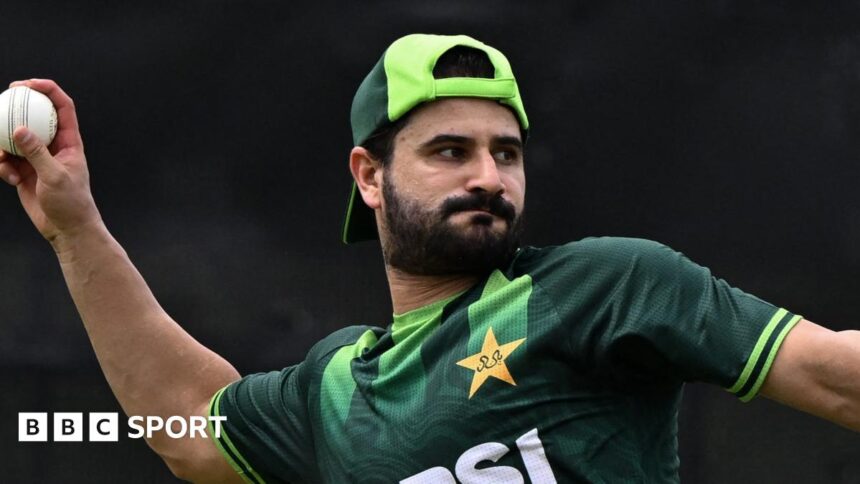
Hundred Deals ‘Not in Our Hands’: Pakistan’s Farhan on Auction Amid India Tensions
The world of franchise cricket is a global marketplace, but as the inaugural auction for The Hundred approaches, a complex geopolitical shadow looms over the selection process. Pakistan’s leading batter, Sahibzada Farhan, has candidly addressed the situation, stating that while interest in Pakistani players is high, their fate in the auction is ultimately “not in our hands.” This admission comes amidst reports that the four Indian-owned franchises in the competition are not considering Pakistani cricketers, highlighting the intricate and often fraught intersection of sport, politics, and commerce.
The Cricketer’s Conundrum: Talent in a Politicized Arena
At 29, Sahibzada Farhan is in the prime of his career. With a remarkable seven T20 centuries to his name—a feat that places him among the most prolific domestic batters in the format—he embodies the explosive talent Pakistan consistently produces. Alongside more than 60 of his compatriots, Farhan has thrown his hat into the ring for next month’s landmark auction, seeking a coveted spot in one of the world’s most publicized leagues.
Yet, his optimism is tempered by realism. “I know T20 franchises are interested in Pakistan players,” Farhan acknowledged. However, he quickly added the crucial caveat: “This is not in our hands who picks us or who doesn’t.” This statement cuts to the heart of the modern cricketer’s dilemma. Individual brilliance and marketability can be rendered secondary to forces far beyond the boundary rope. For athletes like Farhan, whose earning window is limited, such external constraints are a professional and financial frustration.
- Massive Pakistani Presence: Over 60 players registered for the auction.
- Proven Track Record: Farhan’s seven T20 tons demonstrate world-class power-hitting.
- Limited Control: Players can only perform; selection is subject to franchise strategies and, potentially, political considerations.
The Indian-Owned Franchise Factor: A Recurring Theme
The plot thickened last week when BBC Sport reported that Pakistan cricketers are not being considered by the four Indian-owned sides in The Hundred: London Spirit, Oval Invincibles, Manchester Originals, and Birmingham Phoenix. This is not an isolated precedent in franchise cricket. The Indian Premier League (IPL) has not featured a Pakistani player since 2008, a direct consequence of the diplomatic tensions between the two nations.
The extension of this dynamic into a UK-based league, owned by private entities but with clear Indian investment, signals how geopolitical fault lines can migrate into new sporting territories. The franchises, likely mindful of their commercial interests and fanbase sentiments in India, appear to be exercising caution. This creates a two-tiered auction process where Pakistani players are effectively competing for only six of the ten team slots, inherently limiting their opportunities and potentially suppressing their market value.
This development raises significant questions about the spirit of global sport. The Hundred was conceived as a bold, new, inclusive competition to attract a worldwide audience. The potential sidelining of an entire cricket-mad nation’s talent pool, for non-sporting reasons, challenges that inclusive ethos and could be seen as compromising the tournament’s sporting integrity before a ball is even bowled.
Expert Analysis: The Ripple Effects on Cricket’s Ecosystem
The implications of this situation extend far beyond the immediate disappointment for players like Farhan. The long-term consequences could reshape the landscape of franchise cricket.
First, it creates a dangerous precedent of political segmentation. If ownership nationality dictates player nationality in leagues, the free market of talent that defines events like the Caribbean Premier League or the Big Bash begins to erode. We risk moving towards a model where leagues become extensions of bilateral political relationships rather than pure sporting contests.
Second, it impacts Pakistan cricket’s financial ecosystem. The Hundred offers life-changing salaries and exposure. Denying access to this platform deprives Pakistani players of earnings that can secure their futures and reduce the financial pressure to seek early retirement for lucrative league deals elsewhere. It also limits the cross-pollination of skills; English fans are denied the chance to see some of the world’s most exciting T20 talent, and English players miss the opportunity to share a dressing room with them.
Third, it places The Hundred’s management in a bind. The England and Wales Cricket Board (ECB) markets the competition as a world-class spectacle. Can it truly claim to be so if a significant portion of the world’s best T20 players are systemically overlooked by a subset of teams? The league’s credibility as a neutral, premier destination is subtly undermined.
Predictions and Pathways Forward
Looking ahead, the auction will be a telling indicator. It is highly probable that several top Pakistani stars will be picked up by the six franchises without Indian ownership. Names like Babar Azam, Shaheen Shah Afridi, and Mohammad Rizwan are simply too good to ignore from a purely cricketing perspective. However, the bidding patterns and final salaries will be scrutinized for evidence of a devaluation effect.
For players like Sahibzada Farhan, the path forward is a double-edged sword. They must continue to dominate in every available forum—the Pakistan Super League (PSL), international duty, and other global leagues—to make their case so compelling that cricketing logic eventually overrides political hesitation. The sheer weight of performance can sometimes bend the arc of sporting politics.
In the broader context, the resolution lies with cricket’s governing bodies and the franchises themselves. There is a need for:
- Clearer regulations from the International Cricket Council (ICC) or league bodies on non-discrimination in franchise selections based on nationality.
- Braver leadership from franchise owners to separate sport from statecraft and make selections on merit alone.
- Continued diplomacy at the board level (ECB, PCB, BCCI) to ease tensions and foster a more collaborative environment for players.
Conclusion: A Test for Cricket’s Global Soul
Sahibzada Farhan’s simple, resigned statement—”not in our hands”—echoes the vulnerability of the modern athlete in a politically charged world. The saga surrounding Pakistani players in The Hundred auction is more than a transactional story about team selection; it is a stress test for cricket’s soul as a truly global game. The tournament has the opportunity to be a beacon of unity and top-tier competition, but that requires courage to place sport above all else.
The hope is that the dazzling skills of players like Farhan, capable of lighting up grounds across the UK, will ultimately prove irresistible. For the sake of the sport’s integrity and its fans, cricket must strive to ensure that the only thing “in our hands” is the bat and the ball, and that the only boundaries that matter are the ones painted on the field.
Source: Based on news from BBC Sport.