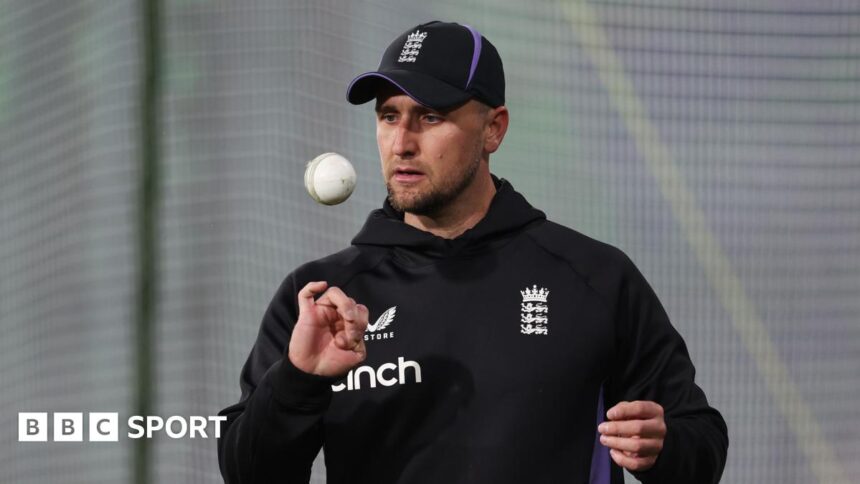
‘I Don’t Miss It’: Liam Livingstone’s Blunt Critique Exposes England Cricket Rift
The image of the modern international cricketer is often one of unwavering patriotism, of sacrificing franchise riches for national honour. Then there is Liam Livingstone. Fresh off reaching the milestone of 100 caps for England across all formats, the all-rounder has not delivered a nostalgic reflection, but a startlingly frank critique. In a revealing interview, Livingstone stated there “wasn’t any part of me” that wanted to be involved in England’s recent T20 World Cup campaign, despite their run to the semi-finals. For a player once seen as a cornerstone of England’s white-ball revolution, these are not the words of a man knocking politely on the selector’s door; they are the sound of it slamming shut.
A Century of Caps and a Sudden Cold Shoulder
Liam Livingstone’s England journey, until recently, followed a classic arc. A powerhouse hitter and versatile spinner, he became a symbol of England’s aggressive, multi-format approach. His 100th cap, earned during last year’s ill-fated Champions Trophy, should have been a celebration. Instead, it marked a precipice. England crashed out, losing all three matches, with Livingstone contributing a highest score of 14 and three wickets. The fallout was swift and clinical. He hasn’t played since and, tellingly, was one of the players to lose his central contract in September’s reshuffle.
What followed, however, is at the heart of his current disillusionment. Livingstone reveals that after his contract was terminated, he received two phone calls: one from England coach Brendon McCullum and one from director of cricket Rob Key. In an age of meticulous man-management and pastoral care, the nature of these calls is damning. “Neither lasted longer than one minute,” Livingstone disclosed. For a player with a century of international appearances, such brief, presumably procedural communication speaks volumes about a potential breakdown in relationship and a system that can quickly move on.
Dissecting the Disconnect: Style, Role, and Communication
Livingstone’s comments point to a deeper disconnect than mere poor form. His assertion that he doesn’t miss the England environment suggests a misfit with the current team culture, ironically under the leadership of Brendon McCullum, whose ‘Bazball’ philosophy would seem tailor-made for a player of Livingstone’s instincts.
Expert analysis suggests several potential friction points:
- Role Ambiguity: Was Livingstone ever settled as a pure finisher, a top-order aggressor, or a frontline spinner? Fluctuating roles can erode confidence.
- Form vs. Philosophy: McCullum’s system demands unwavering commitment to attack. Livingstone’s Champions Trophy struggle may have created a tension between his natural game and the pressure to execute it flawlessly.
- The Franchise Factor: As a global T20 star, Livingstone experiences high-octane, short-term engagements with clear expectations. The contrast with a more complex international setup, especially when out of form, can be stark.
The one-minute phone calls from McCullum and Key are perhaps the most significant detail. They symbolize a potential failure in communication. Was this a conscious, hard-nosed decision to draw a line, or an oversight that has fueled resentment? In high-performance sport, how you deliver bad news often resonates more than the decision itself.
The Road Ahead: A Point of No Return?
Livingstone’s future in England colours now seems deeply uncertain. At 32, he is at a career crossroads. His statements are not those of a player angling for a recall; they are a candid assessment of a chapter he considers closed.
Predictions for the next phase are clear:
- Franchise Focus: Livingstone will become the quintessential global T20 mercenary, a marquee name in leagues from India to the USA and beyond. His calendar will be filled with lucrative, defined roles.
- England’s Conundrum: The management must decide if this bridge is burned forever. A major injury crisis or a specific need for his power-hitting in a future World Cup could force a conversation, but the trust and relationship appear fractured.
- Legacy Impact: Livingstone’s experience may become a cautionary tale for the ECB. As the franchise world grows, managing the egos and expectations of multi-format stars requires more, not less, personal communication.
The irony is that Livingstone’s value to England may now be most keenly felt in his absence. In conditions that demand his specific brand of power, or if the middle-order lacks a ballistic option, his name will inevitably surface. But after such public candour, any return would require a monumental shift in perspective from both parties.
Conclusion: More Than Just Sour Grapes
Liam Livingstone’s “I don’t miss it” is more than just the sour grapes of a discarded player. It is a stark spotlight on the modern cricket ecosystem’s tensions. It highlights the clash between national duty and personal brand, the cold business of professional sport versus the emotional pull of the cap, and the critical importance of man-management in an era of relentless scrutiny.
His 100 caps for England stand as testament to significant contribution, but his departure underscores a new reality. The England cricket shirt no longer holds an unquestioned primacy for every player. For some, like Livingstone, the clarity, respect, and financial rewards of the franchise circuit can outweigh the complexities of international cricket, especially when the communication breaks down. His story is not merely about one all-rounder’s exit; it is a defining case study for how nations must engage with their stars in a radically changing game. The echo of that one-minute phone call may last far longer than anyone intended.
Source: Based on news from BBC Sport.