‘Incredible Situation’: Tudor’s Bold Kinsky Substitution Explained and Defended
In the high-stakes theatre of the Champions League, where every decision is magnified under a continental spotlight, Tottenham Hotspur manager Igor Tudor authored one of the most startling early scripts in recent memory. With his team already 3-0 down to a rampant Atletico Madrid after just 17 minutes of their last-16 first leg, Tudor made the jaw-dropping decision to substitute his starting goalkeeper, Antonin Kinsky. Replaced by Guglielmo Vicario, the move sent shockwaves through the Wanda Metropolitano and beyond. In the aftermath of a crushing 5-2 defeat, Tudor stood firm, insisting the unprecedented change was a necessary act to “protect” his team. This is the deep dive into a moment that defied conventional football logic.
A Meteoric Collapse and a Manager’s Swift Axe
The opening exchanges in Madrid were nothing short of a nightmare for Spurs. Atletico, fueled by a ferocious home crowd, sliced through Tottenham’s defense with surgical precision. By the 17th minute, the scoreboard read a devastating 3-0. While the entire team appeared shell-shocked, the spotlight, often unfairly harsh, fell on goalkeeper Antonin Kinsky. The Czech international, a summer signing, was arguably not at fault for the catastrophic defensive breakdowns in front of him, yet the symbolic weight of conceding three early goals is heavy for any keeper.
Igor Tudor, known for his fiery passion and tactical rigidity, did not wait. In a move that bypassed the standard halftime team talk, he acted immediately. The fourth official’s board lit up, displaying Kinsky’s number. The goalkeeper’s evening was over, replaced by Italian shot-stopper Guglielmo Vicario. The message was as clear as it was brutal: this performance, this situation, was unacceptable. Tudor later framed it not as a punishment, but as a strategic circuit-breaker.
- Unprecedented Timing: A goalkeeper substitution for tactical reasons before the 20-minute mark is virtually unheard of in elite football.
- Psychological Shock: The move was designed to jolt the entire team awake, shifting the narrative instantly.
- Public Scrutiny: While aimed at protecting the team, it placed Kinsky in an intensely public and difficult position.
Tudor’s Defense: Protection Over Punishment
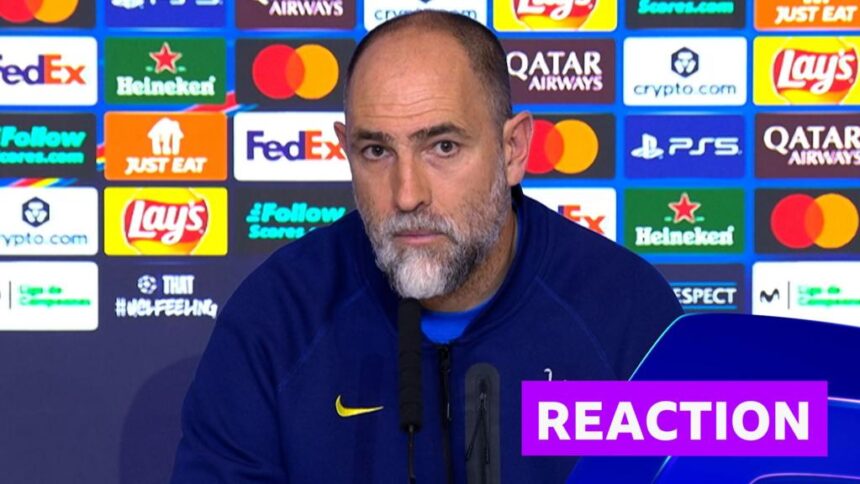
In the post-match press conference, facing a barrage of questions, Igor Tudor was resolute. He framed his decision not as a scapegoating of Kinsky, but as a broader managerial duty. “It was an incredible situation, one you never plan for,” Tudor stated. “My job is to protect the team, to find a solution in the moment. This was not about one player. It was about changing the energy, the dynamic, on the pitch. We needed a different voice, a different presence. It was a decision for the group.”
This rationale opens a fascinating debate on managerial psychology and in-game management. Was it an act of protection or a very public sacrifice? Expert analysis suggests it was a hybrid. By removing Kinsky, Tudor may have aimed to achieve several things:
Absorb Collective Blame: The dramatic nature of the sub shifts the discussion from “why is the whole team failing?” to the manager’s bold action. It can, in theory, relieve pressure on the outfield players.
Create a Definible Moment: It draws a clear line in the sand. Everything before the substitution was chaos; everything after must be different. It’s a hard reset.
Signal Control: To his own squad and the watching world, it demonstrated Tudor was willing to make ruthless, unorthodox calls to try and steer the ship. The message: no one’s place is safe amid such a display.
However, the risks are monumental. The potential damage to Kinsky’s confidence is significant, and the move could easily be perceived as undermining a player in the most public way possible. Tudor is betting that the shock value and potential galvanizing effect on the remaining 10 outfield players outweighs those risks.
The Fallout and the Road to the Second Leg
The immediate fallout was not positive, as Atletico added two more goals to seal a 5-2 victory, though Tottenham’s late consolations offer a glimmer of hope. The real consequences will unfold at Tottenham Hotspur Stadium in the return leg. All eyes will be on the goalkeeping selection. Does Tudor now commit to Guglielmo Vicario, or does he reinstate Kinsky in a show of faith? The manager’s handling of this delicate player psychology situation will be critical.
Furthermore, the decision has ignited a firestorm of debate among pundits and fans. Critics argue that true “protection” of a player would involve shielding him from such a humiliating exit, and that the defensive unit as a whole should have borne the brunt of the tactical change. Supporters of Tudor’s boldness contend that in the face of an historic collapse, standard protocols go out the window, and a manager must trust his gut to prevent total disintegration.
Predictions for the second leg are now infinitely more complex. Tottenham’s three away goals mean a 3-0 win at home sends them through—a daunting but not impossible task. The major question is which Tottenham will show up: a psychologically shattered group, or one united by a sense of defiance and a need to rectify a historic embarrassment? The atmosphere in the locker room, and specifically the unity between the goalkeepers and the manager, will be the ultimate determinant.
A Legacy-Defining Gamble
Igor Tudor’s 17th-minute substitution of Antonin Kinsky will be etched into Champions League lore, regardless of the eventual outcome of the tie. It was a decision of extreme conviction, born from a moment of extreme crisis. By framing it as an act of protection for the collective, Tudor has staked his managerial authority on a single, visceral instinct.
This move transcends simple tactics. It is a case study in crisis management, leadership under fire, and the psychological warfare inherent within a team sport. Whether it is remembered as a masterstroke of shock therapy or a catastrophic misjudgment of man-management depends entirely on what happens next. Can Tottenham muster a legendary comeback, fueled by this moment of stark reckoning? Or will the decision fracture the squad, becoming the defining symbol of a European dream shattered in Madrid?
One thing is certain: the “incredible situation” has created an incredible storyline. The second leg is no longer just about football; it’s about response, resilience, and redemption. Igor Tudor has thrown down the gauntlet, not just at Atletico Madrid’s feet, but at those of his own players. The world will be watching to see if they pick it up.
Source: Based on news from BBC Sport.