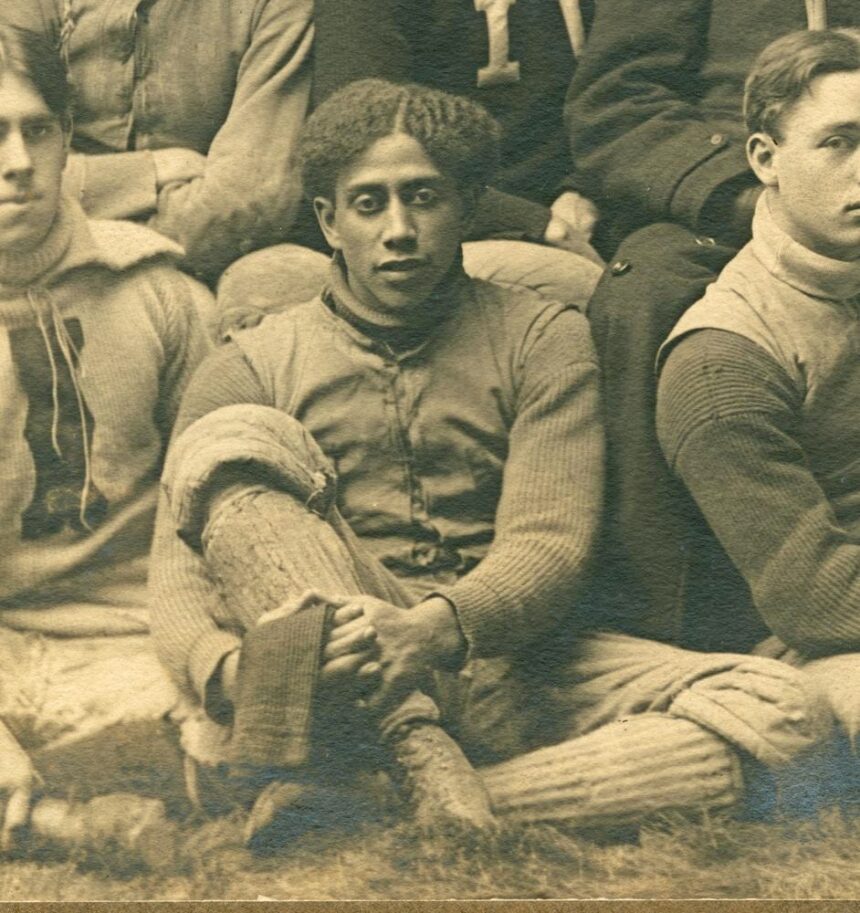
The Shattered Legacy of Preston Eagleson: Indiana Football’s Forgotten Pioneer
The history of integration in college football is often told through iconic names and powerhouse programs. But the true cost of breaking barriers—the human toll paid by the young men who were first—is etched in quieter, more tragic stories. For Indiana University, that story belongs to Preston Eagleson, a name that should resonate in Hoosier lore but instead whispers from the shadows of a forgotten past. His journey from a charmed early life to a devastating, untimely end is not just a footnote in sports history; it is a profound American narrative of promise, prejudice, and profound loss.
A Charmed Beginning: The Making of a Pioneer
Born in 1855 in Bloomington, Indiana, Preston Eagleson entered a world of relative privilege for a Black child in the antebellum Midwest. His father, John Eagleson, was a prosperous farmer and a respected figure in the community. The family was not wealthy, but they were stable and embedded in the fabric of the town, a rarity in a nation barreling toward civil war. This stable foundation afforded Preston opportunities unimaginable to most African Americans of his era. He was educated, articulate, and possessed of the athletic prowess that would soon make him a local standout.
When Indiana University fielded its first official football team in 1887, the sport was a brutal, chaotic cousin of rugby. Preston Eagleson, then a 32-year-old student, made the squad. His enrollment and participation were groundbreaking. He was not just Indiana football’s first Black player; he was among the very first African Americans to play college football anywhere in the United States, predating more famous pioneers at other institutions by years. On the field, Eagleson was known as a speedy and agile halfback, a key position in the game’s early form. For two seasons, he suited up for the Crimson and Cream, helping to lay the very foundation of Hoosier football tradition.
The Unseen Burden: Playing in a Divided World
To understand the weight Eagleson carried, one must view his achievement through the lens of his time. The 1880s were the dawn of Jim Crow. While Indiana was not the Deep South, it was rife with discrimination and violent racial animosity. The Ku Klux Klan would later find strong footholds in the state. Every time Eagleson took the field, he was a visible symbol of integration in a society increasingly hostile to it.
Expert analysis of this period suggests that pioneers like Eagleson operated in a complex social space. On campus, he might have been accepted as a teammate, however uneasily. On the road, and in the broader world, he faced a different reality. There are no recorded accounts of overt incidents during games, but the constant pressure of being “the first” and the only one, coupled with the era’s pervasive racism, undoubtedly shaped his experience. His athletic participation was an act of quiet courage, normalizing Black excellence in a space that would soon try to exclude it for decades.
- Groundbreaking Status: One of the first Black college football players nationally.
- Social Context: Played during the rise of segregationist policies.
- The Invisible Pressure: Represented an entire race with every play, a burden shouldered alone.
From Promise to Peril: A Life Unraveled
After his football career ended, the trajectory of Preston Eagleson’s life took a dark and tragic turn. He left IU and returned to the Bloomington area, but the stability of his youth evaporated. Historical records and newspaper clippings from the late 1890s paint a picture of a man struggling profoundly. He was involved in legal troubles and his mental state appeared to deteriorate. The specific causes are lost to history, but the psychological toll of his pioneering role, combined with the limited opportunities for a Black man in post-Reconstruction America, likely played a part.
The tragedy reached its climax in 1897. In a heart-wrenching echo of personal collapse, Eagleson was involved in a violent altercation with his own brother, John, over a small financial matter. The dispute turned deadly, and Preston Eagleson was shot and killed. He was 42 years old. The pioneer who helped build Indiana football died not as a celebrated alumnus, but in a shocking episode of familial violence that made the local papers as a grim crime story. His legacy was instantly buried, not by malice, but by the sheer, sad obscurity of his demise.
Reclaiming a Legacy: Why Preston Eagleson’s Story Matters Today
For over a century, the story of Indiana football’s first Black player Preston Eagleson and his family was largely forgotten. He was absent from media guides and historical summaries. His tragedy overshadowed his trailblazing achievement. However, recent efforts by historians, journalists, and the university itself have begun to resurrect his memory. This reckoning is crucial, not just for Indiana, but for a full understanding of sports history.
Looking at modern college football, with its majority-Black rosters and national debates on athlete compensation and social justice, Eagleson’s story is a foundational chapter. Predictions for the future of sports history must include a deepened commitment to uncovering these lost narratives. As programs nationwide grapple with their pasts, the act of honoring figures like Eagleson becomes essential. It moves integration from an abstract concept to a human story, complete with triumph and tragedy.
The legacy of the Eagleson family is also part of this reckoning. From a position of relative security in pre-Civil War Indiana, the family endured the national turmoil of the 19th century, producing a son whose brief athletic stardom could not shield him from its harsh realities. Their story is a microcosm of the African American experience.
Conclusion: More Than a Footnote
Preston Eagleson was not a star in the modern sense. He did not set statistical records that stood for ages. His contribution was far more fundamental: he showed up. He stepped onto a field and, through his simple presence, declared that the game belonged to everyone. That his life ended in darkness does not diminish that light; it complicates it, reminding us that the path for pioneers is often lonely and fraught with pressures we can scarcely comprehend.
Honoring Preston Eagleson today means acknowledging the full arc of his life—the charmed beginning, the groundbreaking moments, and the tragic end. It means inscribing his name not as a mere trivia answer, but as a essential part of Indiana University’s soul. His story is a poignant reminder that history is not just made by the winners on the scoreboard, but by the courage of those who dared to be first, paying a price we are only now beginning to fully calculate and honor.
Source: Based on news from Yahoo Sports.