Iran Withdraws from Milan-Cortina Winter Paralympics, Citing Athlete Safety Amid Regional Conflict
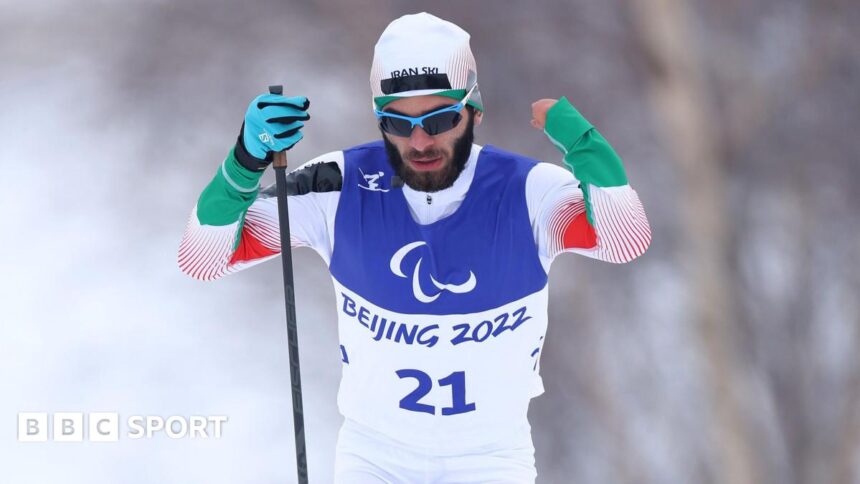
The spirit of the Paralympic Games, built on resilience and global unity, faced a sobering geopolitical reality just hours before the opening ceremony of the Milan-Cortina 2022 Winter Paralympics. In a last-minute announcement, the International Paralympic Committee (IPC) confirmed that Iran would not participate, leaving its sole qualified athlete, cross-country skier Aboulfazl Khatibi Mianaei, unable to compete. The reason, as stated by the IPC, is that the athlete “cannot travel safely to Italy” due to the ongoing conflict in the Middle East, a stark reminder of how world events can shatter an individual’s Olympic dream.
- A Dream Deferred: The Story of Aboulfazl Khatibi Mianaei
- Geopolitical Shadows Over the Games: Analyzing the Safety Rationale
- Broader Implications for the Paralympic Movement and Global Sport
- Looking Ahead: Predictions for the Future of Inclusive Competition
- Conclusion: A Somber Reminder of the World Beyond the Arena
A Dream Deferred: The Story of Aboulfazl Khatibi Mianaei
For Aboulfazl Khatibi Mianaei, this withdrawal represents a devastating personal and professional blow. A veteran of the Winter Paralympic stage, Mianaei is no stranger to representing his nation against the odds. He competed at the Pyeongchang 2018 Games and, most recently, at Beijing 2022. His journey is one of immense dedication, particularly as an athlete from a nation with limited winter sports infrastructure. Preparing for the high-altitude courses and technical demands of cross-country skiing requires resources, specialized training, and an unwavering commitment—all of which Mianaei clearly possessed.
His anticipated appearance in Milan-Cortina was to be a testament to individual perseverance. For many smaller National Paralympic Committees, participation itself is a victory. The withdrawal strips away not just a chance at competition, but a moment of global recognition for years of sacrifice. IPC President Andrew Parsons echoed this sentiment, stating it was “really disappointing for world sport and especially for Aboulfazl” that he would be unable to take part. This isn’t merely a statistical footnote; it’s the abrupt end of a four-year athletic cycle for a dedicated competitor.
Geopolitical Shadows Over the Games: Analyzing the Safety Rationale
The IPC’s brief statement points directly to the complex and volatile security landscape in the Middle East as the cause. While the committee did not specify exact threats, the implication is that travel for the Iranian delegation—or the athlete himself—was deemed to carry unacceptable risk. This decision sits at the fraught intersection of sport, diplomacy, and security.
Expert analysis suggests several potential factors behind the safety assessment:
- Airspace and Travel Route Complications: Ongoing military actions can render certain flight paths perilous or logistically impossible, complicating travel from Tehran to Europe.
- Heightened Diplomatic Tensions: Periods of regional conflict can increase risks for nationals of involved states abroad, with concerns potentially ranging from protests to targeted threats.
- Protocol and Protection Responsibilities: The IPC and Italian authorities have a duty of care to all participants. If intelligence assessments suggested a credible threat to the Iranian delegation’s safety, the precautionary principle would logically prevail.
This incident underscores that Paralympic athletes, despite the movement’s ideals, are not insulated from global political fractures. The decision, while heartbreaking for the athlete, highlights the paramount importance of participant safety over all other considerations, even when the outcome is profoundly unfair to the individual competitor.
Broader Implications for the Paralympic Movement and Global Sport
Iran’s absence from Milan-Cortina is more than a single empty lane in a cross-country skiing event. It raises pressing questions about inclusivity, neutrality, and the future of global sporting gatherings in an increasingly fragmented world.
The Paralympic Games have long championed the power of sport to transcend political divides. However, when geopolitics physically prevents an athlete from reaching the venue, that narrative is challenged. This withdrawal follows a pattern of recent Olympic and Paralympic Games where geopolitical issues—from state-sponsored doping bans to the exclusion of athletes from nations in conflict—have played a significant role.
Key implications for the movement include:
- Precedent for Future Games: Could similar security-based withdrawals become more common, especially for athletes from nations in active conflict zones?
- The Burden on “Neutral” Sporting Bodies: The IPC is forced into making de facto geopolitical risk assessments, a role it inherently seeks to avoid but cannot escape.
- Impact on Development: For winter Paralympic sports in developing nations, seeing a trailblazer like Mianaei barred from competition could dampen inspiration and investment in already niche disciplines.
Looking Ahead: Predictions for the Future of Inclusive Competition
The unfortunate case of Aboulfazl Khatibi Mianaei casts a long shadow toward future international multisport events, including the upcoming Paris 2024 Summer Games. Several predictions and challenges come to the fore.
First, security protocols for athletes from specific regions will become even more stringent and complex, potentially involving earlier risk assessments and contingency planning by the International Olympic Committee (IOC), IPC, and host nations. The “last-minute” nature of this withdrawal suggests systems for anticipating such crises need fortification.
Second, there may be increased advocacy for establishing neutralized travel corridors or guaranteed security provisions for accredited athletes, treating them as protected persons distinct from their national governments’ political standing. While idealistic, the practical implementation is fraught with diplomatic and legal hurdles.
Finally, this event reinforces that the athlete’s voice must remain central. While decisions are made based on macro-level security data, the human cost is borne entirely by individuals like Mianaei. The sporting world must find better ways to support such athletes, whether through guaranteed virtual participation, extended qualification pathways, or other forms of recognition when physical attendance is impossible due to forces entirely beyond their control.
Conclusion: A Somber Reminder of the World Beyond the Arena
The empty starting position where Aboulfazl Khatibi Mianaei should have stood is a powerful symbol. It represents a dream deferred by conflict, a career interrupted by geopolitics, and a stark reminder that the Paralympic flame, for all its brilliance, cannot illuminate every shadow cast by global discord. While the Games in Milan-Cortina will proceed, celebrating extraordinary athletic achievements and human spirit, they will do so with a notable absence.
The true loss is measured in the years of preparation, the personal sacrifice, and the missed opportunity for an athlete to test his limits on the world’s biggest stage. As the global sports community moves forward, the case of Iran’s withdrawal must serve as a catalyst for deeper conversation. The goal must be to forge a path where the fundamental right to safe participation is upheld, ensuring that the arena remains a place where only athletic competition, and not international conflict, determines who reaches the finish line.
Source: Based on news from BBC Sport.