Silence on the Pitch: Iranian Women’s Soccer Team Stages Powerful Anthem Protest at Asian Cup
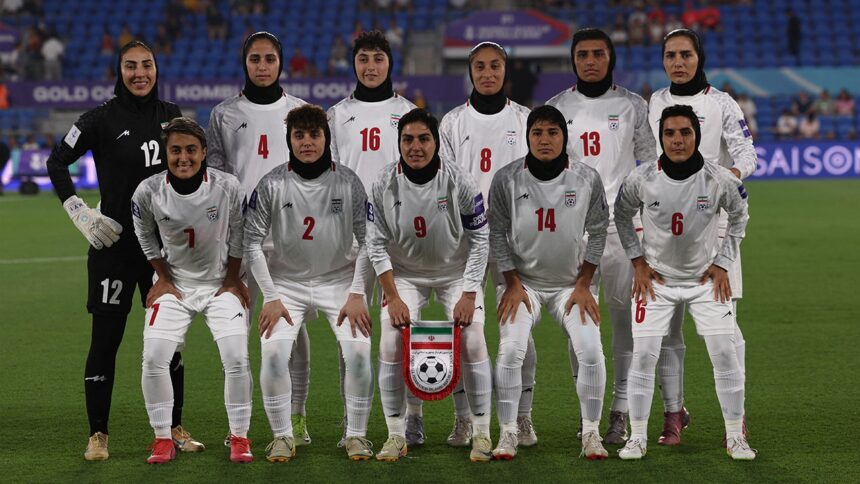
In the charged atmosphere of international sport, moments of profound political statement often arrive not with a roar, but with a silence. On Monday night at the Cbus Super Stadium on Australia’s Gold Coast, the Iranian women’s national soccer team delivered one such moment. As the opening notes of the Iranian national anthem echoed through the arena before their Women’s Asian Cup match against South Korea, the players stood in their customary line, staring straight ahead, their lips firmly sealed. This collective, silent protest, witnessed by a global audience, transcended the pitch, becoming a stark symbol of defiance and a poignant chapter in the long struggle for women’s rights in Iran.
A Calculated Silence: The Protest Unfolds
The scene was meticulously observed. The players, donning their national team kits, were statuesque as the anthem played. There was no fidgeting, no glancing at the ground—just a unified, resolute gaze forward. Reports from the stadium indicated a mix of jeers and, later, supportive applause from sections of the crowd, highlighting the divisive nature of such acts. The visual was powerful enough, but the reaction from the Iranian bench added another layer of narrative. Team manager Marziyeh Jafari was captured on camera smiling as she watched her players’ silent stand from the sidelines, a subtle but telling gesture of solidarity that suggested the protest was a coordinated, team-wide stance rather than a spontaneous individual act.
This incident did not occur in a vacuum. It follows a longstanding pattern of Iranian athletes, both male and female, using international sporting events as a platform. However, the act of an entire women’s national team refusing to participate in a core ritual of national representation carries unique and heavy symbolism. It speaks directly to the systemic constraints placed upon women in Iran, from mandatory hijab laws to restrictions on attending stadiums as spectators—a ban only recently and partially lifted. Their silence was a megaphone for grievances that cannot be shouted at home.
Expert Analysis: The Weight of a Gesture in a Geopolitical Storm
As a sports journalist with decades of experience observing the intersection of athletics and geopolitics, this protest stands out for its timing, its participants, and its potential repercussions. Unlike a single athlete making a stand, a full team protest represents a monumental logistical and moral consensus. It indicates a shared conviction powerful enough to risk severe consequences from their own sporting federation and government authorities back in Tehran.
The protest must also be analyzed within the current, tense geopolitical context. As noted in recent news coverage, such as Bret Baier’s discussion on Operation Epic Fury, tensions between Iran, the U.S., and its allies remain critically high. Every action involving Iran on the world stage is now viewed through this lens of escalating conflict. The team’s silent protest, therefore, operates on two simultaneous levels:
- Domestic Dissent: A direct challenge to the Iranian regime’s treatment of women and its strict societal controls.
- International Symbolism: An unintended but undeniable echo of the broader geopolitical standoff, reminding the world that the conflict is not just between states, but between a state and a significant portion of its own people.
The players’ gamble is immense. They have leveraged their most visible platform to make a statement that could endanger their careers, their freedom, and their safety upon return. The smile from Manager Jafari is a crucial detail; it suggests institutional support within the team structure, potentially buffering the players from immediate internal fallout, but it offers no protection from the state itself.
Predictions: Repercussions and the Ripple Effect
The immediate aftermath of the protest will be telling. Predictions for the short and long term involve both sporting and political spheres:
1. Sporting Sanctions: The Football Federation of the Islamic Republic of Iran (FFIRI) will face intense pressure from hardliners to punish the team. This could range from fines and suspensions for players and staff to the potential dismantling of the team’s management. A softer approach—issuing a vague reprimand—would signal internal divisions and fear of a public backlash.
2. The Regime’s Response: The Iranian government will likely employ a dual strategy. State media may ignore the event or frame it as a “distraction.” Simultaneously, security agencies may launch discreet investigations, applying pressure behind the scenes to prevent future acts of defiance. The players may face travel restrictions or be quietly phased out of future national team call-ups.
3. Inspirational Catalyst: Beyond Iran’s borders, this act will undoubtedly inspire other athletes, particularly women from restrictive societies, to consider their own platforms. Within Iran, the image of their women’s national team standing in silent unity is a potent symbol that could fuel the morale of the “Woman, Life, Freedom” movement and other dissenters, proving that resistance persists in every arena.
4. Tournament Focus: For the remainder of the Asian Cup, the Iranian team will play under an intense microscope. Every gesture, post-match comment, and result will be scrutinized for political meaning. This could either unite the team further under a shared cause or become a destabilizing distraction affecting their performance.
A Conclusion Forged in Defiance
The final whistle in their 3-0 loss to South Korea was almost an afterthought. The real result of the match was decided before a ball was kicked, in those 90 seconds of silent protest. The Iranian women’s soccer team did not just refuse to sing an anthem; they articulated a volume of discontent that resonates far beyond the stadium. They transformed a moment of expected national pride into one of profound civil courage.
In the grand, often cynical theater of international sports, where politics is supposedly kept at bay, the players reminded us that for some, sport is not an escape from reality, but one of the few avenues available to confront it. Their silent stand on the Gold Coast echoes the struggles of Iranian women for basic freedoms and human dignity. Regardless of the sporting sanctions or political pressures that will inevitably follow, they have already secured a victory of conscience. They have shown the world that sometimes, the most powerful statement a team can make is not in how they play the game, but in the principled silence they choose to keep before it begins.
Source: Based on news from Fox Sports.