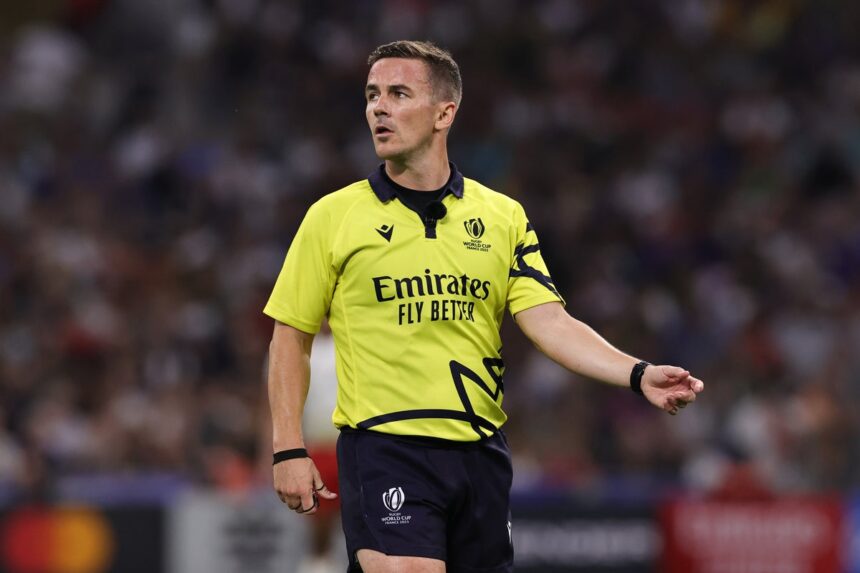
Ireland vs Scotland Referee: Who is Six Nations Official Luke Pearce?
The final weekend of the Guinness Six Nations is a theatre of dreams, nightmares, and legacy-defining moments. As Ireland and Scotland prepare for a seismic clash in 2026, with potential championship and Triple Crown implications hanging in the balance, the man in the middle holds the whistle to history. That man is England’s Luke Pearce, one of the most distinctive and respected referees in the global game. But who is the official tasked with stewarding this high-pressure Celtic showdown, and what can players and fans expect from his approach? We delve into the journey, style, and significance of the appointment of Pearce for a fixture that promises to be pure box-office.
- From Devon Pitches to the World Stage: The Luke Pearce Story
- The Pearce Philosophy: Communication, Flow, and Player Management
- The Significance of the Appointment and Tactical Implications
- Prediction: A Refereeing Performance That Complements the Spectacle
- The Final Whistle: An Official Ready for the Crucible
From Devon Pitches to the World Stage: The Luke Pearce Story
Luke Pearce’s ascent to the pinnacle of rugby officiating is a tale of prodigious talent and relentless progression. Unlike many of his peers who transitioned from playing, Pearce’s love for the laws of the game emerged early. Hailing from Exeter, he picked up the whistle at just 16 years old, cutting his teeth on the grassroots fields of Devon. His aptitude was immediately evident.
His rise was meteoric. By the remarkably young age of 21, he was already officiating in the RFU Championship, England’s demanding second tier. This rapid promotion highlighted not just a technical understanding, but a maturity beyond his years in managing professional athletes. A swift step up to the Premiership followed, where he continued to refine his craft amidst the ferocious intensity of club rugby’s top flight.
His international debut arrived in February 2013, and since then, Pearce has become a fixture on the world stage. A significant milestone was reached during the 2024 Six Nations, where he oversaw his 50th Test match, cementing his status as a senior figure in the officiating cadre. This journey from local parks to World Cup pools and championship deciders underscores a career built on consistent excellence and unwavering dedication to the art of refereeing.
The Pearce Philosophy: Communication, Flow, and Player Management
Ask any player what they want from a referee, and two words often surface: clarity and consistency. These are the cornerstones of Luke Pearce’s highly effective style. In an era where the breakdown is a perpetual battleground, Pearce’s approach stands out for its emphasis on dialogue.
Highly communicative style is his trademark. Pearce is a constant talker, explaining his decisions in real-time, setting clear expectations for competing players at the ruck, and proactively managing potential flashpoints. This open channel doesn’t just aid understanding; it builds a layer of respect. Players feel heard and are less likely to repeat infringements out of frustration or confusion.
Furthermore, Pearce has a well-documented preference for pace. He is a referee who values fluidity and seeks to minimize stoppages where possible. This philosophy will be crucial in the 2026 Ireland vs Scotland match, where both teams pride themselves on playing with tempo and width. A fast ruck speed benefits the attacking team, meaning Pearce’s management of the breakdown—specifically the “jackal” contest and the speed of defensive line retreat—will be under intense scrutiny. His ability to “let the game breathe” while maintaining control is a delicate balance he typically masters.
- Proactive Communication: Constant dialogue with captains and forwards.
- Pace Over Pedantry: Favors advantage and flow where safe and appropriate.
- Clear Decision-Making: Explains calls concisely, reducing animosity.
- Player Rapport: Builds relationships on the field, commanding respect without arrogance.
The Significance of the Appointment and Tactical Implications
The appointment of Luke Pearce for such a critical fixture is a testament to World Rugby’s confidence in his big-game temperament. For both Ireland and Scotland, understanding his tendencies could offer marginal gains.
For Ireland, a team that excels at structured, multi-phase attacks with lightning-quick recycling, Pearce’s preference for pace could be advantageous. Their precision at the breakdown, with clearouts that are both powerful and legal, could see them rewarded with the quick ball that makes their attack so potent. However, they must be meticulous in their discipline around the tackle area; Pearce’s communication will be immediate, and penalty counts can spiral if warnings are ignored.
Scotland, with their more unstructured, off-the-cuff brilliance and threat from turnover ball, will need to be astute. Pearce’s clear framework at the ruck means the jackaling threat of a player like Rory Darge (or his successor in 2026) must be picture-perfect. Any hint of incorrect body position or supporting weight will be penalized. Conversely, Scotland’s sometimes aggressive defensive line will need to be wary of offside, as Pearce’s assistant referees will be vigilant.
Historically, the depth in English refereeing has, at times, seen elite officials like Pearce and Matthew Carley sharing the marquee assignments. This appointment for a potential title-decider confirms Pearce’s current position at the forefront. His experience in high-stakes environments, including World Cup knock-out matches, means the occasion is unlikely to overwhelm him.
Prediction: A Refereeing Performance That Complements the Spectacle
Predicting the outcome of Ireland vs Scotland in 2026 is a fool’s errand this far out, but predicting the nature of Luke Pearce’s performance is more straightforward. Expect a match that is allowed to flow, with a high ball-in-play time. Pearce will seek to be a facilitator of rugby, not its central character.
The key battle will be at the breakdown, and here, Pearce’s communication will be paramount. The first 20 minutes will be a feeling-out process, as he establishes his tolerance levels with both sets of forwards. The team that adapts quickest to his interpretations—particularly around the tackler’s release and the support player’s entry gate—will gain a significant tactical foothold.
Given his style, a tight, penalty-ridden arm-wrestle seems unlikely unless one side deliberately chooses to slow the game down. Pearce will use his whistle and his voice to discourage negative play. This sets the stage for a contest decided by skill, fitness, and attacking ambition rather than a kicking duel. In essence, Pearce is the ideal referee for what this fixture promises to be: a breathtaking, nerve-shredding testament to Six Nations rugby at its very best.
The Final Whistle: An Official Ready for the Crucible
When the teams take to the Aviva Stadium pitch in 2026, all eyes will initially be on the stars: the fleet-footed backs, the brutal forwards, the visionary fly-halves. But the influence of the man wearing the number 16 jersey, Luke Pearce, will be woven into the fabric of the contest from the first kick-off.
His journey from the fields of Devon to this pinnacle reflects a deep-rooted passion for the sport’s integrity. His highly communicative style and preference for pace are not just quirks, but a conscious philosophy aimed at showcasing rugby union as a dynamic, thrilling sport. In a match laden with narrative—be it Ireland chasing another championship or Scotland aiming to slay a giant—the requirement for a calm, authoritative, and clear-minded official is non-negotiable.
Luke Pearce, with his half-century of Test matches and his reputation for fairness and flow, is precisely that official. He won’t be the story, but he will be the essential conductor, ensuring that the symphony of collision and creativity between Ireland and Scotland is played to a rhythm that honors the occasion. The 2026 Six Nations finale is in safe, experienced hands.
Source: Based on news from Yahoo Sports.