From Gridiron Glory to Legal Peril: The Shocking Felony Charges Against Falcons’ James Pearce
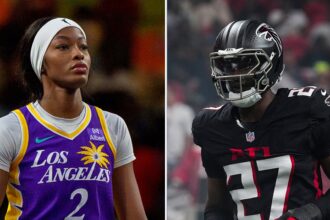
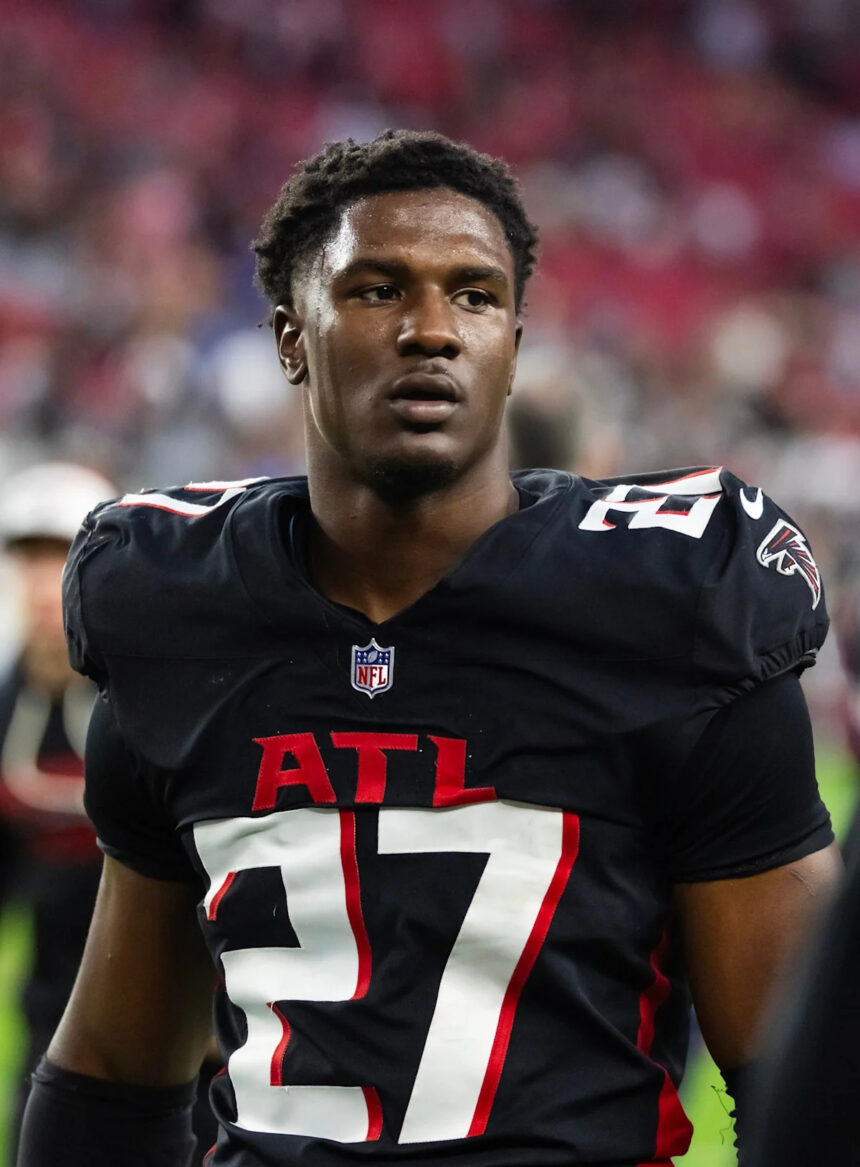
The worlds of professional football and basketball collided in a terrifying domestic incident this winter, casting a dark shadow over two rising stars. Atlanta Falcons defensive end James Pearce Jr., a celebrated former University of Tennessee standout, now faces a formidable legal battle after being charged with multiple felonies stemming from an alleged altercation involving WNBA player and former Lady Vols star Rickea Jackson. The case, which includes allegations of a deadly weapon and a harrowing police chase, has sent shockwaves through the sports community and raises grave questions about Pearce’s future both on and off the field.
A Night of Alleged Violence: Unpacking the Charges and Arrest
According to official records from the Miami-Dade County State Attorney’s office, the incident unfolded on February 7 in Doral, Florida. Pearce, 22, was arrested following a domestic dispute with Jackson, his former girlfriend. The situation escalated dramatically when Pearce allegedly fled the scene, leading police on a vehicle pursuit that ended in a crash. The initial arrest affidavit painted a chaotic picture, resulting in a slate of serious charges filed on March 12.
The Florida State Attorney’s office ultimately filed three felonies and one misdemeanor against the Falcons’ player:
- Aggravated Battery with a Deadly Weapon (Felony)
- Fleeing and Eluding Police (Felony)
- Resisting an Officer with Violence (Felony)
- Stalking (Misdemeanor)
Notably, two initial charges—aggravated battery of an officer and aggravated stalking—were dropped by prosecutors. Pearce posted a bond of $20,500 following his arrest, but the legal machinery is now fully in motion. The most chilling detail emerges from a court filing, where Rickea Jackson stated her fear in stark terms: “James will kill me.” This assertion forms a central, disturbing pillar of the case as it proceeds.
Parallel Paths Diverge: The Tennessee Legacy in Crisis
Until this point, James Pearce and Rickea Jackson shared a narrative of elite athletic achievement. Both were luminaries at the University of Tennessee, Pearce a fearsome pass-rusher for the Volunteers and Jackson a dominant scorer for the Lady Vols. Pearce’s college performance made him a coveted NFL prospect, leading to his signing with the Atlanta Falcons as an undrafted free agent, a player with significant potential. Jackson was selected fourth overall in the 2024 WNBA Draft by the Los Angeles Sparks, poised to begin her professional career.
Their shared “Volunteer” legacy now makes the allegations profoundly jarring for the Tennessee fanbase and the broader sports world. The case transitions their stories from the sports section to the crime blotter, a tragic derailment of promise. The domestic incident on Feb. 7 has irrevocably linked their careers in a manner no one could have anticipated, highlighting the severe personal conduct risks teams absorb when investing in young talent.
Expert Analysis: Legal Ramifications and NFL Protocol
Legal experts examining the case note the severity of the remaining charges. “Aggravated battery with a deadly weapon is a first-degree felony in Florida, carrying a potential sentence of up to 30 years in prison,” notes sports legal analyst Miranda Costas. “Coupling that with the felony charges for fleeing and resisting police, the state is alleging a pattern of violent, reckless behavior during a single event. Jackson’s statement to the court will be a powerful factor in the prosecution’s argument regarding motive and threat level.”
From a professional sports standpoint, the NFL’s personal conduct policy looms large. The league can place players on the Commissioner’s Exempt List—a form of paid administrative leave—while legal matters play out, effectively sidelining them regardless of their team’s wishes. “The Atlanta Falcons and the NFL are now in a reactive, investigative mode,” says former NFL front office executive David Kline. “They will conduct their own parallel investigation. Given the violent nature of the allegations and the graphic detail in the affidavit, the league has ample grounds to intervene with significant discipline, even before a verdict is reached. Teams and the league have a lower burden of proof than a criminal court.”
The dropped charges, while potentially a minor procedural win for the defense, do little to diminish the overall gravity of the situation. The core felonies remain, built on the alleged altercation with Jackson and the subsequent police chase.
Predictions and Fallout: Career in Jeopardy, Personal Reckoning
The immediate and long-term predictions for James Pearce are bleak. The potential outcomes can be categorized as follows:
- NFL Future: It is highly likely Pearce will be placed on the Commissioner’s Exempt List before the Falcons’ offseason program advances. His roster spot is in extreme jeopardy. Even if he avoids significant jail time, a lengthy suspension from the NFL is a near certainty, jeopardizing his ability to ever establish a career.
- Legal Path: Prosecutors appear to have a strong case based on police testimony, physical evidence from the chase and crash, and the victim’s statement. A plea deal to lesser charges is a probable path, but any felony conviction would be a career-ender.
- Reputational Damage: Beyond the law and league rules, the court of public opinion has largely rendered its verdict. Endorsements are unfathomable, and his name is now synonymous with a deeply troubling allegation of violence against a woman.
- For Rickea Jackson: The WNBA and her team, the Los Angeles Sparks, have offered support. The focus will be on her safety, well-being, and her ability to begin her professional basketball career amidst this profound personal trauma.
This incident serves as another grim reminder of the NFL’s persistent issues with players and allegations of violence against women. The league’s handling of Pearce will be scrutinized as a test of its oft-criticized disciplinary consistency.
A Cautionary Tale of Promise Shattered
The case of James Pearce is a stark narrative of potential obliterated by alleged choices. The journey from Neyland Stadium’s roar to a Miami-Dade jail cell is a precipitous fall, underscoring that athletic talent is never an insulator from legal and moral accountability. While Pearce is entitled to his day in court and the presumption of innocence, the documented allegations—a deadly weapon, a frantic flight from police, and a former partner’s fear for her life—paint a horrifying picture that transcends sports.
For the Atlanta Falcons, it is a brutal lesson in due diligence and the unpredictable risks of player acquisition. For the University of Tennessee, it is a heartbreaking divergence of two legendary paths. For fans, it is a disquieting moment of reckoning that the athletes they cheer for are complex individuals capable of grave actions. And for Rickea Jackson, it is a personal nightmare with a very public footprint. As the legal process unfolds, the primary focus must remain on the seriousness of the allegations and the well-being of the alleged victim, a reminder that some stakes are infinitely higher than any game.
Source: Based on news from Yahoo Sports.