Japan’s Juggernaut Rolls On: Nadeshiko Crush Philippines 7-0 to Reach Asian Cup Semis
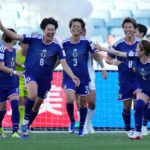
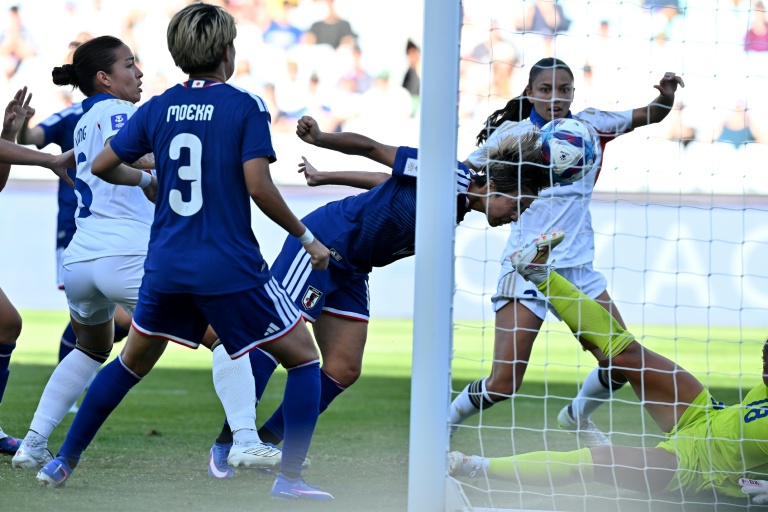
In a display of technical mastery and ruthless efficiency, Japan’s Nadeshiko sent a thunderous statement to the rest of the Women’s Asian Cup, dismantling the Philippines 7-0 at Stadium Australia. The victory was more than a quarter-final win; it was a coronation of their status as tournament favorites and a seamless passage into the semi-finals, where a tantalizing clash with South Korea awaits. With this win, Japan not only kept their quest for a third continental crown perfectly on track but also officially secured their ticket to the 2025 FIFA Women’s World Cup in Brazil, extending their remarkable streak of qualifying for a tenth consecutive global finals.
A Masterclass in Patience and Precision
The scoreline suggests a one-sided affair from the outset, but the opening half-hour told a story of Philippine resilience and Japanese patience. The Malditas, organized and disciplined, initially held their shape and frustrated Japan’s intricate passing lanes. However, the relentless Japanese pressure is a force of nature, a constant, probing rhythm that eventually finds the fault line. That moment arrived in the 37th minute, and once the dam broke, the flood was catastrophic for the Philippines.
Two goals in three devastating minutes just before halftime transformed the contest. The first, a sharp finish, shattered the Philippine resistance. The second, a swift and clinical team move, broke their spirit. This rapid-fire double-punch is a hallmark of elite teams—the ability to shift from controlled dominance to explosive scoring in the blink of an eye. It underscored the vast technical gulf between the sides, with Japan’s first-touch passing, off-the-ball movement, and spatial awareness operating at a level the Philippines simply could not sustain.
Goals Galore: A Symphony of Scorers
What makes this Japanese team particularly fearsome is the sheer diversity of their attacking threat. This was not a victory reliant on one superstar; it was a symphony of scorers, demonstrating the depth and versatility at coach Futoshi Ikeda’s disposal. The Philippines’ defense was pulled apart by waves of attacks from all angles.
- Toko Koga: The Tottenham Hotspur defender showcased her attacking prowess with a well-taken brace, proving a constant menace from set-pieces and deep runs.
- Mina Tanaka: The experienced forward opened the scoring, her intelligent positioning and cool finish setting the tone for the rout.
- Youthful Flair: The likes of Remina Chiba, Manaka Matsukubo, and Momoko Tanikawa got on the scoresheet, highlighting the seamless pipeline of talent in Japanese football.
- Riko Ueki: The West Ham striker added the final exclamation point, a reminder of her consistent threat in the penalty area.
This distribution of goals is a nightmare for opposing coaches. Shut down one avenue, and two more appear. It speaks to a systemic strength and a philosophical commitment to team-oriented football that has long been Japan’s signature.
Analysis: The Blueprint for Success and a Warning to All
From a tactical perspective, Japan’s performance was a blueprint for modern football. Their high defensive line and immediate press upon losing possession suffocated the Philippines, pinning them in their own half. The midfield, the engine room of the side, controlled the tempo with metronomic passing, switching play with ease to exploit overloads on the flanks. Every player is comfortable on the ball, from goalkeeper to center-forward, making them incredibly difficult to press effectively.
For the Philippines, the result is a sobering reminder of the mountain to climb in Asian women’s football, yet their journey to this stage remains historic. The focus for them shifts to development and building on the foundation that has seen them reach a World Cup. For Japan, this match served as another emphatic warning shot to their title challengers. The message was clear: any team with aspirations of lifting the Asian Cup must find a way to disrupt Japan’s rhythm, a puzzle that has remained largely unsolved in this tournament.
Road to the Final: Korea Test and Title Destiny
The semi-final matchup against South Korea is now set, and it promises to be the most compelling fixture of the tournament so far. While Japan have looked imperious, South Korea possess individual stars like Chelsea’s Ji So-yun who can turn a game in an instant. This clash will be a fascinating contrast in styles: Japan’s collective fluidity versus Korea’s structured organization and explosive talent.
Japan’s World Cup pedigree, as the only Asian nation to have won the global title (2011) and finished runners-up (2015), gives them a psychological edge in these high-stakes knockout matches. Currently ranked 8th in the world—the highest of any team at the Asian Cup—they carry the aura of favorites. The prediction here leans decisively towards Japan. Their system is more cohesive, their squad depth is superior, and the momentum from this 7-0 demolition will be immense. Expect a tightly contested first half, but Japan’s relentless possession and tactical intelligence should see them through to the final.
Conclusion: A Juggernaut Operating at Peak Power
Japan’s 7-0 evisceration of the Philippines was more than a simple quarter-final victory; it was a declaration. It announced that the Nadeshiko are not just participating in this Asian Cup—they are intent on reclaiming it with authority. By securing their 2025 World Cup place and marching into the semi-finals, they have already achieved key objectives. Now, the focus sharpens on the prize that matters most: the Asian Cup trophy.
The performance in Sydney was a reminder of why Japanese women’s football is revered worldwide. It is built on a foundation of technical excellence, tactical discipline, and a next-player-up mentality that few can match. As they prepare to face South Korea, the rest of the continent watches, knowing they must find an answer to football’s most beautiful problem: how to stop a team that moves and thinks as one. Based on the evidence so far, no one in Asia currently has the solution.
Source: Based on news from Yahoo Sports.