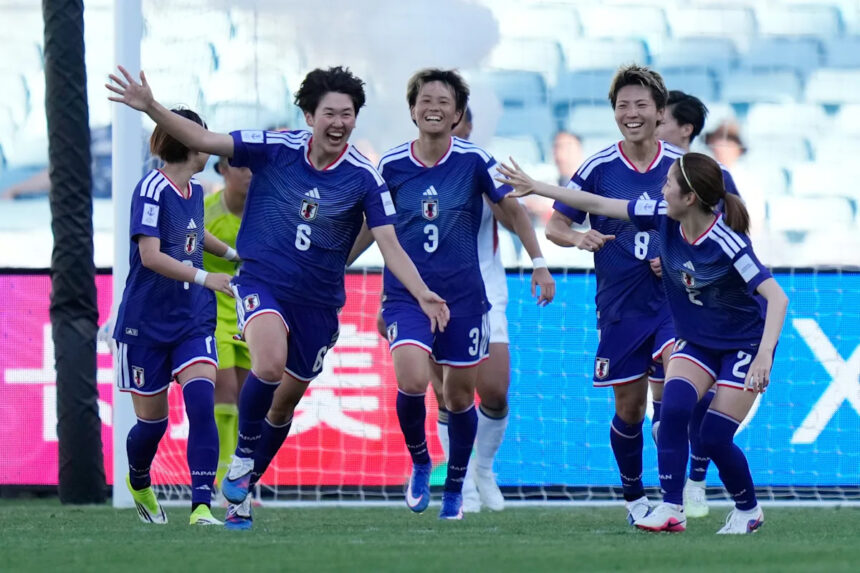
Japan’s Nadeshiko Blaze Past Philippines, Secure World Cup Berth with Emphatic 7-0 Victory
In a display of sheer technical dominance and ruthless efficiency, Japan’s Nadeshiko have stormed into the semifinals of the 2026 AFC Women’s Asian Cup and, more importantly, booked their ticket to the 2027 FIFA Women’s World Cup in Brazil. A commanding 7-0 rout of a valiant but outmatched Philippines side in Sydney served as a stark reminder of Japan’s status as a global powerhouse. The victory, spearheaded by a brace from rising star Toko Koga, was a masterclass in possession, precision, and progression, sending a formidable message to their remaining rivals in the tournament.
A Methodical Demolition: How Japan Unlocked the Philippines Defense
From the opening whistle, the pattern was unmistakable. Japan, ranked 8th in the world, established a rhythmic, metronomic control of the match, circulating the ball with a patience that felt like a slowly tightening vice. The Philippines, the surprise packages of the 2023 World Cup, set up in a compact and disciplined low block, aiming to absorb pressure and counter. For much of the first half, the strategy held, with goalkeeper Kiara Fontanilla making several sharp saves.
However, the relentless Japanese pressure is a force of nature. The breakthrough, when it came, was a product of that very patience. It wasn’t until first-half stoppage time that the deadlock was broken, and fittingly, it was a set-piece that unlocked the door. A perfectly delivered corner found the head of 20-year-old defender Toko Koga, who powered it home, deflating the Philippine resistance at the most psychologically opportune moment.
The second half transformed into a showcase of Japan’s attacking depth and technical superiority. The floodgates opened as the Philippines, forced to chase the game, left spaces that Japan exploited with surgical precision. The midfield trio, orchestrated by the visionary Yui Hasegawa, picked apart the defense with incisive passing.
- Set-Piece Supremacy: Koga’s two goals, both from headers, highlight Japan’s potent threat from dead-ball situations, a critical weapon in tournament football.
- Depth of Attack: The scoring was shared, with goals coming from defenders, midfielders, and forwards, illustrating a system that creates chances for anyone on the pitch.
- Defensive Impenetrability: The clean sheet maintained Japan’s perfect defensive record in the tournament, now at 24 goals scored and 0 conceded.
Koga’s Emergence and the Nadeshiko’s New Generation
While the scoreline reflected a complete team performance, the spotlight rightly shines on Toko Koga. The Tottenham Hotspur defender, at just 20 years old, delivered a performance of immense maturity and threat. Her two goals were not just opportunistic finishes but powerful, well-timed assertions of aerial dominance. Her emergence symbolizes a seamless transition for Japan, blending experienced stars like captain Saki Kumagai with a fearless new generation.
Koga’s comfort on the ball and her willingness to join the attack from her center-back position add a new dimension to Japan’s build-up play. In a footballing philosophy built on technical security, having a defender of her caliber is a luxury. Her performance against the Philippines announces her not just as a defender for the future, but as a key component of Japan’s present ambitions. This blend of youth and experience is perhaps the most daunting aspect of this Japanese squad for opponents.
The Road to Redemption: Semifinal Showdown with South Korea Looms
With a World Cup spot secured, Japan’s immediate focus sharpens on a prize that has eluded them since 2018: the Asian Cup trophy. Their path to the final is blocked by a familiar and formidable foe: South Korea, the 2022 runners-up. This sets up a colossal continental clash dripping with narrative.
For Japan, this semifinal is laden with the weight of recent history. Four years ago, their title defense ended in the heartbreaking cruelty of a penalty shootout semifinal loss to China. That memory will fuel their preparation. The match against South Korea is more than a step to the final; it is an opportunity for redemption and reassertion of their regional supremacy.
The tactical battle will be fascinating. Unlike the Philippines, South Korea possesses the individual talent and structured system to challenge Japan’s midfield control. The duel between Japan’s intricate passing networks and Korea’s potent counter-attacking threat, likely led by the prolific Casey Phair, will be the decisive axis of the match. Japan will favor possession, but they must be wary of the transition quality the Koreans possess.
World Cup Implications and the Asian Football Landscape
Japan’s victory, and their subsequent semifinal qualification, carries significance far beyond their own camp. By reaching the final four, they have claimed one of Asia’s four automatic qualifying spots for the 2027 World Cup. This achievement underscores their consistent excellence and removes any potential qualifying drama, allowing them to plan long-term for Brazil.
The structure of the Asian Cup as a World Cup qualifier has raised the stakes dramatically. For the losing quarterfinalists, including the Philippines, the path now leads to a tense playoff for two remaining guaranteed spots. Japan’s emphatic progress serves as the benchmark. Their style of play—a fusion of technical grace, tactical intelligence, and collective harmony—remains the gold standard in the confederation. Their performance is a statement that while the rest of Asia is improving rapidly, the Nadeshiko’s throne is not easily vacated.
Conclusion: A Statement Made, a Greater Challenge Ahead
Japan’s 7-0 demolition of the Philippines was a performance of profound statement. It was a statement of intent for their Asian Cup ambitions, a statement of security in their World Cup qualifying journey, and a statement about the rising stars ready to carry the Nadeshiko legacy forward. Toko Koga announced herself on the big stage, but the symphony was conducted by the entire team.
However, the true tests now begin. The semifinal against South Korea presents a dramatically different challenge—one of rivalry, pressure, and tactical nuance. The memory of their 2022 semifexit will be a powerful motivator. Japan has expertly navigated the group stage and quarterfinal with flawless, dominant football. They have secured the primary objective of a World Cup berth. Now, playing with the freedom and confidence of a team that has already achieved a key goal, they turn their attention to reclaiming the continental crown. The Nadeshiko are not just going to Brazil; they are marching toward Wednesday’s semifinal with the precision and purpose of a team determined to bring a trophy home along the way.
Source: Based on news from Yahoo Sports.