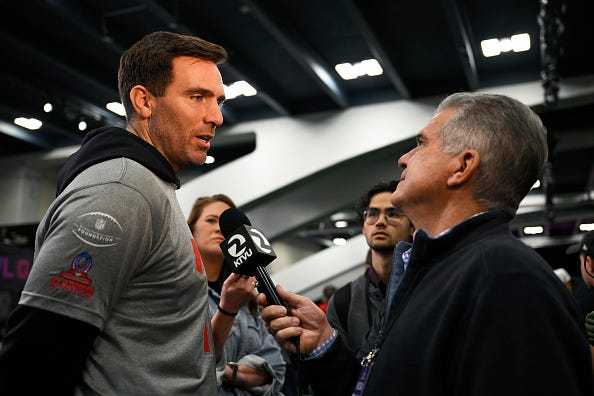
Joe Flacco’s Concussion Confession: A Veteran QB’s Blunt Take on Football’s “Softer” Evolution
The NFL’s relentless march toward player safety is a narrative etched into the modern rulebook. But what happens when a Super Bowl MVP and 16-year veteran pushes back on the very premise of that protection? In a candid and provocative interview, Cincinnati Bengals backup quarterback Joe Flacco didn’t just critique modern officiating; he delivered a jarring statement on the sport’s cultural shift, declaring that players of his era “signed up to get concussions.”
Appearing on Kevin Clark’s “This is Football” podcast, Flacco, 39, offered a raw, unfiltered perspective that serves as a time capsule from a rapidly fading version of professional football. His comments, equal parts rant and requiem, expose the widening generational chasm in how players view risk, toughness, and the essence of the game itself.
The Generational Divide: “Battle-Tested” vs. Potential
Flacco, who entered the league in 2008, positions himself at a pivotal inflection point. He argues that the development pipeline and the very mentality required to survive in the NFL have fundamentally changed.
“I don’t think anybody coming into the league these days is quite as battle-tested as guys that came into the league 15 years ago,” Flacco stated. He pointed to a system that now shepherds elite high school recruits through college based on “potential,” contrasting it with an earlier era where overcoming adversity was a prerequisite. This, he believes, forged a different kind of competitor.
His analysis touches on a real debate in scouting circles: is the modern, spread-offense college game adequately preparing quarterbacks for NFL punishment and complexity? Flacco’s implication is clear—the “tougher times” of his formative years created a resilience that he sees as a diminishing asset.
A Rant Against “Game-Changing” Flags: The Roughing the Passer Dilemma
The core of Flacco’s frustration lies with the rules designed to protect players like him. He views penalties for hits on quarterbacks, particularly roughing the passer calls, as a corrosive element that removes agency from players and injects arbitrary officiating into critical moments.
- “I don’t think it should be roughing the passer when they land on us. I don’t think being slapped in the head should be roughing the passer.”
- “It honestly annoys me, because it affects games in a negative way at random times.”
- “These 15-yard penalties in big situations… they change these games.”
Flacco’s grievance isn’t with safety per se, but with the application of rules that, in his view, criminalize football contact. “I know CTE is a thing these days and all that. But it’s football,” he said, drawing a stark line between acknowledging science and accepting the sport’s inherent violence.
He extends this to defense as a whole, arguing that aggressive defense has been legislated out by the threat of massive fines, altering the strategic balance of the game he learned.
“We Signed Up to Get Concussions”: The Mindset Gap
This is where Flacco’s comments transcend typical “old school” grumbling and enter controversial territory. In explaining the mindset gap, he articulated a contract with danger that younger players now reject.
“We signed up to play football. And I do think that guys of my generation probably benefit a little bit from having that mindset,” Flacco said. He described modern players looking at him “like I’m crazy” for wanting physical play. This culminated in his most stark admission: “Listen, we signed up to get concussions. We signed up to get hurt. It is what it is.”
This statement is a lightning rod. It is not a denial of CTE’s dangers, but a stark acknowledgment of the known, accepted risks of his professional choice—a form of occupational hazard that the league and culture are now desperately trying to mitigate. It highlights a profound philosophical shift: from an era of stoic acceptance to one of proactive prevention.
Analysis & The Point of No Return
Flacco’s rant is more than nostalgia; it’s a diagnosis of irreversible change. He is correct that the NFL is not going back. The league’s legal and moral imperatives, driven by a deeper understanding of brain trauma in football and massive liability settlements, make a return to his preferred style impossible.
Expert analysis suggests Flacco is voicing the last gasp of a dying football ideology. His comments reflect:
- A Clash of Eras: He is a bridge between the brutal, “Jacked Up” era of NFL Films and today’s safety-first protocol.
- The Quarterback Paradox: He critiques rules that exist primarily to protect his own position, valuing game integrity over personal safety.
- The Development Conundrum: His point on “battle-testing” raises valid questions about whether the modern game adequately prepares players for physical adversity.
However, the financial and scientific realities of the sport are overwhelming. The NFL cannot, on one hand, settle a billion-dollar concussion lawsuit and, on the other, promote a product where veterans proudly state they “signed up” for brain injury. The cognitive dissonance is unsustainable.
Conclusion: A Veteran’s Lament in a New Football World
Joe Flacco’s podcast comments are not a blueprint for the future; they are a eulogy for the past. He has articulated the visceral frustration of a competitor who believes the game’s soul—its unscripted, brutal, player-driven consequences—is being sanitized away by well-intentioned but, in his view, game-altering rules.
His controversial quarterback take forces a difficult conversation about risk, consent, and the authentic texture of professional football. While his perspective will be criticized as reckless in the age of CTE awareness, it represents a genuine, rapidly disappearing viewpoint from inside the helmet.
The NFL of 2024 and beyond belongs to the players who look at Flacco like he’s crazy. The league will continue to evolve, prioritizing longevity and health over the gladiatorial ethos he describes. Flacco’s rant is powerful precisely because it is a fading echo. It is the sound of a generation that played by one set of rules—both written and unwritten—watching the game transform into something fundamentally different, knowing there’s no flag on the play to bring back the past.
Source: Based on news from Yahoo Sports.