Legendary College Football Coach Lou Holtz Dies at 89, Leaves Legacy of Faith and Grit
The world of college football has lost one of its most iconic and distinctive figures. Legendary college football coach Lou Holtz, the charismatic leader who guided the University of Notre Dame to its last national championship and became a beloved national symbol of underdog tenacity, passed away on Wednesday. He was 89 years old. His family confirmed his peaceful passing, surrounded by loved ones at his home in Orlando, Florida.
Holtz’s death comes just days after he made one of his final public appearances, offering poignant commentary on national events. His life was a testament to a simple, disciplined philosophy that transformed programs and inspired generations of players and fans far beyond the gridiron.
A Coaching Journey Forged in Underdog Spirit
Lou Holtz’s path to immortality was anything but straightforward. Standing a diminutive 5’10” and speaking with a pronounced lisp, he was the physical antithesis of the classic football titan. Yet, what he lacked in stature, he compensated for with an incisive football mind, an unmatched motivational prowess, and an unwavering belief in fundamental execution. His 33-year head coaching career was a masterclass in program building, taking over struggling teams and willing them into relevance.
His resume is a map of college football revitalization:
- William & Mary (1969-1971): Secured the program’s first conference title in decades.
- North Carolina State (1972-1975): Won the ACC Championship and three bowl games.
- Arkansas (1977-1983): Led the Razorbacks to multiple top-10 finishes and a share of the 1978 Southwest Conference title.
- Minnesota (1984-1985): Engineered a dramatic turnaround, taking the Gophers to a bowl game in his first season.
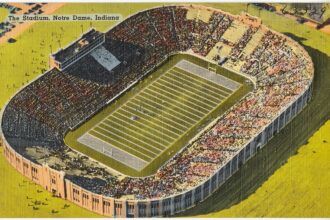
But it was his 11-year tenure in South Bend that cemented his legendary college football coach status. Taking over a Notre Dame program adrift in 1986, Holtz immediately reinstated a culture of hard-nosed defense, a punishing ground game, and absolute accountability. The result was a magical 1988 season, culminating in a perfect 12-0 record and a national championship victory over West Virginia in the Fiesta Bowl. For a generation of fans, Holtz was Notre Dame football—the shrewd strategist on the sideline, the quick-witted commentator in the post-game interview, and the moral compass for his team.
More Than a Coach: The Holtz Philosophy of Life
To remember Lou Holtz solely for his 249-132-7 career record is to miss the essence of his impact. He was a life coach who used football as his vehicle. His famous “Do Right” rule was the bedrock of his program. Players knew that success on the field was contingent upon discipline, punctuality, and integrity off it. He distributed printed lists of personal goals and life principles to his teams, emphasizing faith, family, and education alongside football.
His motivational speeches, often laced with self-deprecating humor and parables, are the stuff of legend. He spoke of “winning one for the Gipper” not as a cliché, but as a call to honor past sacrifices with present effort. This philosophy resonated deeply, creating a bond with his players that lasted lifetimes. In an era increasingly defined by transactional relationships, Holtz’s approach felt refreshingly rooted in timeless values. His recent, final public reflection on the attempted assassination of former President Donald Trump on OutKick’s “Don’t @ Me with Dan Dakich” showcased his enduring perspective, focusing on national unity and resilience—themes that mirrored his coaching creed.
Legendary college football coach Lou Holtz understood that his platform extended beyond Saturdays. He was a devout Catholic, a devoted family man, and after retiring from coaching, a successful television analyst and author. His voice, both literal and figurative, remained a constant in the American sports landscape, always advocating for effort, optimism, and doing the right thing.
The Enduring Legacy and a Changing Game
Holtz’s passing prompts a moment of reflection on the evolution of college football. The sport he dominated in the 80s and 90s is almost unrecognizable today. The transfer portal, Name, Image, and Likeness (NIL) rights, and conference realignment have created a dynamic, player-empowered environment. The long-term building projects Holtz specialized in are now challenged by annual roster volatility.
So, what is the Lou Holtz legacy in this new era? It is foundational. While the mechanisms have changed, the core requirements for success have not. The analysts and experts agree: culture still matters. Holtz was the ultimate culture architect. He proved that a clearly defined, rigorously enforced system of beliefs could elevate talent and create teams greater than the sum of their parts. Modern coaches who achieve sustained success, like a Nick Saban or a Dabo Swinney, are, in their own ways, culture CEOs first—a page taken directly from the Holtz playbook.
Furthermore, his mastery of motivation and psychological preparation remains a textbook study. In a sport where every team has access to similar training and film technology, the ability to connect with and inspire 18-to-22-year-olds is the ultimate differentiator. Holtz’s unique blend of humor, challenge, and care remains the gold standard.
A Final Whistle: Remembering a True Original
The news that legendary college football coach Lou Holtz died at 89 marks the closing of a profound chapter. He was not just a winner; he was an original—a character who colored the sport with his personality and principles. His life was a testament to the power of overcoming limitations, of believing fiercely in a system, and of leading young men with a combination of toughness and love.
As tributes pour in from former players, rivals, and fans, the consistent themes will be his wisdom, his wit, and his unwavering faith. He restored Notre Dame to its pinnacle, but his influence cannot be confined to one campus. It lives on in every coach who preaches fundamentals, in every player who chooses the harder right over the easier wrong, and in every underdog who believes that preparation and heart can overcome any obstacle.
The football field is quieter today. The sharp, raspy voice drawing up a game-winning play or delivering a punchline with perfect timing is silent. But the echoes of Lou Holtz’s philosophy—the relentless pursuit of excellence, the commitment to integrity, and the unshakeable belief that any goal is achievable with the right plan and effort—will resonate for as long as the game is played. He wasn’t just a coach; he was a compass, and his true legacy is the countless lives he pointed in the right direction.
Source: Based on news from Fox Sports.