Navigating the Gauntlet: A Deep Dive into the NCAA Tournament’s Loaded East Regional
The NCAA Tournament selection committee doesn’t always deal in fairness; it deals in drama, narratives, and, above all, competitive fire. Nowhere is that more evident than in the bracket for the 2024 East Regional. To call it “stacked” is an understatement. It is a brutal, beautiful collection of blue-bloods, resurgent powers, and teams peaking at the perfect time, all crammed into one 16-team path to the Final Four. The team that emerges from this crucible won’t just be talented; they will be tourney-tough, forged in a fire hotter than any other region can provide. From the top seed to the potential second-round matchups, the East is a minefield where a championship pedigree might be the minimum requirement for survival.
The Throne at the Top: Duke and UConn’s Divergent Paths
At first glance, the region’s one-two punch follows the classic script. The No. 1 seed Duke Blue Devils arrive as ACC regular season and tournament champions, a model of consistency under Jon Scheyer. They possess the high-end NBA talent, the systemic discipline, and the aura that comes with the name on the jersey. They are the presumptive favorite, the king of the hill. But the hill is extraordinarily steep.
Lurking as the No. 2 seed UConn Huskies is the defending national champion, a juggernaut built on offensive efficiency and defensive versatility. Despite being the Big East runner-up in both the regular season and conference tournament, no one doubts Dan Hurley’s team’s capability to repeat. Their path, however, is emblematic of the region’s brutality. They aren’t just the two best teams; they are two titans around whom an entire ecosystem of dangerous challengers has been assembled.
The Seed of Discontent: St. John’s and the Region’s Depth
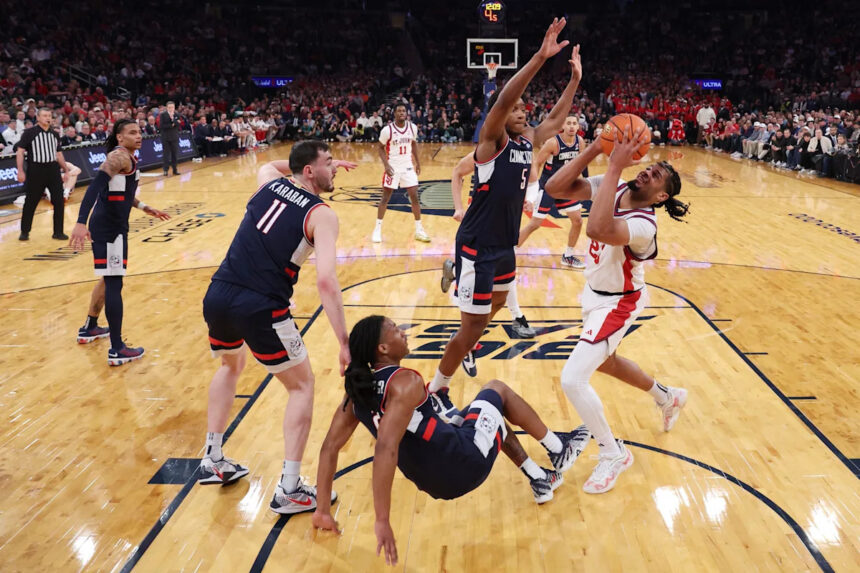
The true measure of a region’s strength isn’t just at the top; it’s in the middle seeds, where potential upsets are born and championship dreams go to die. Here, the East is historically deep. The case of the No. 5 seed St. John’s Red Storm is the most glaring example. Rick Pitino’s squad, winners of 19 of their last 20 games and authors of a 20-point demolition of UConn for the Big East tournament title, feels severely underseeded. Their resume—marked by that lone loss at UConn and a 2-4 record against ranked teams—was picked apart by the committee, landing them in a brutal slot.
This placement creates a cascade of high-stakes matchups. Consider the potential second-round fireworks:
- St. John’s vs. Kansas: A Pitino-led team potentially facing the tradition-rich Jayhawks in the Round of 32 is a television producer’s dream and a coach’s nightmare.
- Auburn (4) vs. BYU (5) or San Diego State (6): Bruce Pearl’s explosive Tigers could face a disciplined BYU offense or the Aztecs, last year’s national runner-up with tournament-tested grit.
- Wisconsin (3) vs. Florida (6): A clash of styles between the Badgers’ methodical pace and Todd Golden’s up-tempo Gators.
Each of these games, occurring before the second weekend, carries the weight and quality of a regional final. There are no easy outs. The committee didn’t just fill the bracket; they pressed every ounce of talent and narrative into these 16 slots.
First-Round Landmines and Potential Cinderella Stories
Before the heavyweight bouts can occur, several first-round games pose immediate danger to the favorites. The No. 12 seed UAB Blazers, champions of the AAC, are precisely the kind of veteran, high-scoring mid-major that gives power conferences fits. They draw the No. 5 seed San Diego State Aztecs in a rematch of a 2021 first-round game, adding a layer of revenge narrative.
Meanwhile, the No. 13 seed Yale Bulldogs are a disciplined, well-coached Ivy League champion capable of slowing the game and frustrating the No. 4 seed Auburn Tigers. Auburn’s reliance on three-point shooting can be volatile, making them susceptible to an off-night against a poised opponent. Even for top-seeded Duke, a matchup with the No. 9 seed Northwestern or the physical No. 8 seed Mississippi State is a serious test before the second round begins. In this regional, the opening act is already main-event quality.
Predictions: Who Survives the East Gauntlet?
Forecasting this region feels less like prediction and more like navigating a labyrinth blindfolded. The margin for error is razor-thin. Here is how the chaos might unfold:
Sweet 16 Surprises: Don’t be shocked if the second weekend features fewer top seeds than any other region. The St. John’s Red Storm, playing with a massive chip on their shoulder, have the coaching and the hot hand to dispatch both South Dakota State and Kansas. Their potential Sweet 16 matchup with No. 1 seed Duke would be a tactical chess match between Scheyer and the legendary Pitino.
Final Four Representative: While Duke’s talent is undeniable, their path is fraught with psychological and physical challenges. No. 2 seed UConn has the benefit of recent championship experience, a critical intangible in high-pressure moments. However, the Huskies’ draw through Florida or Wisconsin and then potentially Auburn or San Diego State is a relentless test of physicality.
The pick here is that UConn’s championship DNA proves to be the decisive factor. They have the roster construction, the coaching adaptability, and the proven ability to win six tough games in a row. They will survive a monumental Elite Eight battle, likely against Duke, in a game that feels like a national championship preview.
Conclusion: A Region Worthy of the Final Itself
The East Regional is not merely a segment of the bracket; it is a standalone tournament of exceptional quality and drama. It has everything: a disrespected powerhouse in St. John’s, a defending champion in UConn, a legendary program in Duke, and a collection of teams in the 3-6 seed range that could win multiple regions. The selection committee created a masterpiece of competitive balance and narrative tension. The team that emerges will not have survived; they will have conquered. They will be scarred, tested, and utterly prepared for anything the Final Four can throw at them. In the end, the East Regional may not just produce a Final Four team—it may produce the national champion.
Source: Based on news from Yahoo Sports.