The Financial Tables Turn: Manchester United’s Money League Slide and Liverpool’s Historic Rise
The tectonic plates of football finance have shifted. For nearly three decades, the Deloitte Football Money League has served as the definitive barometer of commercial and sporting power, and its latest edition has delivered a seismic shock to the English game’s established order. Manchester United, a perennial fixture at the summit of football’s revenue rankings, have tumbled to their lowest-ever position. Meanwhile, their arch-rivals, Liverpool, have ascended to become the highest-earning Premier League club for the first time in the report’s history. This isn’t just a minor blip in the accounts; it’s a symbolic power shift that reflects a dramatic reversal of fortunes on and off the pitch.
A Stark Descent: The Unraveling of the United Commercial Juggernaut
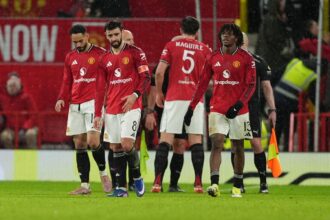
Manchester United’s commercial model was long considered the gold standard, a seemingly unstoppable revenue-generating machine capable of weathering on-pitch storms. Their fall to their lowest Money League ranking—reportedly outside the global top five—signals a fundamental crack in that armor. The reasons are multifaceted and form a perfect storm of sporting underperformance and commercial stagnation.
Champions League Absence is the most immediate and financially punitive blow. Missing out on Europe’s premier competition, not just once but in several recent seasons, creates a multi-million pound black hole. The loss is twofold: the direct UEFA prize money and broadcast revenue, and the diminished “coefficient” payments that reward consistent participation. Furthermore, commercial contracts often include clauses that reduce payments when Champions League football isn’t achieved, hitting the club’s brand appeal.
On the pitch, a prolonged period of instability has eroded the global brand’s lustre. Constant managerial changes, high-profile player recruitment missteps, and a lack of a coherent football identity have translated into a product that is less attractive to broadcasters, sponsors, and fans. The Glazer ownership remains a focal point for fan discontent, impacting matchday atmosphere and, indirectly, the club’s marketable “aura.” While commercial revenue remains robust, it is no longer growing at a rate that outpaces their revitalized rivals.
The Anfield Ascent: How Liverpool Engineered a Financial Revolution
Liverpool’s rise to the pinnacle of Premier League earnings is a masterclass in modern club building, where sporting success and commercial growth are inextricably linked. The club has executed a near-perfect alignment of its on-field philosophy, business strategy, and global fan engagement. Their revenue surge is built on three pillars:
- Consistent On-Pitch Excellence: Under Jürgen Klopp, Liverpool have been perennial contenders, winning the Premier League and Champions League while consistently reaching the latter stages of all competitions. This delivers maximum broadcast revenue and hefty performance bonuses.
- Strategic Commercial Expansion: Liverpool have moved away from a reliance on a few major sponsors to a diversified portfolio of “official partners.” They have also been aggressive in renegotiating key deals, such as their kit supplier contract, to reflect their renewed global status.
- Anfield’s Rebirth: The phased expansion of Anfield’s main stand and the imminent completion of the new Anfield Road stand have significantly boosted matchday revenue. Creating a larger, modernized stadium while preserving its iconic atmosphere has been a financial game-changer.
Crucially, Liverpool’s commercial team has successfully monetized the club’s global fanbase and emotional connection, translating the passion of the Klopp era into tangible financial growth. Their success proves that in today’s game, the most powerful commercial engine is a winning team playing an attractive, identifiable style of football.
Expert Analysis: The New Financial Playbook
This shift signifies more than just two clubs swapping places; it highlights a fundamental change in the football financial landscape. The old model, where global commercial appeal could somewhat insulate a club from cyclical sporting downturns, is under severe threat. Manchester United’s experience shows that brand equity can depreciate.
“The Deloitte report underscores a critical evolution,” notes a leading football finance analyst. “Revenue is now more tightly coupled with contemporary sporting performance than ever before. Clubs can no longer trade on past glory. The digital age and the sophistication of modern sponsorship deals mean partners are paying for current global engagement, social media buzz, and Champions League exposure, not just a historic badge.”
Broadcast revenue dynamics are also pivotal. The Premier League’s immense equal share cushions all clubs, but the merit-based portion and, more importantly, European competition money create a growing gap. The financial might of state-backed clubs like Manchester City and the global commercial machines like Real Madrid and Barcelona further raise the bar, making United’s slide more pronounced.
Future Forecast: Can United Recover? Will Liverpool Sustain?
The road ahead presents clear challenges and opportunities for both clubs. For Manchester United, the path to financial recovery is singular: achieve consistent top-four finishes and deep Champions League runs. Sir Jim Ratcliffe’s INEOS investment and impending control of football operations bring hope of a more modern, data-driven sporting project. Success will reboot commercial growth, but the competition is fiercer than ever. They are playing catch-up in a race they once led.
For Liverpool, the challenge is one of transition and sustainability. Navigating the post-Klopp era will be their biggest test. Maintaining their elite sporting level is essential to sustaining this revenue peak. They must also continue to innovate commercially, particularly in digital and direct-to-consumer spaces, to build resilience for the inevitable cycles of a football team. The new Anfield expansion will provide a steady revenue floor, but the ceiling is determined by trophies and titles.
Looking at the broader Premier League, this development intensifies the financial arms race. Tottenham’s world-class stadium sets a new matchday benchmark, Arsenal’s return to the Champions League boosts their numbers, and Manchester City’s dominance continues to yield rewards. The fight for Money League positions within England is now a brutal proxy for the fight for top-four Premier League finishes.
Conclusion: A Defining Moment in Football’s Financial Era
The latest Deloitte Football Money League is more than a spreadsheet; it is a narrative of decline and ascent, of missed opportunities and executed plans. Manchester United’s fall to their lowest ranking is a stark warning that even the most iconic brands are vulnerable when sporting success falters. Conversely, Liverpool’s historic rise to the top of the English earnings table is a testament to the transformative power of aligning visionary leadership on the pitch with astute strategy off it.
This moment marks a definitive end to an era where commercial revenue could float independently of results. The future of football finance belongs to the clubs that can synchronize sporting excellence with commercial acumen. The message to every executive box is clear: in the modern game, the balance sheet is ultimately written on the grass. The financial league table now, more than ever, reflects the real one.
Source: Based on news from Sky Sports.
Image: CC licensed via commons.wikimedia.org