Mercedes Eyes Alpine: The Strategic Bombshell That Could Reshape F1’s Future
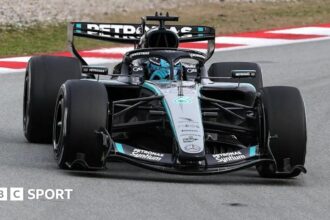
The world of Formula 1 is no stranger to high-stakes poker, but the latest revelation from one of the sport’s most iconic and controversial figures has sent shockwaves through the paddock. Flavio Briatore, the returning executive advisor for Alpine, has confirmed a seismic piece of intelligence: Mercedes is among the parties interested in purchasing a minority stake in Alpine. This is not merely a rumor about a customer engine deal; this is a potential equity play by the eight-time constructors’ champions in a direct rival. The confirmation opens a Pandora’s box of strategic implications, questioning the very fabric of team alliances, technical partnerships, and the future power struggle within the sport.
Briatore’s Bombshell: More Than Just a Rumor
When Flavio Briatore speaks, the F1 world listens—often with a mix of intrigue and skepticism. His recent comments to Italian media, however, carried the weight of an insider tasked with revitalizing the struggling Alpine squad. By confirming Mercedes interest, Briatore has performed a masterstroke of market positioning. He has publicly validated Alpine’s value, signaling to other potential investors that the team is a coveted asset with top-tier suitors. This move transforms Alpine from a team in crisis to a potential strategic jewel.
For Mercedes, the interest is profoundly significant. The Brackley-based squad has long been the pinnacle of corporate efficiency and success in the hybrid era. Their potential move to acquire a stake in Alpine suggests a strategic evolution. It is a departure from being a pure, dominant works team to becoming a strategic investor in the F1 landscape. This could be a hedge against the sport’s ever-tightening budget cap and a way to leverage their immense intellectual property and infrastructure beyond a single team entry.
The Why: Decoding the Strategic Chessboard
On the surface, Mercedes investing in a midfield team like Alpine seems counterintuitive. But scratch beneath the surface, and the potential motivations form a compelling narrative of forward-thinking strategy.
- Power Unit Supremacy Post-2026: The new 2026 power unit regulations are a reset. Having a second team running Mercedes PU’s in a works-like environment (through a stake) provides double the data, accelerating development and reliability. It’s a direct counter to Red Bull’s now in-house Ford partnership and Ferrari’s long-standing Haas alignment.
- Budget Cap Arbitrage: With a hard budget cap limiting spending on the primary Mercedes-AMG F1 team, investing capital into a minority stake elsewhere is a permissible use of resources. It allows the Mercedes group to expand its F1 influence and talent pool without breaching sporting regulations.
- Securing the Driver Pipeline: Alpine’s driver academy is among the best in the sport, having produced the likes of Oscar Piastri. A strategic link could give Mercedes preferential access to future superstar talent, ensuring their long-term succession planning.
- Manufacturer Consolidation: The automotive industry is in flux. Renault Group’s commitment to Alpine’s F1 program has wavered. A Mercedes buy-in could secure Alpine’s future, potentially evolving it into a “Mercedes B-team” or a technology incubator, much like the old McLaren-Mercedes relationship in reverse.
Potential Pitfalls and Regulatory Hurdles
This potential deal is fraught with complexity. The FIA’s regulations and the Concorde Agreement are designed to prevent collusion and protect the integrity of the competition. A minority stake purchase would be scrutinized like never before.
Key questions immediately arise: How would information firewalls be policed? Could Alpine truly compete independently against its part-owner? The sport would need absolute assurances to prevent any semblance of a two-team alliance that could distort the championship. Furthermore, Renault’s pride as a full works manufacturer is at stake. Would they accept a dilution of their control, even if it brings much-needed capital and technical collaboration? The corporate and sporting governance of such a partnership would be a minefield to navigate.
Predictions: How This Could Unfold and Reshape F1
If this deal proceeds, even in a limited form, it will trigger a chain reaction across the Formula 1 grid. We are potentially witnessing the dawn of a new era of strategic conglomerates.
First, it would likely force other top teams to consider similar diversification. Could Ferrari seek a deeper equity tie-in with Haas or another squad? Would Red Bull, through its AlphaTauri (now Visa Cash App RB) model, formalize a two-team ownership structure? The Alpine buy-in could normalize financial engineering at the highest level of the sport.
Second, for Alpine, a Mercedes-backed infusion could be transformative. It could mean:
- Accelerated access to top-tier Mercedes PU knowledge and possibly non-listed parts.
- Greater financial stability to attract and retain top engineering talent.
- A clearer, more competitive path up the grid, potentially breaking into the top four consistently.
However, the risk for Alpine is a loss of identity, becoming perceived as a satellite operation rather than a proud French works team. For Mercedes, the risk is distraction and reputational damage should the partnership be seen as anti-competitive.
Conclusion: A Watershed Moment in the Making
Flavio Briatore’s confirmation of Mercedes interest in Alpine is far more than a transfer rumor. It is a signal flare illuminating the next phase of Formula 1’s evolution. In an era defined by cost caps and technical convergence, the battleground is shifting from pure on-track spending to off-track strategic investment and alliance-building.
This potential minority stake is a probe into the future—a test of regulatory frameworks, team independence, and the very definition of competition. Whether the deal ultimately happens or not, its mere consideration has changed the conversation. It reveals that the sport’s most successful modern entity, Mercedes, is playing a longer, more sophisticated game. For Alpine, it represents a lifeline and a chance at relevance. For F1, it could be the first move in a reshuffling of the grid’s power dynamics, where financial stakes and data alliances become as crucial as a perfect lap in qualifying. The game within the game has just become infinitely more interesting.
Source: Based on news from Sky Sports.
Image: CC licensed via www.flickr.com