Kimi Antonelli’s Harrowing 25G Crash Shakes Australian GP Practice
The serene morning air of Melbourne’s Albert Park circuit was shattered in a heartbeat. For a few terrifying seconds, the future of Mercedes-AMG Petronas F1 Team seemed to hang in the balance as their 19-year-old protégé, Kimi Antonelli, endured a violent, high-G-force crash that left the paddock holding its breath. In a dramatic start to the Australian Grand Prix weekend, the highly-touted Italian rookie walked away unscathed from a wreck that underscored the razor-thin margin between control and catastrophe in Formula 1.
A Moment of Mayhem at Turn One
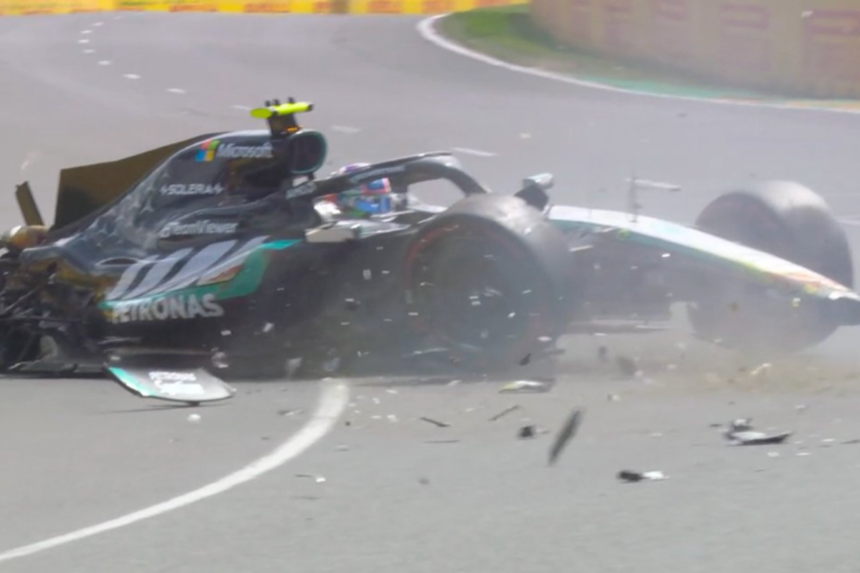
The incident occurred during Free Practice 1, a session typically dedicated to data gathering and setup refinement. Antonelli, completing a push lap, approached the high-speed, braking zone of Turn One. What happened next was a rapid sequence of disaster. The rear of the W15 snapped away, sending the Mercedes into a dizzying spin. The car slid backwards over the unforgiving kerbs, which then launched it into a sickening, multi-impact collision with the Tecpro barrier.
The violence of the impact was stark. The Mercedes was pitched back onto the circuit, leaving a trail of carbon fibre debris across the track. The severity was immediately apparent, triggering a red flag and the swift deployment of the FIA medical car. Initial data from the team’s onboard sensors revealed the shocking force of the impact: a peak of over 25G. To put that in perspective, a 25G deceleration is akin to a head-on collision at highway speeds, compressed into a fraction of a second. It’s a testament to the incredible safety of modern F1 machinery that Antonelli was able to climb out unaided.
- Location: High-speed braking zone at Turn One, Albert Park.
- Sequence: Loss of rear grip, snap oversteer, backward slide over kerbs, heavy side-on impact with wall, rebound onto track.
- Key Metric: Impact force registered at over 25G, triggering mandatory medical checks.
- Immediate Response: Session red-flagged, medical car deployed, Antonelli reported he was “OK” over radio.
Garage Reactions and Antonelli’s Resilience
In the Mercedes garage, the atmosphere turned from focused to frozen. Team Principal Toto Wolff, watching from the pit wall, was seen visibly wincing and turning away as the crash unfolded—a raw, human reaction from the usually stoic Austrian. The concern was palpable; Antonelli isn’t just another driver. He is the crown jewel of the Mercedes junior program, a driver upon whom the team’s long-term future hopes are increasingly pinned.
Yet, the most telling moment came after the adrenaline faded. Instead of retreating to the motorhome, a shaken but steadfast Antonelli returned directly to the engineering bay. There, he was immediately immersed in data with his race engineer, the legendary Peter “Bono” Bonnington. This wasn’t a driver seeking solace; this was a racer seeking answers. Analysing the crash data with Bonnington—the voice of strategy for seven Lewis Hamilton world titles—signaled a remarkably mature and analytical response to a traumatic event. It demonstrated a mindset focused on understanding the failure, be it car setup, driver error, or an external factor like a gust of wind or kerb strike, rather than dwelling on the scare.
“The most important thing is that Kimi is okay,” Wolff later stated to media. “The car did its job, the safety structures worked. It’s a big shunt, but his first question was about what happened and why. That’s the mentality we want.”
Expert Analysis: The Fine Line for a F1 Rookie
From a technical perspective, crashes like this at a street-adjacent circuit like Albert Park are particularly jarring. The walls are close, and the consequences of a mistake are magnified. For a rookie like Antonelli, these practice sessions are about finding the absolute limit of the car—a limit that is invisible and constantly shifting with fuel load, tyre condition, and track evolution.
“What we likely saw was a classic case of snap oversteer under braking,” explains a former F1 performance engineer. “At that corner, you’re carrying immense speed before a heavy brake application. If the rear axle loses aerodynamic load or the driver gets a millisecond of brake bias wrong, the car can pivot around in an instant. The kerbs at Albert Park are also notoriously punitive; hitting them sideways, as Antonelli did, acts like a ramp, exacerbating the crash.”
The psychological component is equally critical. A crash of this magnitude can either shatter a young driver’s confidence or forge it into something stronger. Antonelli’s immediate return to engineering debriefs is a strong indicator of the latter. However, the true test will come in FP2 or qualifying, when he must attack the same corner, at the same speed, with the memory of the impact fresh in his mind. How he and the Mercedes team manage that psychological recovery will be as important as repairing the chassis.
Predictions for the Australian GP Weekend
Despite the dramatic start, Antonelli’s weekend is far from over. The Mercedes team now faces a significant workload to rebuild the car, ensuring no hidden damage compromises his running for the rest of the event. For Kimi, the predictions are twofold:
1. A Cautious, Data-Driven Approach: Expect Antonelli to be methodical in rebuilding his pace. He will likely use subsequent sessions to gradually rebuild confidence, leaning heavily on simulator correlation and Bono’s guidance. The goal will shift from ultimate lap time to consistent, clean running.
2. A Testament to Modern F1 Safety: This incident will once again highlight the phenomenal advances in cockpit safety, from the Halo device to the survival cell. Antonelli’s walk-away is the best possible advertisement for the FIA’s relentless safety push.
While a points finish may now be a taller order given the potential for grid penalties if parts need changing, the real victory has already been won. He emerged unharmed. The remainder of the weekend will now be a story of resilience, a narrative far more defining for a rookie’s career than a single flying lap.
Conclusion: A Rite of Passage Forged in Carbon Fibre
Kimi Antonelli’s crash in Melbourne was a brutal, visceral reminder of the dangers inherent in the pursuit of speed. It was a moment that showcased fear in Toto Wolff’s eyes, the swift efficiency of F1’s safety protocol, and the staggering forces drivers silently agree to confront. Yet, beyond the shattered carbon fibre and the scattered debris, a more compelling story emerged.
This was a rite of passage. In the crucible of a 25G impact, Antonelli displayed the core attributes Mercedes believes will make him a champion: a cool head under extreme pressure and an insatiable, analytical drive to improve. Walking away from such a crash is a physical triumph for the sport’s engineers. Walking straight into a data debrief to understand it is the mark of a driver with a champion’s mentality. The Australian Grand Prix weekend may have been violently disrupted for Kimi Antonelli, but in his response, he may have just cemented his place as Formula 1’s next formidable talent.
Source: Based on news from Yahoo Sports.