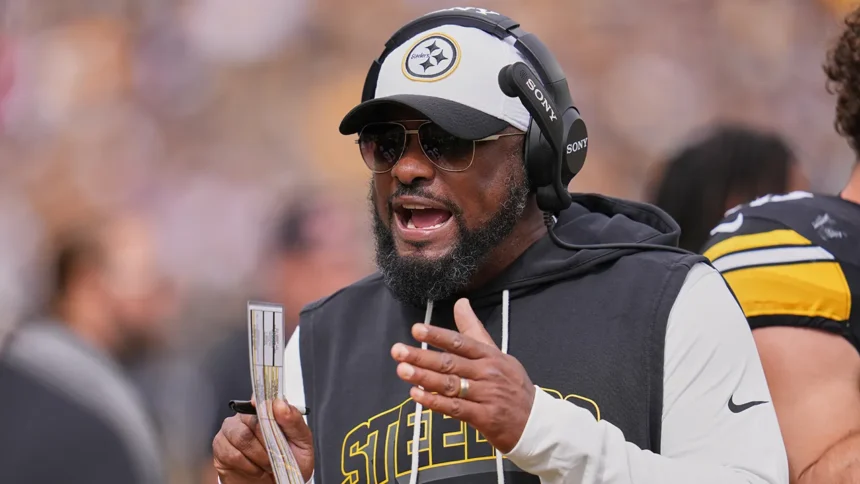
Mike Tomlin’s Era Ends: Steelers Head Coach Steps Down After 17 Seasons
The winds of change are howling through the Steel City with a force not felt in nearly two decades. According to multiple reports, Mike Tomlin is stepping down as head coach of the Pittsburgh Steelers, ending one of the most remarkable and consistent tenures in modern NFL history. The decision, reported Tuesday, follows the Steelers’ blowout loss to the Houston Texans in the AFC Wild Card Round, a defeat that extended a frustrating postseason losing streak to seven games. For a franchise synonymous with stability, Tomlin’s departure marks the end of an era and the beginning of a profound, uncertain new chapter.
A Legacy Forged in Steel: Unparalleled Consistency Meets Postseason Frustration
Mike Tomlin’s legacy in Pittsburgh is complex, defined by both incredible regular-season fortitude and recent playoff disappointments. Hired in 2007 at just 34 years old, Tomlin immediately upheld the Steelers standard, leading the team to a Super Bowl XLIII victory in his second season and an appearance in Super Bowl XLV two years later. His career record of 173-100-2 stands as a testament to his week-in, week-out ability to compete. Most famously, he never suffered a losing season—a 17-year run of .500 or better that placed him among legends like Tom Landry and Bill Belichick.
However, the latter half of his tenure was shadowed by playoff shortcomings. The recent wild-card loss to Houston was a microcosm of recent struggles: the team appeared unprepared and overmatched. This seven-game postseason losing streak, dating back to the 2016 AFC Championship game, became the defining narrative around the team. The weight of that streak, coupled with the challenge of navigating a post-Ben Roethlisberger landscape, ultimately framed Tomlin’s final years. His departure is not just about one bad loss; it is the culmination of mounting pressure to reclaim postseason glory.
Expert Analysis: Why Now, and What Defines the Tomlin Era?
From a journalistic and football operations perspective, Tomlin’s decision to step down now is a seismic event. It represents a voluntary conclusion to a tenure that most believed would only end on his terms. The timing suggests a mutual understanding between coach and organization that the cycle had run its course.
Key pillars of the Mike Tomlin era include:
- The Unwavering “Standard”: Tomlin’s famous mantra, “The standard is the standard,” epitomized his approach. He demanded excellence regardless of circumstance, fostering a culture of resilience that produced countless comeback victories and kept the Steelers in contention annually.
- Defensive Identity: A defensive backs coach by trade, Tomlin maintained the Steelers’ historic defensive identity. While the “Steel Curtain” predated him, units under his watch, led by players like Troy Polamalu, James Harrison, T.J. Watt, and Cameron Heyward, were consistently formidable.
- Locker Room Management: Tomlin was a masterful manager of personalities, from veteran stars to disgruntled players. His ability to command respect and navigate internal dynamics was arguably his greatest strength, keeping the team focused through numerous external distractions.
- The Postseason Paradox: The analysis is incomplete without addressing the playoff woes. Critics pointed to outdated offensive schemes, questionable in-game adjustments, and a failure to advance past the first round since 2016. This dichotomy—regular-season titan, postseason struggler—will dominate his historical evaluation.
The Steelers’ Crossroads: Predicting the Path Forward
The Pittsburgh Steelers now face their most critical hiring process since they chose Chuck Noll in 1969. The organization, known for its internal continuity, must look outward for only the third head coach in over half a century. The direction they choose will signal their vision for the future.
Potential Candidate Profiles:
- The Offensive Innovator: With a young quarterback in Kenny Pickett (or a potential new draft pick), the Steelers may seek a modern offensive mind to revitalize a unit that has often lagged. Names like Detroit Lions offensive coordinator Ben Johnson or Houston Texans offensive coordinator Bobby Slowik could fit this mold.
- The Defensive-Minded Successor: Staying true to their roots, Pittsburgh could target a leader who can maximize a defense still featuring Watt and Heyward. Current Steelers senior defensive assistant/linebackers coach Brian Flores or other defensive coordinators with head coaching experience may be considered.
- The Culture Carrier: The Rooney family may prioritize a leader who can replicate Tomlin’s cultural strength. A current head coach with a proven leadership record or a former head coach known for commanding respect could be a target to maintain the franchise’s unique ethos.
The prediction here is that the Steelers will seek a blend of these traits: a leader with the strength to uphold the demanding Pittsburgh culture, but paired with a forward-thinking offensive philosophy to unlock the team’s potential in a modern AFC dominated by high-powered attacks.
A Conclusion on the End of an Era: Respect, Results, and Renewal
Mike Tomlin’s resignation is more than a coaching change; it is the closing of a defining chapter for one of sports’ most storied franchises. He presided over the Steelers with dignity, intensity, and an unmatched level of consistent performance. He coached a Hall of Fame quarterback, a Hall of Fame safety, and a generation of Steelers who knew only his leadership. For 17 seasons, he was the face, voice, and uncompromising spirit of Pittsburgh football.
Yet, the NFL is a results-oriented business, and the ultimate result—a championship—had become elusive. The postseason losing streak created a stagnation that a change at the top was destined to address. As the news breaks and the football world reacts, the overwhelming sentiment will be one of respect for Tomlin’s monumental career, coupled with immediate speculation about the future.
For the Pittsburgh Steelers, the path forward is uncharted. The weight of history and expectation now falls on a new set of shoulders. The “Tomlin Standard” is now part of the franchise’s legacy, and the next coach will be tasked not only with building his own winner but with emerging from the long shadow of a man who never knew a losing season. The steel mill’s furnace has cooled, but in Pittsburgh, the fire to win burns eternal. The next forge is about to begin.
Source: Based on news from Fox Sports.