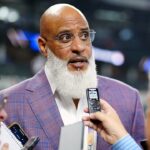
MLBPA Earthquake: Tony Clark Expected to Resign Amid Federal Financial Probe, Sources Say
In a stunning development that threatens to upend Major League Baseball’s labor landscape, Tony Clark, the powerful executive director of the Major League Baseball Players Association (MLBPA), is reportedly expected to resign. This bombshell news, first reported by multiple outlets, comes as Clark and the union itself are under a federal investigation by the U.S. Attorney’s Office for the Eastern District of New York for alleged financial improprieties. The potential departure of the union’s top official, on the eve of what was expected to be a critical period for player rights, sends shockwaves through the sport and raises urgent questions about governance, transparency, and the future of collective bargaining.
A Sudden Fall from Grace: From Labor Leader to Investigation Target
Tony Clark, a former All-Star first baseman who rose to lead the union in 2013, was poised to be the central figure in the next chapter of MLB labor relations. Having steered the players through the contentious 2021-22 lockout that delayed the season, Clark was expected to continue his aggressive stance against ownership in future negotiations. Instead, his tenure appears to be ending under a cloud of federal scrutiny.
The investigation, as detailed by reports, centers on the alleged misuse of union licensing money and whether Clark or other union officials improperly used these funds or union equity for personal gain. The MLBPA, which manages lucrative group licensing deals for player merchandise and video game rights, controls a significant financial war chest intended to benefit the collective membership. Any suggestion that these funds were diverted is a grave allegation that strikes at the heart of the union’s fiduciary duty to its players.
Fox News Digital reached out to the MLBPA for comment but did not receive an immediate response, amplifying the silence surrounding the unfolding crisis. The lack of official confirmation from the union has only fueled speculation and concern among players and agents across the league.
The Broader Context: A Perfect Storm of Scandal and Sport
This crisis for the MLBPA erupts against a backdrop of heightened sensitivity around integrity and finance in professional sports. The explosive growth of legalized sports betting has leagues and unions on high alert, vigilant against any potential scandals that could undermine public trust. As noted in recent commentary, including segments on Fox News’ ‘Special Report,’ the concerns around betting scandals and financial misconduct are at a fever pitch across all sports.
While Clark’s investigation is unrelated to gambling, it touches the same nerve: the expectation of integrity from those in positions of power. The federal probe into the players’ union creates a parallel credibility crisis, suggesting internal financial mismanagement at the very organization tasked with protecting players’ economic interests. This dual-front assault on sports’ ethical standing—external threats from gambling and internal threats from corruption—creates a uniquely challenging environment.
- Federal Probe Focus: Alleged misuse of player licensing revenue and union equity.
- Key Concern: Breach of fiduciary duty to the MLBPA’s 1,200+ members.
- Industry Climate: Occurs amid national focus on sports betting integrity and financial transparency.
Expert Analysis: The Immediate Fallout and Labor Implications
The potential resignation of Tony Clark is not merely a personnel change; it is a seismic event in baseball’s labor ecosystem. Clark, as the first former player to hold the position, commanded a unique loyalty within the clubhouse. His expected departure, under these circumstances, leaves a leadership vacuum at a critical time.
“This is a catastrophic breach of trust,” analyzed a veteran sports labor attorney speaking on background. “The union’s strength is its unity. When players start questioning whether their dues and licensing money are being handled properly, that unity fractures. The immediate task won’t be fighting ownership; it will be restoring faith within the ranks.”
The MLBPA executive board, comprised of current players, now faces a series of monumental decisions. They must navigate the ongoing federal investigation, launch a search for a new executive director, and simultaneously prepare for future collective bargaining agreement (CBA) negotiations. The current CBA runs through the 2026 season, but crucial groundwork and strategy are developed years in advance.
Player reactions, while not yet public, are likely a mix of anger, confusion, and betrayal. Agents, who work closely with the union on behalf of their clients, are undoubtedly scrambling for information and assurances. The credibility of the union’s financial stewardship is now a paramount issue, potentially overshadowing all other advocacy work.
Predictions: What Comes Next for the MLBPA and MLB?
The path forward is fraught with complexity. Here is what the industry can likely expect in the coming weeks and months:
1. An Interim Leadership and Internal Audit: The MLBPA will almost certainly appoint an interim director, potentially from within its senior staff or a retired player respected for their integrity. The union’s first official step must be to commission a thorough, independent forensic audit of its finances, specifically targeting the licensing funds in question. Transparency with the membership is non-negotiable.
2. A Protracted Federal Legal Process: The investigation by the Eastern District of New York will proceed on its own timeline. Whether it results in indictments or not, the cloud will remain until it is conclusively resolved. This will be a persistent distraction.
3. A Shift in Labor Strategy: MLB ownership, led by Commissioner Rob Manfred, will be watching closely. While unlikely to publicly exploit the union’s turmoil, the league’s bargaining strategy may subtly shift, perceiving a weakened or distracted adversary. The union’s next leader will need to re-establish authority quickly.
4. A Redefinition of the Executive Director Role: The Clark episode may lead players to seek a leader with a different skill set—perhaps less a former player and more a seasoned lawyer or financial manager with impeccable credentials in governance. The balance between clubhouse credibility and administrative expertise has been fundamentally altered.
Conclusion: A Pivotal Moment for Player Power
The reported expectation of Tony Clark’s resignation marks one of the darkest chapters in the storied history of the MLBPA, an organization built by pioneers like Marvin Miller to champion player rights. The allegations of financial impropriety cut deeper than any lost negotiation; they strike at the covenant between the union and its members.
As the federal investigation unfolds, the immediate future of the union will be defined by its response. It must choose radical transparency, rigorous internal reform, and a recommitment to its core mission: the unflinching protection of its players’ interests, both on the field and off. The coming leadership transition is no longer just about finding a new negotiator; it is about finding a healer, a reformer, and a trustee who can restore the faith that has been so profoundly shaken. The integrity of the game is often discussed in the context of bats, balls, and betting lines. Today, it is being tested in the union’s ledger books.
Source: Based on news from Fox Sports.