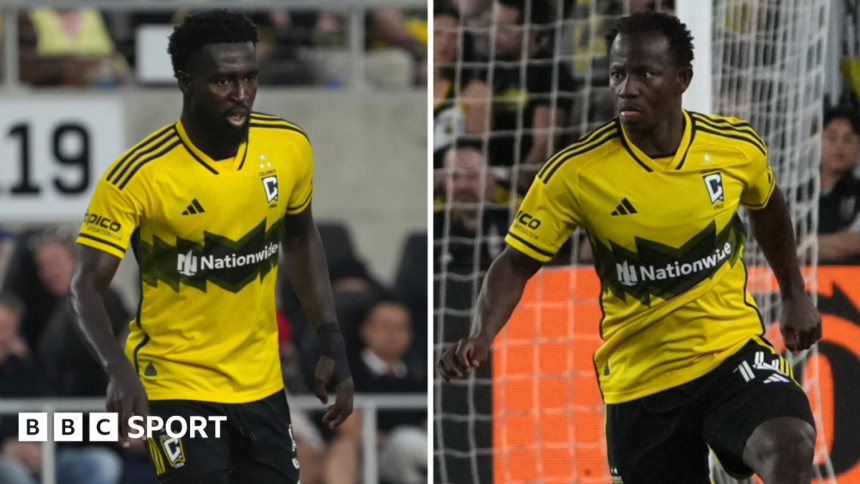
MLS Issues Unprecedented Lifetime Bans to Yaw Yeboah and Derrick Jones for Betting Violations
In a seismic move that sends an unequivocal message across the sporting landscape, Major League Soccer has handed down lifetime bans to midfielders Yaw Yeboah and Derrick Jones for violating the league’s strict integrity rules. The players were found to have placed extensive bets on soccer, including wagers on matches involving their own teams. This landmark decision, stemming from investigations into activities during the 2024 and 2025 seasons, represents the most severe punishment in MLS history for gambling-related misconduct, striking at the very heart of competitive fairness and public trust.
The bans come at a time when sports leagues globally are navigating the complex new reality of widespread legalized sports betting. While partnerships with betting companies have become a significant revenue stream, MLS has drawn a stark, red line with this ruling. The cases of Yeboah, 28, recently signed by Chinese Super League side Qingdao Hainiu after his LAFC contract was terminated, and Jones, 29, released by Columbus Crew last November, now serve as a chilling cautionary tale for every professional athlete in North America.
The Unforgivable Breach: Betting on One’s Own Team
According to the league’s statement, the core of the violation was not merely gambling on soccer, but the specific act of betting on their own teams. This distinction is critical in the world of sports integrity. Placing a wager on a match in which you have the ability to influence the outcome is considered the cardinal sin. It opens the door to potential match-fixing, spot-fixing (manipulating specific in-game events), or the perception thereof, which can be just as damaging to a league’s credibility as the act itself.
Major League Soccer’s integrity protocol is clear and uncompromising. All players, coaches, and officials undergo mandatory training that explicitly prohibits betting on MLS matches, soccer matches globally, or any other sports offered by a sportsbook. The lifetime ban underscores a zero-tolerance policy for the most egregious form of this violation. The league’s investigation, which likely involved collaboration with regulated sportsbooks to monitor betting patterns, found the players’ actions to be “extensive,” suggesting a pattern of behavior rather than a one-off lapse in judgment.
Analysis: A Necessary Shock to the System
From a sporting integrity standpoint, this decision, while harsh, is arguably necessary. The credibility of any competition rests on the fundamental belief that every participant is competing to the best of their ability to win. When an athlete bets on their own team, that foundation crumbles, whether the bet is for or against them.
- For the League: MLS has prioritized long-term integrity over short-term talent retention. Banning two starting-caliber players is a significant competitive loss, but it protects the league’s brand value and the trust of its fans. It demonstrates to broadcast partners, sponsors, and international governing bodies that MLS is serious about policing itself.
- For the Players’ Union: The MLSPA faces a difficult balance between supporting its members and upholding the league’s integrity rules. While they may review the process, the severity of the violation makes a forceful defense challenging. The union’s focus will likely shift to reinforcing education to prevent future cases.
- The Global Context: This mirrors actions taken by other leagues. The NFL suspended several players for at least a season in 2023 for betting violations, while English soccer has issued lengthy bans for similar offences. MLS has now positioned its deterrent at the most severe end of the spectrum.
The timing is also poignant. Both players were already in career transition—Jones without a club and Yeboah having moved abroad. This raises questions about whether personal or professional uncertainty played a role in their decisions, though it does not excuse them. Their bans will be recognized by FIFA, effectively ending their careers at any professional level under FIFA’s jurisdiction.
Predictions and Ripple Effects Across Professional Sports
The fallout from this decision will reverberate far beyond the pitch in Columbus and Los Angeles. We can expect several immediate and long-term consequences.
1. An Era of Hyper-Vigilance: MLS and its club compliance officers will double down on monitoring and education. Expect more frequent, detailed briefings for players, especially young athletes entering the league who have grown up in a culture where sports betting apps are normalized. The definition of prohibited behavior will be drilled in relentlessly.
2. A Deterrent That Will Shape Careers: The phrase “lifetime ban” will now be in the forefront of every MLS player’s mind. The catastrophic financial and reputational cost to Yeboah and Jones—likely forfeiting millions in earnings—will be a powerful tool in preventing future violations. Agents will be forced to have frank, uncomfortable conversations with their clients about the absolute boundaries.
3. Scrutiny on League Partnerships: Critics will rightly point to the inherent tension between leagues profiting from betting sponsorships and punishing players for engaging in the same activity. MLS will need to continue clearly demarcating the line: betting is a legal commercial activity for fans and a strictly prohibited one for insiders with access to non-public information and the ability to affect outcomes.
4. A Benchmark for Other Leagues: The NBA, NHL, and MLB will be watching. While their policies differ, the MLS ruling sets a precedent for the ultimate punishment. It may embolden other leagues to consider stricter penalties for the most serious integrity breaches involving wagering on one’s own sport.
Conclusion: Integrity as the Non-Negotiable Cornerstone
The lifetime bans of Yaw Yeboah and Derrick Jones are a tragic story of potential unfulfilled and careers obliterated by catastrophic choices. However, for Major League Soccer, this was a non-negotiable decision. In the rapidly evolving intersection of sports and gambling, the league has made its paramount value clear: the integrity of the game is sacrosanct.
This is not just about punishing two individuals; it is about protecting the sport for millions of fans, investors, and fellow players. It affirms that no individual is bigger than the collective trust that allows professional sports to exist. As MLS continues its growth trajectory, aiming to sit among the world’s elite soccer leagues, this firm stance on its core principles may be remembered as a painful but essential step in its maturation. The message is now etched in stone for every individual associated with the league: bet on the game you play in, and you bet your entire career on the outcome.
Source: Based on news from BBC Sport.