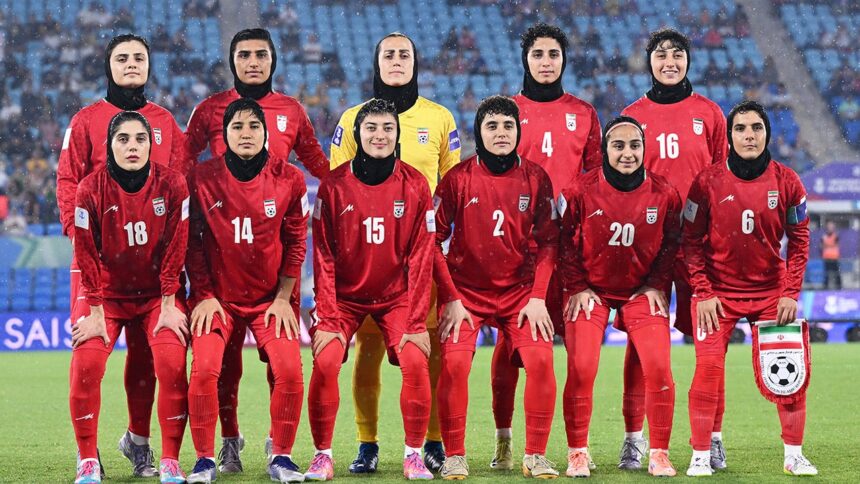
Iranian Women’s Football Exodus: Asylum Offers in Australia Highlight Deepening Crisis
In a quiet, procedural room at an Australian airport, a profound and personal choice was presented, one that underscores the terrifying realities facing women in Iran. As members of Iran’s women’s national football team prepared to board a flight home, Australian officials took them aside, one by one. Away from the gaze of state minders, they were offered sanctuary. The result: a growing exodus of athletic talent and personnel, with another player and a staff member accepting asylum this week, following five players who made the same heart-wrenching decision just days prior. This coordinated intervention by the Australian government is not merely a sports story; it is a stark diplomatic rebuke and a human drama that reveals the intense pressure on Iranian women who dare to step onto a global stage.
A Coordinated Sanctuary: The Australian Intervention
The scene described by Australian Minister for Home Affairs Tony Burke was meticulously planned. In the neutral territory of customs and border control, the mechanism of state protection was activated. “Almost all the Iranian players and many of the support staff were taken aside, individually, as they passed through Australian Customs,” Burke stated. This individual approach was critical, ensuring each person could make a free choice without peer pressure or fear of immediate reprisal from accompanying officials.
The offer itself is a rare and explicit form of humanitarian protection. Australia, by systematically offering asylum to an entire team’s contingent, is making a powerful statement. It signals a recognition that for these women, returning to Iran could result in punishment for their participation in international sport, simply for representing their country while being female. This move transcends standard immigration policy, positioning Australia as a safe harbor for those fleeing gender-based persecution in a specific and high-profile context.
- Individual Interviews: Each person was spoken to privately, ensuring a voluntary decision.
- Safe Environment: The process was conducted without Iranian state officials present, a key factor in enabling genuine choice.
- Expanding Group: The initial five players accepting asylum on Sunday has now grown, confirming the pervasive fear within the squad.
The Roots of Fear: Punishment and Persecution in Iranian Women’s Sports
To understand why a footballer would choose the uncertainty of asylum over returning home as a national team player, one must examine the perilous landscape for Iranian women in sports. The Iranian regime has a long history of suppressing women’s athletic participation, enforcing strict dress codes, and limiting their access to stadiums and resources. Female athletes are often viewed as tools of the state when successful, but as threats to ideological purity when they step out of line.
The fear of punishment upon returning is not paranoia; it is based on precedent. Female athletes have faced intimidation, family harassment, and bans for perceived infractions like not wearing the hijab properly during competition or for speaking out. The national football team itself has been a site of tension, with players previously facing backlash for confronting officials over systemic issues. Accepting asylum is likely seen as a preemptive strike against potential retaliation for the “crime” of having been exposed to Western society and ideals during their tour. The very act of competing internationally can be construed as a form of defiance, making their return a risky proposition.
Geopolitical Echoes: Beyond the Pitch
This sporting asylum crisis does not exist in a vacuum. It reverberates within a broader, tense geopolitical context. As noted in security analyses, such as those by Fox News chief national security correspondent Jennifer Griffin, the international community maintains deep concerns regarding Iran’s internal stability and external actions, from munitions proliferation to oil supply dynamics. The treatment of women is a central pillar of the regime’s ideology, and their suppression is intertwined with its security apparatus.
Australia’s decision, therefore, can be interpreted on multiple levels. Humanitarily, it protects vulnerable individuals. Politically, it is a calibrated critique of the Iranian government’s human rights record, using the global language of sport to amplify the message. It isolates the regime culturally and highlights the desperation of its own citizens, even elite athletes. This incident turns each asylum offer into a diplomatic signal, underscoring a fundamental incompatibility between Iran’s gender policies and the values of the international sporting community.
Analysis & Predictions: The Fallout and Future
The immediate fallout is clear: Iran’s women’s football program is being decimated by the loss of core personnel, setting back development and morale for years. The regime will likely paint the athletes as traitors manipulated by Western propaganda, using their defections to justify even tighter controls on future traveling teams.
Looking ahead, several predictions can be made:
- Stricter Travel Controls: Iran may drastically reduce international travel for women’s teams or only send athletes with deep familial ties in Iran to act as leverage against defection.
- International Sporting Bodies Under Pressure: Organizations like FIFA will face increased calls to sanction Iran for creating an environment where athletes fear persecution, potentially affecting all Iranian football.
- A Blueprint for Other Nations: Australia’s proactive “airport offer” may become a model for other host countries of Iranian teams, in sports or even cultural events, leading to further talent drains.
- Empowerment Through Escape: The athletes who stay may become powerful voices in exile, akin to other Iranian sports defectors, using their platform to advocate for change from abroad.
Conclusion: A Goal for Freedom
The image of footballers choosing asylum is a tragic indictment of a system that fears its own women. These athletes, who dedicated their lives to representing Iran, have been forced to choose between their homeland and their safety, their passion and their freedom. Australia’s intervention, while extraordinary, highlights a failure of the international sporting system to protect athletes from political persecution. The Iranian women’s soccer personnel who stayed are not just seeking new careers; they are refugees from a specific brand of oppression that targets ambition and talent in women. Their cleats may be left behind, but their courage in stepping into an unknown future marks a powerful, silent protest. As the geopolitical tensions surrounding Iran continue, the world must see these women not merely as defectors, but as canaries in the coal mine, signaling the profound human cost of a regime at odds with the basic liberties of half its population. Their most significant victory was not scored on any pitch, but in a quiet airport room, where they chose to win their own futures.
Source: Based on news from Fox Sports.