Pacers’ Offensive Engine Sputters as Knicks Grind Out Gritty 101-92 Road Win
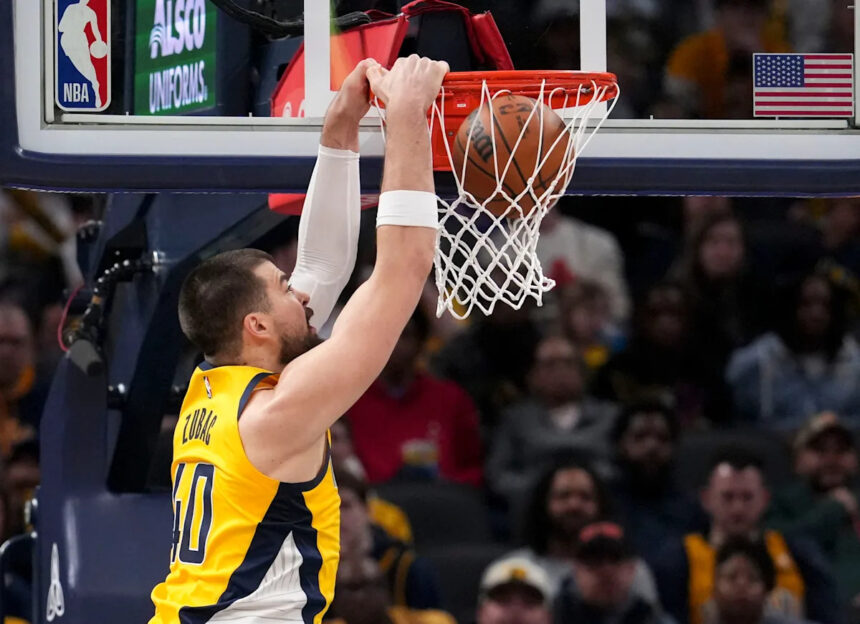
The narrative was set for a classic, high-octane Indiana Pacers performance on their home floor. The majority of their key contributors were suited up and ready to run. Yet, in a stark reminder that availability does not guarantee victory, the Pacers’ offense hit an unexpected wall of New York Knicks defense and their own inefficiency, falling 101-92 in a grinding affair at Gainbridge Fieldhouse. This wasn’t a loss due to a depleted roster; it was a defeat born from a system failing to fire against one of the league’s most relentless physical challenges.
A Clash of Philosophies: Pace vs. Physicality
On paper, this matchup was a stylistic dichotomy. The Indiana Pacers, leaders in nearly every offensive category, pride themselves on a blistering pace, constant motion, and unselfish ball movement. The New York Knicks, under Tom Thibodeau, are the NBA’s blue-collar bullies, built on offensive rebounding, defensive switches, and turning games into punishing, half-court slugfests. For one night, the bullies won decisively. Despite having Tyrese Haliburton, Pascal Siakam, and Myles Turner available, the Pacers’ rhythm was consistently disrupted. The Knicks’ ability to muck up the game, contest every shot without fouling, and control the glass turned what is usually a Pacers track meet into a struggle for every single point.
The key stats tell the story of the Knicks’ disruptive game plan:
- Second-Chance Points Dominance: New York crushed Indiana on the offensive glass, leading to a monumental advantage in second-chance points. This extended possessions and drained the Pacers’ transition opportunities.
- Pace Neutralized: Indiana’s fast-break points, a staple of their identity, were severely limited. The Knicks prioritized getting back and setting their defense, forcing the Pacers to operate in a crowded half-court.
- Three-Point Disparity: The Pacers live by the three but shot a dismal percentage from deep. The Knicks’ close-outs were disciplined, and Indiana’s normally fluid ball movement resulted in contested, off-rhythm attempts.
Expert Analysis: When “Healthy” Isn’t Synonymous with “Effective”
From a tactical standpoint, this game was a masterclass in defensive game planning from the Knicks. They targeted the Pacers’ primary actions, showing hard on Haliburton’s pick-and-rolls and effectively rotating to take away his passing lanes. While Haliburton’s final stat line may look respectable, his impact was muted; he was forced into being a scorer more than a conductor, which plays into the Knicks’ hands.
Furthermore, the Knicks’ physicality seemed to wear on the Pacers as the game progressed. Players like Josh Hart and Precious Achiuwa brought an energy that Indiana struggled to match. Pascal Siakam found himself battling for every inch in the post, and the collective Pacers’ effort on the defensive glass was lacking. This game highlighted a crucial vulnerability for Indiana: when their shots aren’t falling and they aren’t generating turnovers for easy run-outs, they can become predictable and struggle to find alternative paths to scoring. Their reliance on jump-shooting, when not complemented by paint attacks or free throws, makes them susceptible to cold nights—especially against a defensively elite unit like New York’s.
Looking Ahead: Implications for the Playoff Picture
This result carries significant weight in the tightly packed Eastern Conference standings. For the New York Knicks, it’s a signature road win that reinforces their status as a team no one wants to face in a seven-game series. Their formula is playoff-ready: defense, rebounding, and the superstar shot-making of Jalen Brunson, who was brilliant down the stretch. It proves they can win ugly, in hostile environments, against elite offenses.
For the Indiana Pacers, this loss is a sobering reality check. Having most of your roster available is only the first step. The playoffs are a series of adjustments, and this game film will be a critical teaching tool. Questions they must answer include:
- How can they create easier baskets when the three-point shot is taken away?
- Can they develop a reliable counter-punch when an opponent successfully slows their pace?
- Is there a level of defensive and rebounding toughness they can consistently summon against elite competition?
This single January or February game could be a direct preview of a first-round playoff matchup. If so, the Pacers have been served notice that talent alone won’t be enough; they must win the fight before they can run their race.
Final Buzzer: A Defining Moment in the Season’s Narrative
The final score of 101-92 in favor of the Knicks is more than just a tally. It’s a statement. The Indiana Pacers face New York Knicks matchups have quickly evolved into one of the East’s most compelling rivalries, defined by a stark contrast in styles. While the Pacers had their weapons, the Knicks brought the will. In the end, New York’s relentless, physical approach rendered Indiana’s health irrelevant. They turned Gainbridge Fieldhouse into a half-court battleground and emerged victorious.
For the Pacers, the path forward is clear. To graduate from exciting upstart to legitimate contender, they must learn to win these kinds of games. They must embrace the grind, match physicality with precision, and find a way to impose their will when their first option is taken away. This 101-92 loss, with a mostly full roster, may ultimately be remembered as a pivotal lesson on the road to maturity. For the Knicks, it’s further proof that their identity is not just effective—it’s capable of silencing the most potent offensive engines in the league, no matter who is on the floor.
Source: Based on news from Yahoo Sports.