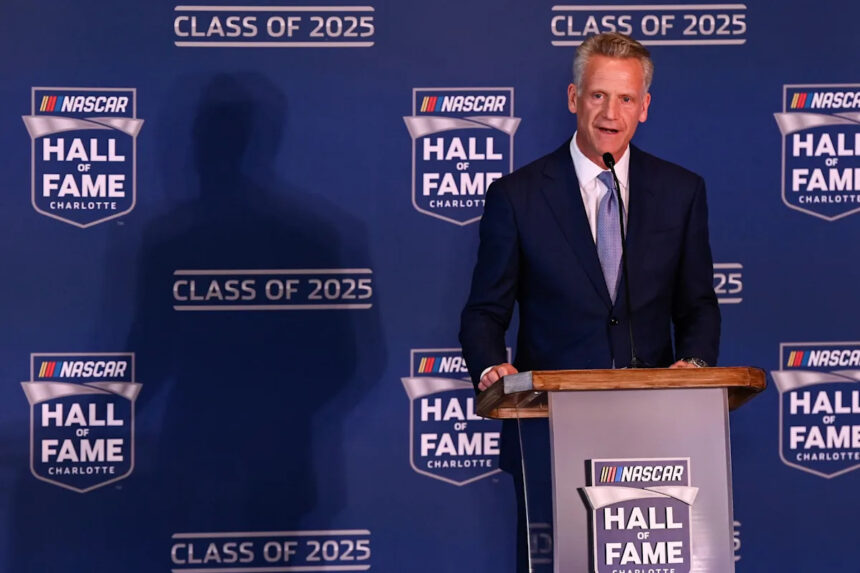
NASCAR Commissioner Steve Phelps Resigns in Wake of Explosive Text Message Scandal
In a stunning development that sends shockwaves through the motorsports world, NASCAR Commissioner Steve Phelps has abruptly resigned. His departure, effective at the end of the month, caps a tumultuous 20-year tenure that unraveled not on the racetrack, but in a federal courtroom. The catalyst was the public exposure of incendiary private text messages, revealing a caustic behind-the-scenes culture that has forced a seismic leadership change just as the new season prepares to begin. This is more than a personnel shift; it is a profound crisis of credibility for NASCAR’s top office, exposing deep fissures between the sanctioning body and the very team owners who form its foundation.
A Trial by Fire: How Courtroom Revelations Torched a Career
The path to Phelps’ resignation was paved during the discovery and testimony of a high-stakes antitrust lawsuit. The case, brought by 23XI Racing and Front Row Motorsports, centered on revenue-sharing negotiations and NASCAR’s charter system. While the financial details were complex, the most damaging evidence was profoundly personal. Internal communications, presented as exhibits, laid bare a culture of contempt among NASCAR’s executive ranks for some of the sport’s most iconic figures.
Most explosively, Phelps was revealed to have referred to Hall of Fame team owner Richard Childress as “a stupid redneck” who “needs to be taken out back and flogged.” For an industry built on Southern heritage, fan loyalty, and personal relationships, this language was not just unprofessional; it was a direct affront to the sport’s core community. The texts shattered the public facade of unity and respect, suggesting the sport’s leadership privately mocked its legendary stakeholders.
- Antitrust Lawsuit: Filed by 23XI Racing (Michael Jordan/Denny Hamlin) and Front Row Motorsports (Bob Jenkins).
- Key Revelation: Private texts showing Phelps’ derogatory comments about Richard Childress.
- Immediate Fallout: The exposure turned a corporate legal battle into a deeply personal public relations disaster.
The Domino Effect: From Boardroom to Backlash
The fallout from the courtroom revelations was swift and severe. The text messages did not exist in a vacuum; they circulated among the highest echelons of NASCAR leadership, implicating others in a corrosive dialogue. This created a crisis that extended far beyond legal liability.
The most significant reaction came from Bass Pro Shops founder Johnny Morris, a titan of outdoor retail and one of NASCAR’s most prominent sponsors. An ardent supporter of both the sport and Richard Childress Racing, Morris did not remain silent. He authored a forceful letter to NASCAR demanding Phelps’ removal as commissioner. When a sponsor of Morris’s stature and deep ties intervenes in executive matters, the sanctioning body has no choice but to listen. Sponsorship is the lifeblood of motorsports, and Morris’s intervention represented a direct threat to that vital revenue stream and the sport’s moral authority.
Significantly, NASCAR settled the lawsuit with the two race teams the day after Morris’s letter became known. The sequence of events is telling: damning testimony, a powerful sponsor’s ultimatum, a rapid settlement, and finally, the commissioner’s resignation. This chain reaction underscores that Phelps’ position became untenable not solely due to the legal case, but because of the irreparable damage to trust with key partners and the sport’s fanbase.
Expert Analysis: A Crisis of Culture and Credibility
This scandal transcends one man’s poor judgment. It points to a systemic failure in leadership culture at a critical juncture for NASCAR. “This isn’t just about Steve Phelps texting something offensive,” notes a veteran motorsports industry analyst. “It’s about what it reveals: a perceived disconnect and arrogance at the executive level towards the teams that put cars on the grid and the legends who built the sport. In an era where NASCAR is working to broaden its appeal, such language is a toxic anchor to the worst stereotypes it tries to overcome.”
The timing is particularly devastating. Phelps was named NASCAR’s first-ever commissioner just last season, a move intended to centralize authority and present a unified front. The role was created after Phelps was courted by the PGA Tour, a fact revealed during the same trial, adding a layer of instability to his appointment. Now, the new commissioner’s legacy is defined by scandal and resignation, leaving the landmark position tarnished before it could be fully established.
Furthermore, the incident threatens to reopen old wounds between the France family-controlled NASCAR and the team owners. The “us vs. them” mentality hinted at in the texts could hinder future negotiations on the critical charter system and revenue sharing, which are essential for team sustainability.
The Road Ahead: Predictions for a Post-Phelps NASCAR
NASCAR now faces a defining leadership transition. The immediate priority will be to install a new commissioner who can serve as a true healer and bridge-builder. Look for the following in the coming months:
- A Diplomat-in-Chief: The successor will likely be someone with impeccable relationship skills, perhaps with deep roots in the garage area, tasked explicitly with repairing ties with team owners, sponsors, and legends.
- Internal Culture Reckoning: Expect mandatory sensitivity training and a top-down review of internal communications. NASCAR will need to prove the exposed culture was an aberration, not the norm.
- Sponsor Assurance Tour: Executives will be in full damage-control mode, privately assuring major partners like Bass Pro Shops that the sport’s values align with their own.
- Quiet Bridge-Building: Mending fences with Richard Childress and the broader ownership council will be a silent, but paramount, mission. Actions, not statements, will be required.
The sport’s momentum on-track—with exciting new stars and a solid schedule—is now overshadowed by this off-track drama. How quickly and authentically NASCAR addresses the cultural issues will determine if 2024 is remembered for its racing or for its scandal.
Conclusion: A Cautionary Tale Written in Text Messages
Steve Phelps’ resignation is a stark reminder that in the digital age, no private communication is truly safe, and that leadership is tested in moments far from the public eye. His two-decade career, which included navigating the COVID-19 pandemic and overseeing the Next Gen car rollout, has been irrevocably marred by a few taps on a smartphone. The episode forces NASCAR to confront uncomfortable questions about the respect it shows its own history and partners.
Ultimately, the sport stands at a crossroads. It can treat this as a simple personnel change, or it can seize it as an opportunity for genuine cultural reform. The roar of the engines will soon return, but the echoes of this scandal will linger in the boardrooms and haulers for seasons to come. NASCAR’s ability to rebuild trust, not just its championship standings, will be the true test of its resilience in 2024 and beyond.
Source: Based on news from Yahoo Sports.