NBA Axes Hawks’ ‘Magic City Monday’ Promotion, Igniting Debate on Sports and Culture
In a move that has sent shockwaves through Atlanta’s vibrant sports and cultural scene, NBA league officials have abruptly canceled the Atlanta Hawks’ planned “Magic City Monday” promotion. The event, a high-profile collaboration between the franchise and the world-renowned Atlanta strip club Magic City, was scheduled for next Monday’s game against the Orlando Magic at State Farm Arena. The sudden cancellation, announced on Monday, has left fans bewildered, sparked intense debate about the intersection of professional sports and local culture, and raised questions about the league’s consistency in its promotional partnerships.
The Promotion That Was: A Taste of Atlanta’s Nightlife
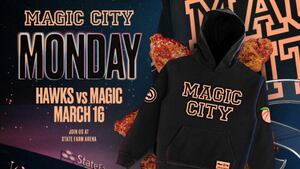
The Hawks had billed “Magic City Monday” as a full-sensory celebration of Atlanta’s unique identity. More than just a themed night, it was a direct bridge from the court to the club, promising fans an authentic slice of the city’s legendary nightlife. The promotion was set to feature several key elements that made its cancellation particularly stinging for local supporters:
- Iconic Culinary Crossover: The promised serving of Magic City’s famous lemon pepper wings—a culinary staple mythologized in hip-hop culture—was a major draw.
- Exclusive Merchandise: Custom “Magic City Monday” Hawks merchandise, a certain collector’s item, was to be available.
- Star-Studded Halftime: A performance from Atlanta rap legend and community figure T.I., whose career is deeply intertwined with the city’s music scene.
This was not a generic “hip-hop night.” It was a specific, localized, and deeply authentic partnership that resonated with a significant portion of the Hawks’ fanbase, acknowledging a cultural institution that, while controversial to some, is undeniably woven into the fabric of modern Atlanta.
The Fallout: Fan Outrage and the “Corporate vs. Culture” Divide
The immediate reaction from Atlanta fans and observers was one of frustration and accusations of hypocrisy. Social media platforms erupted with criticism directed at the NBA. Many pointed to the league’s embrace of other adult-oriented sponsors, such as hard alcohol brands and sportsbooks, as evidence of an inconsistent and perhaps tone-deaf application of its standards.
“This is pure corporate sanitization,” argued Marcus Johnson, a longtime Atlanta sports radio host. “The NBA is happy to profit from the cool, edgy aesthetic that clubs like Magic City helped create for Atlanta’s music scene, which the league heavily leverages. But when a team tries to formally partner with that very culture in a celebratory, community-focused way, they pull the plug. It feels disingenuous.”
The cancellation touches a nerve in Atlanta, a city where local culture—from its strip club scene’s role in launching musical careers to its distinct culinary and slang contributions—is a point of immense pride. For many, the Hawks’ attempt to honor this was seen as a bold and positive move by the franchise to connect on a grassroots level. The NBA’s veto is perceived by those fans as an outsider dismissal of that culture.
Expert Analysis: Brand Safety, Demographics, and the Modern NBA
From a league operations perspective, the decision, while unpopular locally, is not entirely surprising. Sports business analysts suggest the NBA is navigating a complex tightrope.
“The NBA’s primary revenue drivers are national television deals and corporate partnerships with Fortune 500 companies,” explains Dr. Lena Crawford, a professor of sports marketing. “While the Hawks are targeting a specific, local demographic, the league office is perpetually concerned with ‘brand safety’ on a global scale. A direct promotional tie with a strip club, regardless of its cultural cachet, likely triggered red flags for a league that markets itself as family-friendly in broad strokes and is intensely image-conscious.”
This incident highlights the inherent tension in modern sports franchising: the desire to act as a hyper-local community pillar versus the obligation to conform to a monolithic, global league brand. The Hawks, under owner Tony Ressler, have been praised for innovative, Atlanta-centric marketing. However, the NBA maintains final say over all uniform patches, sponsorships, and in-arena promotions, wielding ultimate control over the product.
The Orlando Magic connection also presents an awkward, if coincidental, subtext. While the promotion was clearly named for Magic City, the visiting team’s name provided an unfortunate double-entendre the league was likely eager to avoid in official communications and media coverage.
Predictions and Future Implications
This episode will likely have lasting repercussions for both the Hawks and the league’s approach to local marketing.
First, expect the Hawks organization to quickly pivot. They may salvage elements of the night—perhaps a T.I. performance or a lemon pepper wing offering under a different, league-approved banner—but the specific Magic City branding is dead. The franchise must now manage significant fan disappointment while not publicly criticizing its league overlords.
Second, this establishes a clearer, if murky, boundary for all 30 teams. Other franchises with deep ties to local adult entertainment institutions—think clubs in Miami, Los Angeles, or Dallas—will now think twice before proposing similar collaborations. The message is clear: some aspects of city culture, no matter how influential, are off-limits for official integration.
Finally, this may ignite a broader conversation within the league about allowing for more nuanced, locally-driven partnerships. As teams fight for engagement in their markets, the need for authentic connections is critical. The NBA may need to develop a more flexible framework that allows for celebration of local culture without crossing its own, often nebulous, line of acceptability.
Conclusion: A Celebration Grounded
The cancellation of “Magic City Monday” is more than a simple change in promotional scheduling. It is a case study in the clash between corporate protocol and authentic cultural expression. The Atlanta Hawks attempted to throw a party that was unmistakably, uniquely Atlanta, honoring a venue that has served as an unofficial incubator for the city’s global musical influence. The NBA, from its headquarters in New York, saw a partnership that didn’t fit its carefully curated global image.
While the league’s concerns about broad brand perception are understandable from a business standpoint, the decision risks alienating a core segment of the Atlanta fanbase who saw the promotion as a rare acknowledgment of their city’s real, unfiltered identity. The fallout is a reminder that professional sports leagues, for all their celebration of local rivalries, ultimately demand conformity. The wings won’t be served, the merch won’t be sold, and a unique moment of synergy between Atlanta’s court and its most famous club has been sidelined, leaving behind a potent mix of disappointment, debate, and a lingering question about who truly controls a team’s soul in the modern NBA.
Source: Based on news from Yahoo Sports.