NBA Admits Late-Game Error in Lakers’ Thrilling Victory Over Nuggets
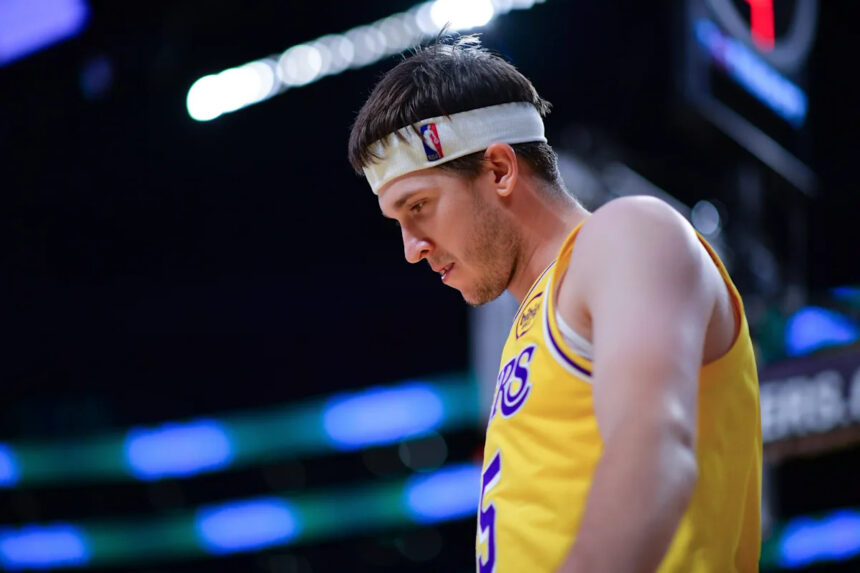
In the high-stakes theater of the NBA playoffs, every possession is magnified, every whistle scrutinized. The Los Angeles Lakers’ pulse-pounding 119-117 victory over the Denver Nuggets in Game 5 was instantly etched into postseason lore, a desperate triumph to stave off elimination. The narrative was perfect: Austin Reaves, the undrafted hero, securing his own intentionally missed free throw for a miraculous game-tying basket to force overtime. Yet, on Monday, the NBA’s Last Two Minute Report introduced a complicating asterisk, revealing that a crucial call preceding that iconic moment was incorrect. The league’s admission throws a fascinating layer of “what if” over a game already rich in drama, forcing us to re-examine the thin line between destiny and human error in professional sports.
- The Crucible of Chaos: Revisiting the Final 9.2 Seconds
- Expert Analysis: The Butterfly Effect of a Single Whistle
- The Bigger Picture: Accountability, Noise, and the Unchangeable Result
- Predictions and Ramifications: Will This Alter the Series Landscape?
- Conclusion: The Unforgiving and Unscripted Drama of Playoff Basketball
The Crucible of Chaos: Revisiting the Final 9.2 Seconds
To understand the weight of the league’s statement, we must return to the chaotic final seconds of regulation. With the Nuggets leading 116-113 and just 9.2 seconds on the clock, the Lakers inbounded the ball to Austin Reaves. Denver’s Spencer Jones, a two-way player tasked with a critical defensive assignment, immediately swiped at the ball. On the court, the sound of the swipe and the subsequent movement of the ball was interpreted by the officiating crew as a foul. The whistle blew, sending Reaves to the free-throw line for two shots.
Reaves, with ice in his veins, sank both free throws to cut the deficit to one point. This sequence set in motion the final, more memorable act: a foul on Cameron Johnson, his two made free throws, and then Reaves’ intentional miss, rebound, and put-back to send the game to overtime. The Lakers’ season lived. However, the NBA’s report paints a different picture of that initial play. According to the league’s review, Jones “cleanly dislodges the ball away from Reaves”. It was not a foul, but a legal, game-changing defensive play. The report leaves one critical ambiguity unanswered: if the correct no-call had been made, who would have gained possession after the ball went out of bounds?
- Key Moment: 9.2 seconds remaining in 4th quarter, Nuggets lead 116-113.
- On-Court Call: Foul on Spencer Jones for contact on Austin Reaves.
- NBA L2M Report Ruling: Incorrect Call. Clean strip by Jones.
- Immediate Consequence: Reaves makes two free throws (116-115).
- Unanswered Question: Possession after the clean strip was undetermined.
Expert Analysis: The Butterfly Effect of a Single Whistle
As a sports journalist, the NBA’s transparency with its Last Two Minute Report is a double-edged sword. It provides accountability and insight, but it also invites endless speculation on alternate timelines. The incorrect foul call on Spencer Jones is a textbook example of the “butterfly effect” in sports. Let’s break down the potential ramifications, which extend far beyond the two points Reaves scored at the line.
First, the most significant variable is possession. If the strip was clean and the ball went out of bounds, the direction it went is everything. If it last touched Reaves, it’s Nuggets’ ball, up three with roughly 9 seconds left—a near-insurmountable scenario for the Lakers. If it last touched Jones, the Lakers retain possession, still down three but now with a fresh, albeit shorter, shot clock to attempt a game-tying three. The entire strategic landscape changes for both coaches. Denver likely doesn’t foul on the ensuing inbounds play to Johnson, a decision made knowing they still had a one-point cushion after Reaves’ free throws. The Lakers’ play call is different. The pressure matrix shifts entirely.
Second, there’s the psychological component. Clutch free throws are a mental feat. Did the act of stepping to the line and successfully converting two pressure-packed shots sharpen Reaves’ focus for the ensuing, more chaotic play? We cannot discount the rhythm and confidence built in that moment. Furthermore, the Nuggets, who felt they had made a game-winning defensive play, instead saw the Lakers claw a point closer. The emotional letdown, however slight, in a moment of such intensity cannot be quantified but is very real.
The Bigger Picture: Accountability, Noise, and the Unchangeable Result
The NBA’s admission is sure to fuel outrage in Denver and provide a talking point for those who view the Lakers as beneficiaries of favorable officiating. However, it’s crucial to contextualize this within the league’s long-standing policy. The Last Two Minute Report is an officiating transparency tool, not a mechanism for justice. The result is final. The league office consistently states that these reports are for educational and accountability purposes—to help officials improve and to provide clarity to teams and fans.
This incident highlights the immense difficulty of the officials’ job. In real-time, at full speed, with the season on the line, they must interpret contact that is often marginal and obscured. The report, using slow-motion replay from multiple angles, provides a clarity that is simply impossible for the human eye in live action. While the call was incorrect, it was not necessarily an egregious one from the official’s sightline. The sound of the swipe, the reaction of the players, and the trajectory of the ball all likely contributed to the live decision.
For the Lakers and their fans, the report is an inconvenient postscript to a legendary victory. For the Nuggets and theirs, it is salt in a wound that was already deep—the end of their championship reign. It underscores a painful truth in sports: officiating errors are part of the game’s fabric, woven into its history alongside the brilliant plays and heroic performances. They are the human element that no technology, short of a full-scale replay overhaul of the final minutes, can fully eradicate.
Predictions and Ramifications: Will This Alter the Series Landscape?
While the Game 5 result stands, the psychological fallout from the league’s report could subtly influence the remainder of the series, should it continue. For the Denver Nuggets, this public validation of their grievance could serve as a powerful rallying cry. It fuels a “us against the world” mentality and could galvanize their effort in a potential close-out Game 6. Coach Michael Malone now has a definitive, league-sanctioned piece of evidence to point to when discussing the fine margins of the game with his team.
For the Los Angeles Lakers, the narrative shifts slightly. Their incredible resilience and execution in overtime—where they unquestionably earned the win—now comes with an acknowledged prelude of good fortune. The challenge for them is to treat this report as irrelevant noise, a historical footnote to a game they won on the scoreboard. It cannot become a distraction or a source of doubt. Their mission remains the same: survive and advance, one game at a time.
Looking at the broader NBA landscape, this incident will inevitably renew debates about the expansion of instant replay review. Should coaches be allowed to challenge calls in the final two minutes on par with the rest of the game? Should there be a separate category of review for “defensive dispossession” plays that currently fall outside the challenge purview? The league’s competition committee will likely discuss these questions, but any change would be for future seasons, not this current playoff war.
Conclusion: The Unforgiving and Unscripted Drama of Playoff Basketball
The Lakers’ victory over the Nuggets in Game 5 will forever be remembered for Austin Reaves’ heads-up, heart-stopping heroics. The NBA’s Last Two Minute Report ensures it will also be remembered as a game touched by officiating controversy. This duality is the essence of modern sports. We celebrate the athletic brilliance while simultaneously dissecting the administrative and human judgments that frame it.
Ultimately, the Lakers-Nuggets thriller and its post-game audit remind us that playoff basketball is not a sanitized, perfectly officiated product. It is a messy, emotional, and unforgiving crucible where destiny is shaped by a combination of skill, strategy, luck, and yes, occasionally, error. The Lakers seized the opportunity the game presented, however imperfectly it arrived. The Nuggets were left with a brutal lesson in the fragility of a closing moment. And the NBA, in its pursuit of transparency, has given us all a masterclass in how a single, split-second decision can echo far beyond the final buzzer, haunting one team and forever qualifying the celebration of another. The record books will show only the result, but the story of how it happened just became infinitely more complex.
Source: Based on news from Yahoo Sports.