Touchdown in Toulouse: NFL’s European Ambition Expands to France and Spain
The National Football League, having conquered London and flirted with Germany, is now executing a bold, two-pronged offensive into the heart of continental Europe. In a strategic play announced during Super Bowl week, the league confirmed its long-anticipated debut in France and doubled down on its budding Spanish experiment. This isn’t just a scheduling quirk; it’s a calculated expansion into two of Europe’s most passionate sports markets, signaling a new chapter in the NFL’s global playbook. For fans in Paris and Madrid, the roar of the crowd is about to get a distinctly American accent.
From the Bayou to the Seine: The Saints March Into Paris
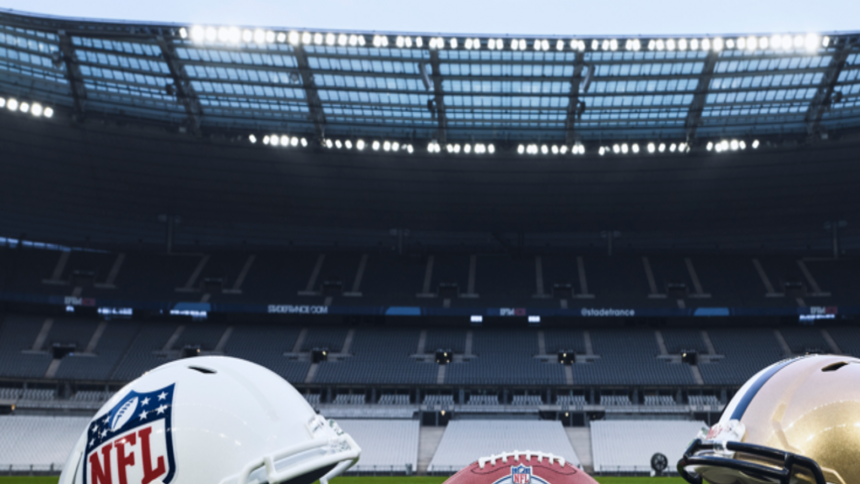
The NFL’s entry into France comes with a distinctly Cajun flavor. The New Orleans Saints, who hold exclusive marketing rights in France, have been confirmed as one of the teams to play in the historic first regular-season game at the Stade de France later this year. This is a masterstroke of localization. The Saints’ brand, rich with French colonial history and nomenclature, provides a natural and compelling narrative bridge to French fans. It’s more than a game; it’s a homecoming of sorts for a franchise whose very identity is tied to France.
The choice of the Stade de France—a venue accustomed to hosting rugby’s fiercest battles and soccer’s biggest stars—guarantees a monumental atmosphere. While the date and opponent remain under wraps, the announcement alone has electrified a growing French fanbase. American football has seen steady growth in France, with a robust amateur league and increasing TV viewership. Placing a team with built-in cultural affinity at the nation’s premier stadium demonstrates the NFL’s move from exploratory to entrenched investment in the French market.
¡Hala Madrid! NFL Secures a Spanish Fortress at the Bernabéu
If the France move is a strategic entry, the Spain announcement is a declaration of permanence. The league’s new multi-year partnership to stage games at Real Madrid’s Bernabeu Stadium is a coup of the highest order. Aligning with the most iconic brand in global club soccer provides the NFL with instant credibility and access to a state-of-the-art venue currently undergoing a breathtaking renovation. The Bernabéu isn’t just a stadium; it’s a temple of sport. Playing there sends an unequivocal message: the NFL is here to stay in Spain, and it’s doing so at the very pinnacle of sporting infrastructure.
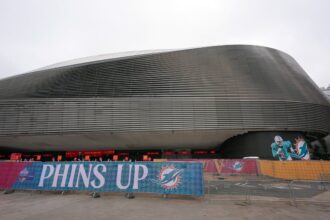
This deal builds on the palpable success of the first-ever NFL game in Spain, held in November at Madrid’s Estadio Metropolitano, where the Miami Dolphins beat the Washington Commanders. That game sold out in minutes, proving the latent demand. The shift to the Bernabéu signifies an upgrade in ambition and scale. Key factors driving the Spanish push include:
- Demographic Goldmine: Spain has a young, sports-crazed population with high disposable income, a perfect target for merchandise and media engagement.
- Time Zone Advantage: Compared to the UK, Spain’s time zone is more favorable for broadcasting prime-time U.S. games to American audiences, a critical factor for league broadcast partners.
- Cultural Fit: The Spanish appreciation for tactical complexity in sport makes sophisticated NFL schemes a potentially attractive watch.
Expert Analysis: Decoding the NFL’s European Chessboard
This two-nation strategy is not accidental. “The NFL is moving from a ‘roadshow’ model in Europe to a ‘hub’ model,” explains Dr. Simon Chadwick, a professor of sport and geopolitical economy. “London was the test market. Germany proved the demand for regular, high-quality games could be sustained. Now, they are establishing regional hubs in the continent’s largest markets—France and Spain—with long-term partnerships and dedicated team affiliations.”
The decision to grant marketing rights to specific teams in international territories is perhaps the most telling tactic. It allows for 365-day-a-year fandom building. The Saints can now actively cultivate French fans through local events, youth programs, and digital content, creating a sense of ownership and loyalty long before the team ever lands at Charles de Gaulle. We should expect the team designated for the Bernabéu (with the Dolphins a prime candidate) to receive similar rights in Spain, creating a sustainable fan ecosystem beyond a single annual game.
This expansion also pressures the league’s internal dynamics. An increasingly crowded international schedule—with games now potentially in the UK, Germany, France, and Spain annually—will intensify the debate over a 17th regular-season game and how to balance competitive fairness for teams tasked with long-haul travel.
Predictions: What’s Next for the NFL’s Global Game?
The immediate future is clear: sold-out, raucous crowds in Paris and Madrid. But looking further ahead, several developments seem likely:
- A Rivalry is Born: The NFL will likely pit the Saints against a major draw like the Green Bay Packers or San Francisco 49ers for its Paris debut, maximizing the spectacle.
- The “Spain Game” Team: Look for the Miami Dolphins, given their 2023 success in Madrid, to become the de facto “home” team for the Bernabéu, possibly facing NFC East opponents regularly.
- Pathway to a Franchise: These moves are the strongest signal yet that the NFL is seriously laying the groundwork for a potential permanent European division. Success in four major European markets creates a viable conference footprint previously thought impossible.
- Broadcast Windfall: New, lucrative international media rights deals for France and Spain will follow, further justifying the logistical investment.
Conclusion: A New Frontier for Football
The NFL’s touchdown in France and fortified presence in Spain marks a paradigm shift. This is no longer about exporting a product; it’s about cultivating a genuine, localized presence in Europe’s cultural powerhouses. By marrying iconic franchises with iconic venues—the Saints with the Stade de France, the spectacle of the league with the majesty of the Bernabéu—the NFL is betting that the passion of European sports fans is transferable. The goal is no longer just to host games abroad, but to create lasting, emotional connections that turn casual observers into devoted fans. The global football landscape is expanding, and the end zone now stretches from the French capital to the heart of Madrid.
Source: Based on news from BBC Sport.