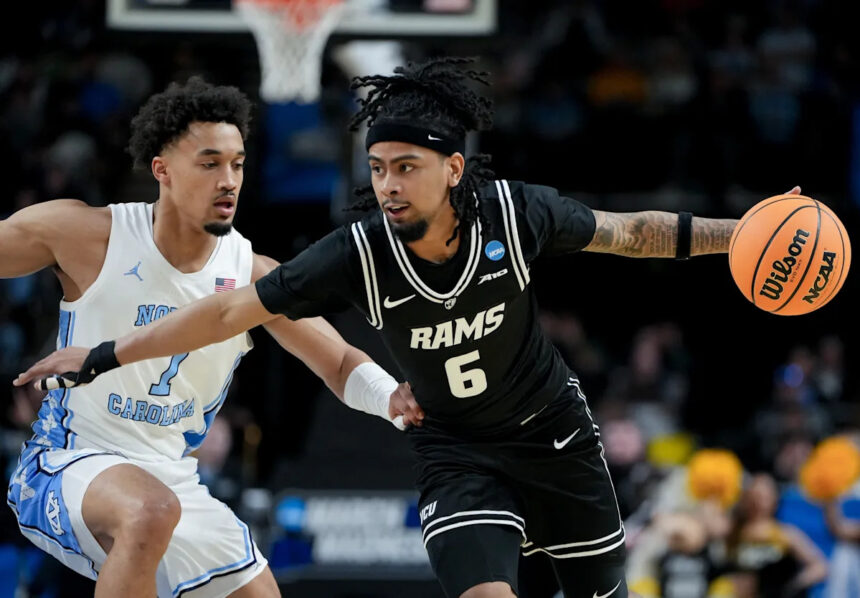
VCU’s Relentless Rams Stage Historic Comeback, Stun North Carolina in NCAA Tournament Thriller
In the annals of March Madness, certain games transcend the box score to become instant legend. They are tales not of dominance, but of defiance; not of a flawless performance, but of an unkillable spirit. On Thursday, the No. 11 seed VCU Rams authored one of those chapters, engineering a heart-stopping, record-setting comeback to topple the No. 6 seed North Carolina Tar Heels 82-78 in overtime, in a game that will be remembered as one of the most stunning turnarounds in tournament history.
A Tale of Two Halves: Carolina’s Cruise Meets VCU’s Chaos
For the first 30 minutes, the script followed a familiar, blue-blooded narrative. North Carolina, with its size and pedigree, imposed its will. The Tar Heels’ offense flowed smoothly, their defense stifled VCU’s initial attacks, and they built a commanding lead that swelled to a seemingly insurmountable 19 points at 56-37. Armando Bacot was a force inside, and the Rams’ shots simply weren’t falling. With just over seven minutes remaining in regulation and UNC leading 70-56, the Tar Heels appeared to be cruising into the Round of 32.
But VCU, a program built on a foundational principle known as “HAVOC,” had other ideas. The Rams’ identity is predicated on relentless defensive pressure, creating chaos, and waiting for the moment to strike. That moment arrived with the season hanging by a thread.
- Aggressive Defense: VCU flipped a switch, ratcheting up their full-court pressure and half-court traps. Passes that were easy for UNC became contested. Driving lanes disappeared.
- Deep Bench Energy: Coach Ryan Odom utilized his roster’s depth to keep fresh, frantic defenders on the floor, wearing down Carolina’s ball-handlers.
- Clutch Shooting: After a cold start, shots began to fall. Key three-pointers, often from unlikely heroes, ignited the rally and sent shockwaves through the arena.
Meanwhile, North Carolina’s execution crumbled. The Tar Heels’ offense, once fluid, became stagnant and turnover-prone. They managed a mere 5 points in the final 7:11 of regulation, a catastrophic drought that opened the door for disaster.
The Anatomy of a Historic Collapse and Comeback
VCU’s 12-0 run to close regulation was a masterpiece of desperation and precision. It wasn’t just one player; it was a collective surge. The Rams chipped away, possession by grueling possession, as the pressure mounted exponentially on the Tar Heels. Every stolen pass, every contested rebound, every made basket fueled the belief that the impossible was within reach.
When the final horn of regulation sounded with the score tied, the psychological shift was complete. All the momentum, all the energy, and all the belief resided on the VCU bench. The overtime period was a mere formality of the seismic shift that had already occurred. North Carolina’s offense was utterly paralyzed, failing to hit a single field goal in the extra five minutes. Their first points didn’t come until a Seth Trimble free throw with 2:02 left. The collapse was total.
This victory wasn’t just a win; it was history. VCU’s rally from 19 points down stands as the sixth-largest comeback in NCAA tournament history and, most notably, the largest comeback ever in the first round. It is a statistic that will forever be attached to this game, a testament to the sheer improbability of what transpired.
Expert Analysis: What This Means for Both Programs
For VCU, this win is a program-defining moment that validates their entire basketball philosophy. “HAVOC” isn’t just a marketing slogan; it’s a viable weapon that can dismantle even the most talented opponents when fully operational. Coach Ryan Odom’s strategic adjustments—staying with the press, trusting his bench, and instilling a never-quit mentality—were flawless. This victory propels them forward not just in this tournament, but in national perception. They are no longer just a cute mid-major; they are a legitimate threat capable of beating anyone on any given night.
For North Carolina, the loss is a devastating bookend to a season of immense expectations. The Tar Heels’ failure to close out a large lead will be scrutinized for years. Questions about late-game execution, decision-making under pressure, and mental toughness will dominate the offseason in Chapel Hill. The bitter taste of this dramatic collapse will linger, marking a painful end for a team that featured veteran stars and harbored Final Four aspirations.
Key Turning Points:
- The Defensive Spark: A specific trap or steal that ignited the initial run.
- UNC’s Offensive Stagnation: The Tar Heels’ over-reliance on one-on-one play as the lead evaporated.
- The Momentum Shift: The palpable change in arena energy that visibly affected player confidence on both sides.
Looking Ahead: Predictions and Ramifications
VCU now advances, carrying not just a victory, but an aura of invincibility. Teams facing them next will know no lead is safe. The Rams’ confidence will be sky-high, and their style of play is inherently disruptive in a single-elimination format. They have officially become the team no higher seed wants to see in their bracket.
For the NCAA tournament landscape, this result is a classic reminder of why we call it March Madness. It reinforces the idea that in a one-game scenario, heart, hustle, and a disruptive system can overcome a stark talent differential. It is the essence of what makes this event the most compelling in American sports.
North Carolina, conversely, faces a long offseason of reflection. The departure of key players will lead to a new roster construction, but the lessons from this game—about closing out games, handling pressure, and respecting every opponent—must become part of the program’s fabric moving forward.
Conclusion: In the end, VCU’s stunning victory over North Carolina was more than a game. It was a narrative about resilience. It was a lesson in the power of system and spirit over individual talent. The Rams, left for dead by nearly everyone watching, summoned a will that defines the very best of college athletics. They didn’t just beat North Carolina; they broke their will, authored history, and provided the single most unforgettable moment of the tournament’s opening act. In March, history isn’t always written by the favorites. Sometimes, it’s forged in the chaos, by a team that simply refuses to quit.
Source: Based on news from Yahoo Sports.