Norrie Reclaims British Throne, But Draper’s Shadow Looms Large
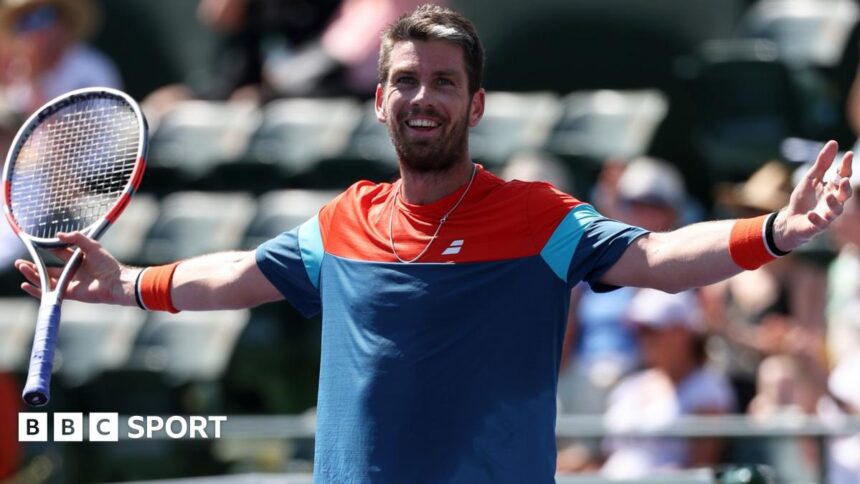
The crown of British men’s tennis is proving to be a restless, shifting diadem. In the sun-baked aftermath of the Indian Wells quarter-finals, a familiar yet significant shift occurred in the ATP rankings. Cameron Norrie, the relentless baseliner with a career-high of world number eight, has once again ascended to the position of British number one. He displaces Jack Draper, the powerful left-hander whose own meteoric rise had briefly claimed the summit. This isn’t merely a statistical blip; it’s the opening gambit in what promises to be a compelling, season-long narrative of domestic rivalry, with the coveted top spot likely to change hands multiple times before the year is out.
The Indian Wells Pendulum: A Tale of Points Defended and Gained
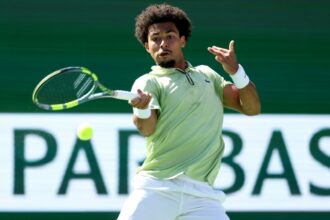
The mechanism behind this latest shift is a classic demonstration of tennis’s unforgiving ranking system. Last week’s BNP Paribas Open in Indian Wells acted as a dramatic pivot point for both men. Jack Draper arrived in the California desert not just as a contender, but as the defending champion. With that stunning 2023 title came a heavy burden: 1,000 precious ranking points to defend. His run to the quarter-finals this year was a commendable effort, but in the cold calculus of the ATP tour, it resulted in a net loss. The consequence? A 12-place slide to 26th in the world.
Cameron Norrie, meanwhile, approached the same tournament with opportunity. A former finalist himself at Indian Wells, he had fewer points to defend and used a strong quarter-final showing to propel himself five places up the ladder to 24th. That slender two-place gap was enough to reclaim the national top spot. Norrie’s characteristically pragmatic response to BBC Sport—”It’s a nice thing, obviously, but I’m not really thinking about that too much”—underscores the transient nature of the honour. For both athletes, the real battle lies beyond national bragging rights, focused squarely on re-entering the world’s elite top 20 and chasing major silverware.
Contrasting Styles, Converging Ambitions
The dynamic between Norrie and Draper is fascinating precisely because they represent different generations and tennis philosophies. At 30, Cameron Norrie is the established workhorse, a model of consistency whose game is built on relentless physicality, dogged defence, and one of the flattest, most disruptive forehands on tour. His ascent to world number eight was forged through sheer will and tournament volume, a testament to his durability and professional rigor.
Jack Draper, 22, is the explosive talent. His game is built on raw power, a thunderous lefty serve, and explosive groundstrokes that can overwhelm anyone on his day. His challenge has never been about ceiling—it’s been about floor. Injuries have hampered his consistency, but when fit, as his title run in Indian Wells last year and his Stuttgart Open victory demonstrated, he possesses a weaponry that can dominate. The central question for Draper has always been: can his body sustain the immense force his game generates?
- Norrie’s Strengths: Elite fitness, consistency, tactical discipline, experience in deep tournament runs.
- Draper’s Strengths: Top-tier power, higher peak performance, left-handed advantage, explosive shot-making.
- The Key Battle: Norrie’s consistency vs. Draper’s peak firepower and health.
Predicting the 2024 British Number One Rollercoaster
So, what comes next? The 2024 season is set up for a potential tug-of-war. Norrie’s immediate task is to leverage his regained ranking for better draws and use his veteran savvy to accumulate points on his favoured hard and clay courts. His game is less susceptible to dramatic dips, suggesting he could hold the position through the European clay swing.
However, the grass-court season looms as a monumental opportunity for Jack Draper. On the lawns of Queen’s Club and Wimbledon, his serve-and-strike power is magnified. If he can stay healthy, he is a legitimate threat to win titles on grass—a feat that would catapult him back past Norrie in a heartbeat. Furthermore, Draper has fewer points to defend in the latter half of the year, freeing him to attack. We should also consider the lurking presence of Dan Evans and the returning Andy Murray, whose influence and occasional deep runs add further intrigue to the domestic race.
Look for these key swing moments in the battle for British number one:
- The Clay Swing (April-June): Advantage Norrie. His grinding style is effective on clay, while Draper’s fitness will be tested on the gruelling surface.
- The Grass Swing (June-July): Critical advantage Draper. This is his prime opportunity to seize back the initiative with a big result.
- The North American Hard Courts (August): A toss-up. Both players can excel here, making the US Open Series pivotal.
- Injury and Fitness: The ultimate wildcard. Draper’s ability to stay on court is the single biggest factor in this race.
A Healthy Rivalry for a New British Era
This fluid situation at the top of British men’s tennis is not a sign of weakness, but of emerging depth and competitive health. For years, the narrative was defined by the solitary figure of Andy Murray. Now, there is a genuine, active rivalry. This internal competition can be a powerful motivator for both Norrie and Draper, pushing each to refine their games and chase higher collective goals—namely, leading Britain in the Davis Cup and making second-week runs at Grand Slams as a matter of expectation, not exception.
Cameron Norrie’s reclaiming of the British number one spot is a testament to his resilience and professionalism. Yet, it feels like a temporary stewardship. Jack Draper’s potential, when unlocked, points to a higher tennis stratosphere. The coming months will be a compelling study in contrasts: the steady, accumulating pressure of Norrie versus the explosive, point-and-title winning capacity of Draper.
In the end, the question isn’t just “for how long?” but “how many times?” The British number one ranking in 2024 is less a throne to be sat upon and more a baton to be exchanged, perhaps repeatedly, in the relentless relay race of the ATP tour. This dynamic tussle promises to be one of the most engaging subplots of the British sporting year, a signal that British men’s tennis is moving into a new, and fiercely contested, chapter.
Source: Based on news from BBC Sport.