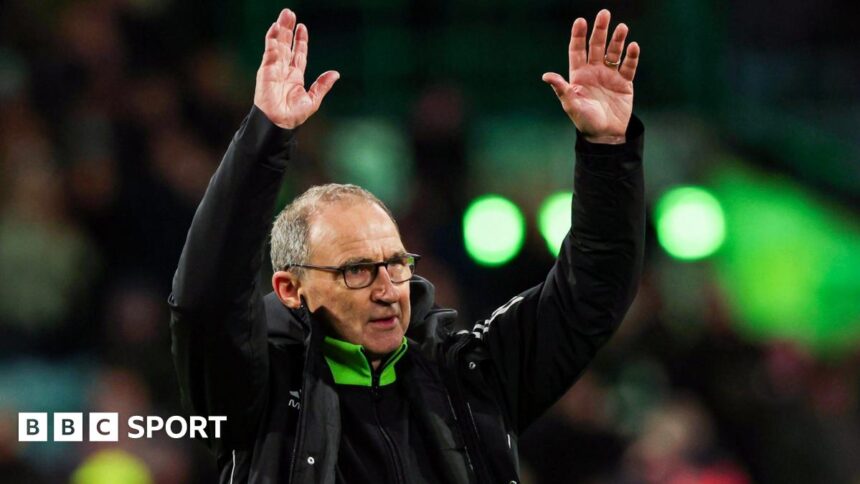
Martin O’Neill’s Celtic Encore: A Brief, Brilliant Return and the ‘What If’ That Lingers
The final whistle at Celtic Park on a crisp December afternoon brought with it more than just three points. It marked the end of a captivating, nostalgic, and ultimately poignant five-week interlude. Martin O’Neill, the architect of some of modern Celtic’s most glorious nights, bowed out for a second time with a 1-0 win over Dundee. The victory sealed a remarkable interim record of seven wins from eight games. Yet, as the departing legend walked down the tunnel, he left behind a statement that will echo through the corridors of Parkhead for some time to come: he would have “happily stayed on.” In a period of unexpected turbulence, O’Neill didn’t just steady the ship; he made it fly, inadvertently casting a complex shadow over the new era that has immediately stumbled.
The Caretaker Who Conquered: O’Neill’s Instant Impact
When Brendan Rodgers’ sudden resignation in late October sent shockwaves through Scottish football, Celtic turned to a familiar face to provide stability. The appointment of Martin O’Neill was framed as a short-term solution, a safe pair of hands to guide the club through a period of transition. What transpired was anything but mere stewardship. O’Neill, with his trademark passion and tactical clarity reignited, delivered a run of form that was both dominant and emotionally resonant.
His return was a masterclass in man-management and simplicity. He immediately reinstated a core of experienced players, fostering a siege mentality and a clear, direct style of play. The results were emphatic:
- Seven wins from eight games, a near-flawless points return.
- A restoration of defensive solidity and attacking urgency.
- Reconnecting the team with a support that craves identity as much as victory.
O’Neill himself described the spell as “holding the fort for a while,” but this was no passive vigil. This was a forceful reminder of his enduring managerial prowess. Crucially, he dismissed the notion that staying for the Premier Sports Cup final—a match Celtic would lose under successor Wilfried Nancy—was a driving motivation. His focus was purely on the day-to-day, winning the next game, a philosophy that yielded relentless success.
A Stark Contrast: The Nancy Appointment and Turbulent Start
While O’Neill’s interim tenure soared, the club’s permanent appointment, Wilfried Nancy, has endured a start that can only be described as brutal. The former Columbus Crew manager, a highly regarded tactician from a different footballing culture, has lost all three of his opening matches. The transition from O’Neill’s intensity to Nancy’s philosophy has been jarring, exposing a squad in need of confidence and perhaps ill-suited to an abrupt stylistic shift.
This stark juxtaposition amplifies O’Neill’s “would have stayed” comment from a mere footnote into a central narrative. The Celtic board, seeking a progressive, long-term project in Nancy, made a decision for the future. Yet, the present has immediately bitten back. The optics are undeniably challenging: the beloved legend departs on a wave of victories, while the new man, tasked with building a new dynasty, cannot buy a win. It raises difficult questions about the timing of the transition and whether the stability O’Neill provided was prematurely discarded.
Nancy deserves time and patience—a commodity often in short supply at a club of Celtic’s demands. However, the shadow of O’Neill’s successful stint lengthens with each defeat, increasing the pressure on the new regime from day one.
The Unanswered Question: Why Not O’Neill?
Given his spectacular interim record and his iconic status, the natural question is why a permanent reunion wasn’t pursued. Analysis suggests several factors were likely at play:
- Age and Long-Term Vision: At 72, O’Neill represents the past, however glorious. The board’s decision to appoint the younger Nancy signals a desire for a multi-year project built on a modern, possession-based model, a clear departure from O’Neill’s more vertical, pressing style.
- A Clean Break: After the abrupt nature of Rodgers’ exit, the club may have sought a definitive new direction, untainted by previous eras. Returning to a former manager, even one as successful as O’Neill, can sometimes feel like a retrograde step.
- O’Neill’s Own Ambiguity: While stating he would have stayed, O’Neill never publicly campaigned for the role. His “happy to help” demeanor may have been taken at face value by a board already looking elsewhere.
Nevertheless, O’Neill’s success makes the decision debatable. He demonstrated an unparalleled ability to maximize the immediate potential of the existing squad, a skill of immense value in a season where trophies are the only currency. In opting for project over pragmatism, the Celtic hierarchy has taken a monumental gamble.
Predictions and Legacy: The Road Ahead for Celtic and O’Neill
The immediate future at Celtic Park is fraught with intrigue and pressure. For Wilfried Nancy, the challenge is now monumental. He must not only implement his system but also win over a fanbase now wistfully recalling the O’Neill days. His first transfer window will be critical; he needs players who can execute his vision and quickly reverse the team’s fortunes. The margin for error has evaporated.
For Martin O’Neill, this brief encore has beautifully burnished his legacy. It proved his fire still burns and his tactical brain remains sharp. He exits, again, as a conqueror. His willingness to step into the breach in a time of crisis reaffirms his deep bond with the club. This final chapter, though short, adds a layer of fascinating “what if” to his Celtic story.
Looking forward, the pressure on the Celtic board will intensify if Nancy’s struggles persist. The specter of O’Neill’s available and effective stewardship will loom over every poor result. Has the club been too idealistic in its appointment? Only time and the league table will tell.
Conclusion: A Bittersweet Symphony of Success and What Might Have Been
Martin O’Neill’s second act at Celtic was a masterful, if fleeting, demonstration of a master at work. He provided a potent reminder of what he does best: organizing, motivating, and winning. His parting comment that he would have happily remained is not a lament, but a statement of fact that now hangs in the air, a bittersweet coda to a triumphant caretaker spell.
The club has chosen its path, betting on the future with Wilfried Nancy. That bold vision now collides with the harsh reality of results and the potent nostalgia O’Neill has reignited. Celtic’s season, and perhaps the trajectory of this new project, will be defined by how quickly it can escape the long, successful shadow cast by a legend who proved, once again, that he had the magic touch. The fort is no longer being held, but the memory of how securely it was guarded will persist for some time.
Source: Based on news from BBC Sport.