Opetaia’s IBF Title in Jeopardy: The High-Stakes Gamble of the Zuffa Belt
The glittering lights of Las Vegas are no stranger to high-stakes gambles, but for Australian cruiserweight king Jai Opetaia, his latest victory may have come at a potentially devastating cost. Fresh off a dominant unanimous decision win over Brandon Glanton to claim the inaugural Zuffa world cruiserweight title, Opetaia now faces a fight outside the ring that could see him stripped of his coveted IBF world championship. This regulatory clash pits the legacy of a traditional sanctioning body against the brash new money of a promotional upstart, with the undefeated Opetaia caught squarely in the middle.
A Victory Overshadowed by Uncertainty
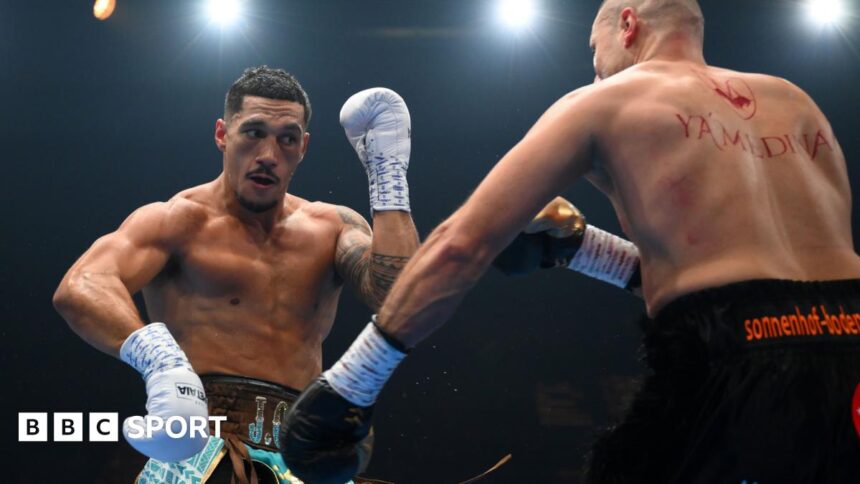
On paper, Opetaia’s performance at the Meta Apex in Las Vegas was a masterclass. The scores—119-106 across all three judges’ cards—tell a story of near-total dominance against a durable and dangerous opponent in Glanton. The win not only extended his perfect record but added a new, shiny belt to his collection. However, the Zuffa world cruiserweight title he now holds may have immediately devalued the more prestigious IBF cruiserweight belt he has carried since his stunning 2022 victory over Mairis Briedis. The core issue is stark: the IBF did not sanction this bout as a title defense or unification, and their rules are notoriously strict on champions facing approved contenders.
The situation is fraught with irony. Opetaia’s team had proactively communicated with the IBF, securing initial approval by framing the Zuffa belt as a “trophy or token of recognition,” not a legitimate world title that would constitute a unification. Yet, in the bombastic world of boxing promotion, Zuffa—a new player backed by the financial might of the UFC’s ownership—inevitably marketed its inaugural belt as a legitimate world championship. This discrepancy between behind-the-scenes assurances and public-facing spectacle has placed Opetaia in a perilous position with the IBF.
Navigating the Sanctioning Body Maze: Rules vs. Reality
To understand the gravity of Opetaia’s predicament, one must understand the sanctioning body politics that govern modern boxing. The IBF, alongside the WBA, WBC, and WBO, operates on a set of bylaws designed to maintain order, mandate mandatory challengers, and collect sanctioning fees. Straying from these protocols, especially by recognizing another organization’s title without permission, is a cardinal sin.
- Mandatory Defense Obligations: Champions are typically required to face the IBF’s top-ranked contender within a specified window, unless an exception is granted.
- Unification Approval: Any fight that involves another sanctioning body’s title must be explicitly approved as a unification bout.
- Bout Sanctioning: For a champion’s fight to count as a defense, it must be sanctioned by the governing body, which involves fees and oversight.
In this case, Opetaia’s fight with Glanton was not a sanctioned IBF defense. By winning and accepting the Zuffa title, he may be viewed as having participated in an unauthorized unification, a clear violation of IBF rules. The precedent is not on his side; history is littered with champions stripped for less. The IBF’s decision will hinge on whether they accept his team’s “trophy” characterization or view the Zuffa belt as a direct challenge to their authority.
Expert Analysis: A Strategic Misstep or a Calculated Risk?
From a pure boxing perspective, Opetaia’s choice to fight Glanton was sound. It was a tough keep-busy fight against a credible opponent, maintaining activity and visibility on a global stage in Las Vegas. However, from a boxing business strategy standpoint, it appears to be a significant gamble. The value of the Zuffa title is currently speculative—it carries no lineage, no history, and its marketability is entirely tied to Zuffa’s ability to build it into a respected brand. The IBF title, by contrast, is a proven asset that opened the door to his recent high-profile victory over Ellis Zorro in Saudi Arabia.
Why take the risk? The answer likely lies in the shifting economics of the sport. The influx of entities like Zuffa, Turki Alalshikh’s Riyadh Season, and other deep-pocketed promoters is disrupting the traditional model. Opetaia and his team may be betting that aligning with a new, well-funded player like Zuffa could lead to more lucrative fights and greater control in the long term, even at the short-term cost of an IBF strap. They may be calculating that the Ring Magazine cruiserweight title, which he also holds and is widely respected as a lineal championship, will preserve his status as the true division king regardless of sanctioning body politics.
Predictions and Potential Fallout
The immediate future holds several distinct possibilities, each with profound implications for the cruiserweight landscape.
Scenario 1: The IBF Strips Opetaia. This is the most likely outcome based on strict adherence to their regulations. The IBF would vacate the title, ordering their top two contenders (likely Mairis Briedis and perhaps Richard Riakporhe) to fight for the vacant belt. Opetaia would be left with the Zuffa and Ring Magazine titles, forcing him to build the Zuffa belt’s credibility from scratch.
Scenario 2: A Hefty Fine and a Mandatory Order. The IBF could choose a middle path, fining Opetaia and immediately enforcing a mandatory defense against their #1 contender. This would be a warning shot, allowing Opetaia to retain the belt but under strict terms and with a financial penalty.
Scenario 3: The IBF Looks the Other Way. Unlikely, but possible if the body determines the Zuffa belt is indeed inconsequential. This would be a major loss of face for the IBF and set a dangerous precedent, effectively endorsing a rival title.
For the cruiserweight division, a stripping would create chaos. Instead of a unified champion facing clear mandatories, we would have a splintered title picture with Opetaia as a “champion without a belt” in the eyes of many, and a new, less-recognized IBF champion. This fragmentation benefits no one but rival promoters and contenders waiting in the wings.
Conclusion: A Champion at a Crossroads
Jai Opetaia stands at a critical juncture in his career. His in-ring prowess is undeniable; he has proven himself the best cruiserweight in the world. Yet, boxing has always been a sport where business and politics can outweigh pure athletic merit. His gamble on the Zuffa belt is a bold bet on the future of the sport’s power structure, a wager that new money and new players can rewrite the old rules.
Whether this move is seen as a visionary step or a costly error will be determined by the IBF’s impending decision and Zuffa’s ability to deliver on its promises. One thing is certain: the saga of the IBF title in doubt underscores the perpetual tension in boxing between the sanctity of sporting achievement and the complex, often frustrating, machinery of the business that surrounds it. Opetaia’s fight for legitimacy, both as a champion and as a businessman navigating this terrain, is just entering its most crucial round.
Source: Based on news from BBC Sport.