Dango Ouattara’s Panenka Gamble Backfires as West Ham Edge Brentford in FA Cup Thriller
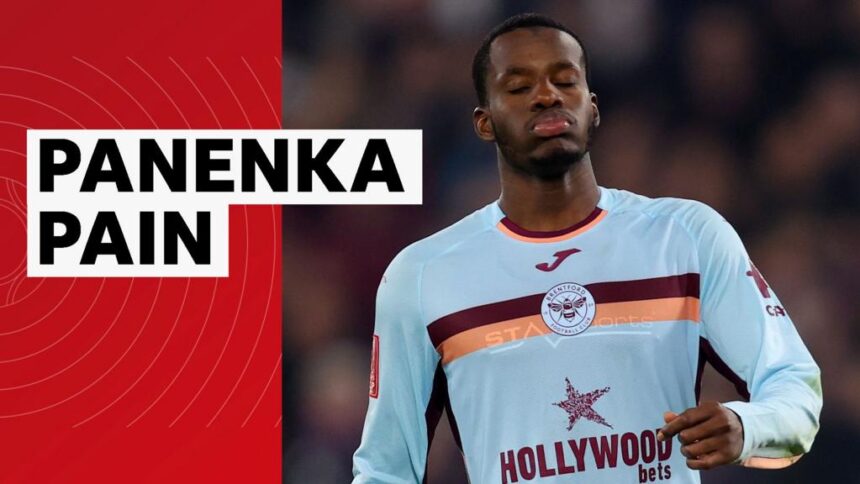
In the high-stakes theatre of a penalty shootout, where nerve often trumps technique, the boldest gambles are either immortalized or instantly regretted. At the London Stadium, Brentford’s Dango Ouattara experienced the crushing latter, as his audacious Panenka was calmly collected by West Ham’s Alphonse Areola, sending the Hammers through to the FA Cup quarter-finals in a night of relentless drama. A 2-2 draw after 120 minutes of grueling, end-to-end action was ultimately decided from twelve yards, with West Ham emerging 5-3 victors, their passage secured by a moment of sheer bravado that spectacularly misfired.
A Cup Classic Forged in Grit and Flair
This was not a tie for the faint-hearted. From the outset, the match pulsed with the intensity of a Premier League derby, both teams understanding the golden opportunity at hand. West Ham, seeking silverware to crown their impressive season, started brightly. Brentford, desperate to salvage a campaign marred by injuries, displayed their characteristic resilience. The deadlock was broken just before halftime, with Jarrod Bowen demonstrating his predatory instincts to tap home from close range after a defensive scramble.
True to form, Thomas Frank’s Bees stung back. The introduction of Yoane Wissa injected vital pace, and the Congolese forward delivered, sweeping home a precise low cross to level the score and force the game into extra time. The additional period was a rollercoaster. Brentford seized the initiative, with Nathan Collins powering in a header to put the visitors ahead and on the cusp of a major upset. Yet, David Moyes’ side, fueled by a roaring home crowd, found an immediate response. The ever-reliable James Ward-Prowse whipped in a delicious free-kick, and Lucas Paquetá arrived with a deft, glancing header to make it 2-2 and trigger the penalty shootout.
The Shootout: Nerve, Precision, and One Costly Chip
As the teams gathered at the centre circle, the weight of the moment was palpable. The initial takers were flawless. Ward-Prowse, Paquetá, and Said Benrahma for West Ham; Bryan Mbeumo, Mathias Jensen, and Shandon Baptiste for Brentford—all converting with cold efficiency. The turning point arrived with Brentford’s fourth kick. Dango Ouattara, the Burkina Faso winger, stepped up. What followed was a split-second decision that will be debated for weeks.
- Ouattara’s Panenka attempt was not poorly executed in terms of height or trajectory.
- However, it lacked the essential element of surprise and conviction. Areola, crucially, held his ground.
- The West Ham keeper, showing remarkable composure, simply watched the ball’s flight and gathered it into his chest.
- The gamble had failed spectacularly, handing West Ham a decisive psychological and practical advantage.
With the pressure now squarely on his shoulders, Emerson Palmieri had the chance to win it. The Italian left-back made no mistake, firing high into the net to spark wild celebrations in the East End and send West Ham into the last eight.
Expert Analysis: Dissecting the Panenka Paradox
The Panenka penalty is football’s ultimate high-wire act. When it succeeds, as Antonín Panenka himself showed in the 1976 European Championship final, it is a stroke of genius that humiliates the goalkeeper. When it fails, the taker is branded reckless. Ouattara’s choice must be analyzed in context.
Psychological Warfare: In a shootout where every previous penalty had been struck with power, a Panenka is a tool of psychological disruption. It aims to outthink the keeper. However, this requires the taker to be utterly convinced of their action. There was a hint of hesitation in Ouattara’s run-up, which may have betrayed his doubt.
Goalkeeper Intelligence: Alphonse Areola deserves immense credit. Instead of diving early, he stayed on his feet, reading the player’s body language. His patience transformed what could have been a moment of magic for Ouattara into one of mortification. This save was as much about mental fortitude as it was about reflexes.
Team Dynamics: The miss will raise questions about pre-designated penalty hierarchies. Was Ouattara the planned fourth taker? In such a pressurized environment, was a high-risk technique the right choice for a player not renowned for spot-kicks? Thomas Frank will undoubtedly review the process, though he will also defend his player’s right to make that decision in the moment.
Road to Wembley: Implications for Both Clubs
For West Ham, this victory is a massive boost. Progressing in the FA Cup keeps a tangible route to glory alive and provides a perfect response to recent Premier League setbacks. The character shown to fight back twice will please David Moyes, and the depth of his squad was evident. They now enter the quarter-final draw as one of the favorites, with genuine belief they can go all the way.
For Brentford, the manner of this exit is heart-wrenching. They matched a top side over 120 minutes and showcased the fighting spirit that defines them. However, the defeat extends their difficult run and ends a precious chance for cup success. The focus now shifts entirely to Premier League survival, where every point is critical. The challenge will be to channel the positives from this performance while eradicating the fine-margin errors that proved so costly.
Conclusion: The Fine Line Between Hero and Villain
Football, in its cruel beauty, often hinges on the slimmest of margins. At the London Stadium, the margin was the few feet of air between Alphonse Areola’s gloves and Dango Ouattara’s chipped penalty. West Ham march on, their dreams of a day out at Wembley very much alive, fortified by a goalkeeper’s cool head and a collective refusal to be beaten.
For Brentford and Ouattara, it is a brutal lesson in the razor’s edge that exists in knockout football. The Panenka will be replayed, analyzed, and lamented. But in that single, audacious act, lies the very essence of the FA Cup’s magic and misery—a willingness to risk everything for glory, understanding that the fall from such a height is a long and lonely one. The Hammers survived the test; the Bees were stung by their own boldness.
Source: Based on news from BBC Sport.