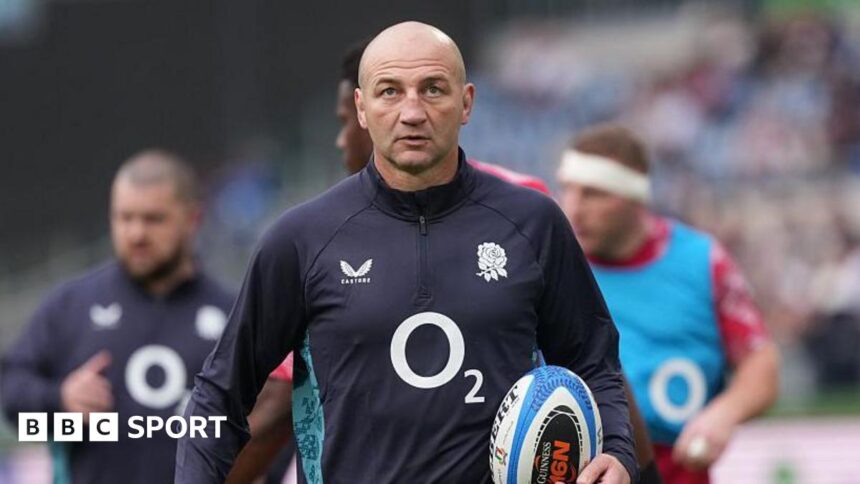
The Weight of the Rose: How Pressure Has Crippled Borthwick’s England
The narrative was set. Steve Borthwick, the meticulous technician, had steadied the ship. After taking over from the turbulent Eddie Jones era in December 2022, England strung together an 11-match winning run, suggesting a swift and seamless transition. The 2024 Six Nations was to be a platform for confirmation, a launchpad for a new era. Instead, it has become a stark psychological case study. Defeat to Scotland was a setback. The demolition by Ireland was a reality check. But the historic, first-ever loss to Italy in Rome was a crisis of confidence that transcends tactics. As Borthwick himself has now articulated, the immense pressure of representing England has visibly “weighed heavy” on his players, unraveling their campaign and exposing a fundamental mental hurdle.
From Promise to Paralysis: A Six Nations Unraveled
The contrast is jarring. The England that entered the Championship was pragmatic but effective, built on a solid set-piece and defensive grit. The team that slumped to a third consecutive defeat in Rome looked shackled, hesitant, and devoid of attacking clarity. This wasn’t simply a case of being outplayed by superior skill; it was a display of being overwhelmed by the occasion.
Steve Borthwick’s diagnosis is telling. Speaking to the BBC’s Rugby Union Weekly podcast, he pinpointed the psychological burden: “I think that the England shirt can, at times, weigh heavy.” He acknowledged the unique scrutiny that comes with the role, stating, “We’ve worked exceptionally hard to try and alleviate that.” Yet, the evidence on the pitch suggests that for all the technical work, the mental block remains. The expectation to win, the history of the shirt, the relentless media spotlight—these factors have coalesced into a perfect storm of anxiety, leading to error-strewn performances where players appear to be playing not to lose, rather than playing to win.
Anatomy of the Pressure: Why the England Shirt is Unique
To understand the current predicament, one must appreciate the unique ecosystem of English rugby. The pressure is multifaceted and unlike that faced by any other home nation.
- Sheer Expectation: With the largest player base and financial resources, England is always expected to contend, if not dominate. Mediocrity is never tolerated.
- Historical Scrutiny: Every performance is measured against the legacy of 2003’s World Cup-winning side, a shadow that looms two decades on.
- Media Magnification: Operating in the world’s most intense rugby media market, every selection, every error, and every quote is dissected on back pages and social media, creating a constant noise.
- The Post-Jones Pendulum: The shift from Eddie Jones’s chaotic, confrontational style to Borthwick’s structured, detail-oriented approach has been a cultural shock. Players seem caught between instincts and instruction.
This environment creates what sports psychologists call “outcome-focused” thinking. Players become consumed by the potential consequences of failure—the headlines, the criticism—rather than being immersed in the process of the game itself. The result is a visible tightening in key moments: forced passes, knock-ons under no pressure, and defensive miscommunications.
Borthwick’s Challenge: Coaching Minds as Well as Systems
Steve Borthwick is renowned as one of rugby’s great analysts, a coach who leaves no stone unturned in the search for a marginal gain. However, the last three games have revealed a challenge that cannot be solved by data alone. His admission is a crucial first step—you cannot fix a problem you won’t name. The work to “alleviate” the pressure is now his central mission.
This goes beyond traditional motivational speeches. It requires a deliberate, cultural rebuild. Experts suggest this might involve:
- Redefining “success” in the short-term to focus on performance metrics over pure results.
- Shielding players from external noise and reinforcing an internal, team-first belief system.
- Encouraging expressive, instinctive play within the structure to liberate talents like Marcus Smith and Tommy Freeman.
- Embracing the pressure as a privilege, not a burden, a mindset famously adopted by the All Blacks.
The coming summer tour to Japan and New Zealand presents a critical laboratory. Away from the suffocating home spotlight, Borthwick must foster a more resilient, mentally agile group. The question is whether his coaching persona, so defined by control and detail, can successfully cultivate the freedom and fearlessness required to lift the psychological weight.
The Road Ahead: World Cup Shadows and the Path to Liberation
The timing of this crisis is significant. With the 2027 Rugby World Cup on the horizon, England’s psychological frailties have been exposed at a pivotal moment. A title bid is gone, but the remainder of the Six Nations and the tours ahead are now about foundational repair.
Prediction for the immediate future: We can expect Borthwick to double down on his core principles while attempting to simplify the game for his players. The focus will be on restoring basics with ruthless efficiency—dominant scrum, secure lineout, aggressive defense—to build a platform of confidence. Selections may increasingly favor those with proven mental fortitude.
However, the long-term prediction is more complex. True liberation will only come when this England team forges its own identity, separate from the ghosts of 2003 and the turbulence of the Jones years. They need a defining, against-the-odds victory born of collective spirit, not just individual talent. Until then, the shirt will remain heavy.
The ultimate conclusion is stark. Steve Borthwick has identified the core issue plaguing English rugby: it is in the mind. The 11-game win streak papered over a fragility that the cauldron of the Six Nations has brutally exposed. Technical and tactical prowess are worthless if players are psychologically compromised. Borthwick’s tenure will now be defined not by his playbook, but by his ability to perform the most delicate coaching surgery: lifting the weight of the Rose and allowing a new, liberated England to finally bloom. The journey from here is less about designing new plays, and more about rebuilding a mindset.
Source: Based on news from BBC Sport.