


Quiz: Who Does Max Dowman Join as a Premier League’s 10 Youngest Scorers?
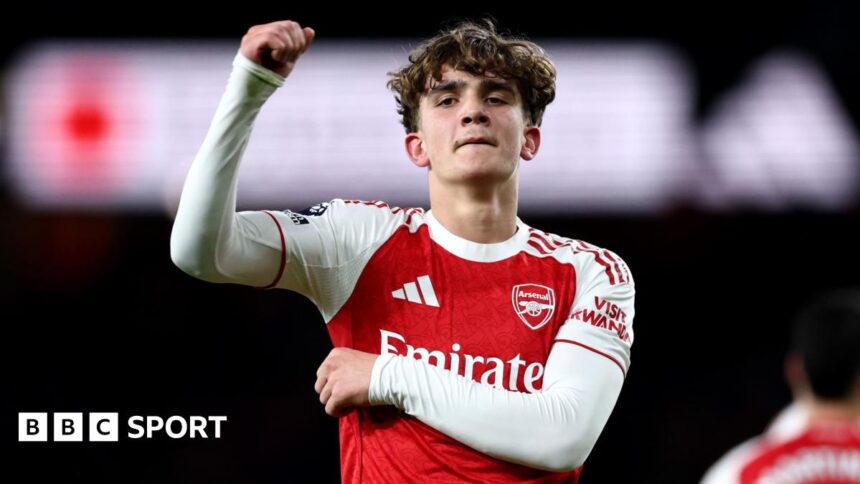
The Emirates Stadium was already bubbling with the relief of a late, late breakthrough when history was made in the 97th minute. With Everton’s goalkeeper stranded, a 16-year-old lad from Hale End breezed past two desperate challenges and rolled the ball into an empty net. In that moment, Max Dowman didn’t just seal a 2-0 win for Arsenal; he etched his name into the Premier League record books. At 16 years and 73 days, he became the competition’s youngest ever goalscorer, a staggering feat that rewrites a record held for nearly two decades. But this milestone is about more than one boy wonder. It’s about entry into one of football’s most exclusive clubs. So, who does the prodigious Dowman now join on the illustrious list of the Premier League’s 10 youngest scorers?
Breaking the Barrier: A Record Two Decades in the Making
For 19 years, the record stood as a testament to a different era. James Vaughan, scoring for Everton against Crystal Palace in April 2005 at 16 years and 271 days, was the benchmark. It was a record that seemed to grow more sacred with each passing season, as football evolved and the pathway from academy to first-team became ever more scrutinized. Dowman’s goal didn’t just break that record; it shattered it by over half a year. This isn’t merely a case of a player scoring young; it’s a quantum leap in precociousness.
Mikel Arteta’s bold substitution in the 74th minute, with the game agonizingly goalless, was a masterstroke of faith. In handing Dowman his third Premier League appearance, the manager was playing a tactical hunch, seeking fresh legs and fearless energy. What he received was a game-changing display that transcended tactics. Dowman’s composure to finish the move, after Viktor Gyokeres’ 89th-minute opener had lifted the pressure, revealed a temperament belying his years. The goal itself—a savvy, calm run and finish after seizing on a defensive disaster—was the work of a seasoned pro, not a teenager on his debut season.
The Elite Ten: Dowman’s New Peer Group
By entering this hallowed list, Max Dowman aligns himself with a unique fraternity of wunderkinds. These players shared a moment of breathtaking early promise, though their careers thereafter have taken dramatically different paths. Let’s meet the elite group Dowman now leads.
- Max Dowman (Arsenal) – 16 years, 73 days: The new record holder. May 2024 vs Everton.
- James Vaughan (Everton) – 16 years, 271 days: The previous holder. April 2005 vs Crystal Palace.
- Harvey Elliott (Fulham) – 16 years, 30 days: A technically sublime goal for Fulham before his move to Liverpool. May 2019 vs Wolves.
- Matthew Briggs (Fulham) – 16 years, 65 days: Held the record briefly in 2007. A defender who scored early but saw his career hampered by injury.
- Wayne Rooney (Everton) – 16 years, 360 days: An iconic, last-minute winner against Arsenal that announced a global superstar. October 2002.
- Cesc Fàbregas (Arsenal) – 17 years, 113 days: A midfield maestro who scored in a 3-0 win over Wolves in 2004, foreshadowing his legendary career.
- Michael Owen (Liverpool) – 17 years, 143 days: A blistering pace and cool finish against Wimbledon in 1997 kicked off a Ballon d’Or winning journey.
- Rushian Hepburn-Murphy (Aston Villa) – 17 years, 173 days: Scored in 2015 but struggled to establish himself at the highest level.
- Federico Macheda (Manchester United) – 17 years, 226 days: Scored a legendary, title-influencing winner against Aston Villa in 2009, a career peak that proved difficult to sustain.
- Daniel Jebbison (Sheffield Utd) – 17 years, 309 days: Scored on his first Premier League start in 2021, showing the pathway is still alive for sharp, physical strikers.
This list is a powerful reminder that a record-breaking debut goal is a beginning, not a destiny. It offers no guarantees. For every Rooney and Owen, there is a Vaughan or Briggs whose careers were shaped more by injury and circumstance than that initial flash of genius. Dowman now carries that weight of immediate, immense comparison.
Analysis: What Dowman’s Record Tells Us About Modern Football
Dowman’s achievement is a confluence of several modern football trends. Firstly, it highlights the incredible academy production line at clubs like Arsenal, where technical proficiency and tactical understanding are drilled into players from a very young age. Secondly, it underscores the increasing bravery of managers like Arteta to trust youth in high-pressure moments, moving away from the perceived safety of experienced pros.
Furthermore, the physical development of teenagers today, supported by advanced sports science and nutrition, allows them to compete athletically in a league that is faster and stronger than ever before. Dowman didn’t look out of place; he looked capable. His goal also came in “stoppage time,” a period that has expanded dramatically in the modern game, creating more opportunities for late, decisive interventions from substitutes.
However, the immediate challenge for Arsenal and Dowman is talent management. History is littered with young players burdened by hype. The club must now carefully navigate his development, shielding him from excessive pressure while providing him with minutes that foster growth. The presence of a stable, long-term project under Arteta is a significant advantage that many on the list above did not have.
Predictions: What’s Next for the Record Holder?
Predicting the career trajectory of a 16-year-old is a fool’s errand, but the early signs for Max Dowman are profoundly encouraging. Unlike some pure goal-poachers on the youngest scorers list, Dowman’s all-around game as a forward—his link-up play, movement, and willingness to drive at defenders—suggests a more complete modern attacker.
Short-term, we can expect more cameo appearances from the bench as Arsenal manage the title run-in. His skill set makes him a potent weapon against tiring defenses. Long-term, the challenge will be transitioning from a history-making substitute to a consistent starter. He will need to add physical strength and maintain his hunger. Given the Gunners’ project and his apparent mentality, the tools for a stellar career are there. The key will be patience—from the club, the fans, and the player himself.
As for the record he now holds, it feels more secure than Vaughan’s ever did. The combination of age (16 years, 73 days) and the modern game’s demands makes it a monumental barrier. To break it, football would need to see a truly generational talent emerge even earlier, at 15, in a top-flight match—a scenario that seems almost unfathomable under current regulations and physical demands.
Conclusion: A Star is Born, But the Journey Just Begins
Max Dowman’s 97th-minute goal was more than three points; it was a seismic moment in Premier League history. He now sits atop a list that charts the explosive beginnings of some of football’s greatest names and its most poignant “what-ifs.” His achievement is a testament to his own dazzling talent, Arteta’s visionary management, and Arsenal’s stellar academy.
By joining the Premier League’s 10 youngest scorers, he has entered an exclusive club. The question now shifts from “who does he join?” to “which path will he follow?” Will he be a Rooney or a Vaughan? The next chapter is entirely unwritten. For now, the football world can simply marvel at a boy who, with one cool finish, didn’t just win a game for his team, but won a permanent place in the annals of the sport. The record is his. The future, tantalizingly, is his to shape.
Source: Based on news from BBC Sport.


