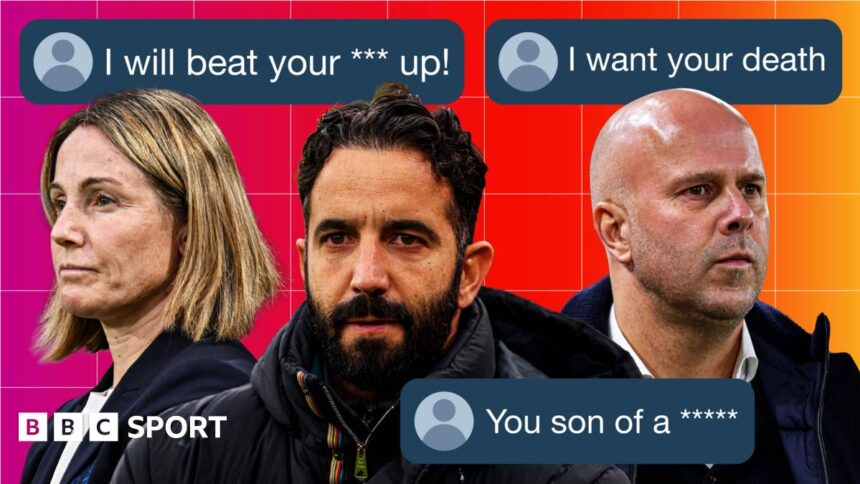
Racism, Rape and Death Threats: The Weekend That Laid Bare Football’s Social Media Nightmare
On a typical autumn weekend, fans across England settle in for the drama of the Premier League and the rising spectacle of the Women’s Super League. The narratives are familiar: tactical masterclasses, moments of individual brilliance, the agony of defeat. But beneath the surface of these 16 matches on November 8th and 9th, a far more sinister and coordinated game was being played. A game not of skill, but of hate. A BBC investigation, in collaboration with data science firm Signify, has pulled back the curtain on a shocking reality: in just 48 hours, over 2,000 extremely abusive social media posts—a torrent of racism, homophobia, rape and death threats—were directed at the very people who make the sport what it is. And in a startling revelation, the primary targets were not the players on the pitch, but the managers in the dugout.
The Digital Dugout: Managers in the Crosshairs
Conventional wisdom might suggest that players, as the most visible stars, bear the brunt of online vitriol. This investigation shatters that assumption. The data reveals a deliberate and disturbing shift in focus towards managers. Why? Experts point to a perfect storm of perceived power and accessibility.
“Managers are seen as the architects of a team’s fate,” explains Dr. Linford Peters, a sports sociologist who studies fan behavior. “They make the contentious substitutions, they set the tactics fans disagree with. In the online mob’s mind, they are solely responsible for failure. Unlike players, who can be shielded by agents and PR teams, managers—especially in press conferences and post-match interviews—are constantly presenting a ‘target’ for frustration. The abuse is a twisted form of engagement, a way to directly challenge authority from behind the anonymity of a keyboard.”
The platform of choice for this onslaught was overwhelmingly X (formerly Twitter), accounting for a staggering 82% of the abusive posts tracked. The platform’s real-time, public reply function creates a direct, unfiltered, and often toxic line from a fan to a figure they see on television.
- Anonymity as Armor: Fake accounts and burner profiles allow individuals to detach their online actions from real-world consequences.
- The Performance of Fandom: Extreme posts can be a way to gain traction and validation within niche, toxic online communities.
- The Pressure Cooker Effect: The immediate nature of live football, where emotions run high, translates into instant, reactionary abuse the moment a decision backfires.
Deconstructing the Hate: More Than Just “Trolling”
To label this abuse simply as “trolling” or “banter” is to dangerously minimize its content and impact. The Signify analysis categorized threats and slurs that go far beyond criticism of a 4-4-2 formation. This was targeted harassment designed to intimidate, degrade, and inflict psychological harm.
The investigation found posts containing:
- Racist slurs and imagery directed at managers and players of color.
- Graphic death threats, often detailing violent methods.
- Vile rape and sexual violence threats, particularly prevalent against figures in the women’s game.
- Homophobic abuse, targeting both individuals and the sport’s broader community.
“The language is specifically chosen to cause maximum trauma,” says Kara Bellington, founder of a nonprofit supporting athletes’ mental health. “A death threat isn’t about football. A rape threat isn’t about a lost match. It’s about using the most horrific violations imaginable as a weapon. For the recipient, it’s not just reading a nasty comment; it’s a violation that can lead to genuine fear, anxiety, and a fundamental questioning of their safety in their profession.”
The inclusion of the Women’s Super League in the study is critical. Abuse in the women’s game often carries a distinct, misogynistic edge, seeking to undermine the sport’s legitimacy and intimidate those pioneering its growth. The threats are a brutal reminder of the gendered hostility female athletes and coaches still face.
The Mounting Cost: From Screens to Real-World Repercussions
The impact of this digital avalanche extends far beyond a notification on a phone. It seeps into the fabric of the sport, affecting decision-making, mental health, and the very pipeline of talent.
We are already seeing consequences:
- Career Reconsideration: Promising young coaches may think twice about pursuing a high-profile management career, deterred by the inevitable abuse that now accompanies the job.
- Erosion of Mental Wellbeing: The constant background noise of hate takes a cumulative toll, with clubs increasingly having to provide psychological support for staff as well as players.
- Normalization of Extremes: As the most extreme posts grab attention, the baseline for what is considered “acceptable” criticism is dangerously shifted, coarsening fan discourse overall.
“Clubs are in an arms race against this stuff,” notes a Premier League communications director who asked to remain anonymous. “We have monitoring services, we report to platforms, we support our staff. But it’s reactive. We’re dealing with the symptoms after the infection has spread. The question is no longer if a manager will get abuse after a loss, but what horrific form it will take.”
Beyond Condemnation: What Comes Next?
Universal condemnation is easy. Meaningful action is not. The weekend of November 8-9 serves as a stark data point, a baseline from which the sport’s response must be measured. Several paths forward are emerging, but all require unprecedented collaboration.
Platform Accountability: The 82% figure for X is a damning indictment. Social media companies must move beyond easily circumvented automated filters and invest in human moderation teams with cultural and sporting literacy. Verification policies and rapid, transparent takedown processes for credible threats are non-negotiable.
Unified Legal Action: Leagues, clubs, and the PFA must move from isolated reporting to a coordinated legal strategy. Identifying and prosecuting a few high-profile offenders, using the full extent of the law against threats of violence and racial hatred, would send a powerful deterrent message.
Fan Education and Culture Re-set: Clubs have a unique relationship with their supporters. Initiatives that educate on the real human impact of abuse, promote positive fan channels, and explicitly state that such behavior is not a form of support, are essential to reclaiming the culture.
The prediction is grim but clear: without systemic intervention, the volume and severity of abuse will escalate. The next frontier could be targeting match officials with even greater ferocity, or the families of managers and players. Alternatively, a tragic real-world incident stemming from online threats could finally force the seismic change that years of warnings have not.
The beautiful game is being shadowed by an ugly, relentless counterpart. That November weekend wasn’t an anomaly; it was a snapshot of the new normal. The final whistle blows on the pitch, but for those targeted, the harassment offers no such respite. The question now is whether football’s governing bodies, social media giants, and the fan community itself have the courage to step up and reclaim the game—not just from defeat, but from hate.
Source: Based on news from BBC Sport.
Image: Source – Original Article