Raiders Claim Ravens “Backed Out” of Blockbuster Maxx Crosby Trade Agreement
In a stunning and bizarre twist to the NFL offseason, the Las Vegas Raiders have publicly accused the Baltimore Ravens of reneging on a trade agreement involving superstar defensive end Maxx Crosby. The allegation, delivered without supporting details, has sent shockwaves through the league, leaving fans, analysts, and presumably the Ravens organization itself scrambling for answers. This isn’t just about a routine player transaction; it’s a rare public airing of alleged dirty laundry between franchises, centering on one of the game’s most dominant and beloved defensive players. The football world is now left to parse the implications of a deal that, if the Raiders’ claims are true, would have been one of the most seismic trades in recent NFL history.
A Statement Without Substance: Dissecting the Raiders’ Bombshell
The Raiders’ announcement was as explosive as it was vague. By stating the Ravens had “backed out of our trade agreement,” the team made a serious accusation of bad faith negotiation. In the high-stakes, reputation-driven world of NFL front offices, such a public charge is virtually unprecedented. Typically, trade discussions are shrouded in secrecy, and when they fall apart, teams issue generic statements about “exploring all options” or mutually deciding to move in different directions.
The complete lack of accompanying details is the most intriguing element. The Raiders provided no information on:
- The proposed trade compensation: Was it multiple first-round picks? A package of players and picks?
- The timing of the alleged agreement: When was this deal supposedly struck?
- The communication breakdown: What prompted the Ravens to allegedly withdraw?
This vacuum of information immediately raises questions. Is this a strategic move by new Raiders General Manager Tom Telesco to signal to a frustrated Crosby that the team tried to build a contender around him? Or is it a genuine grievance over a handshake deal gone wrong? Without the Ravens’ side of the story—who have remained silent—the narrative is dangerously one-sided.
The Maxx Crosby Conundrum: To Build Around or Cash In?
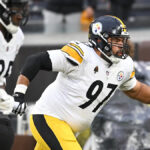
At the heart of this maelstrom is Maxx Crosby himself. “Mad Maxx” is not just the Raiders’ best player; he is the emotional and cultural heartbeat of the franchise. A perennial Defensive Player of the Year candidate, his relentless motor and production are irreplaceable. However, Crosby has been openly vocal about his desire to win and his frustration with years of mediocrity in Las Vegas.
This public tension created two clear paths for the Raiders’ front office: either commit fully to building a winner around Crosby immediately, or consider trading him for a historic haul of assets to accelerate a broader rebuild. Trading a player of Crosby’s caliber, in his prime, with a reasonable contract, could potentially net a package similar to what the Broncos received for Von Miller or more.
The potential trade compensation would have been astronomical. We are likely talking about multiple first-round picks, possibly a high-caliber young player, and additional mid-round selections. For the Ravens, a team perpetually on the cusp of Super Bowl contention, adding a force like Crosby to a defense already featuring Roquan Smith and Kyle Hamilton would be a league-altering move. The mere possibility of this trade shows how highly Crosby is valued across the NFL.
Expert Analysis: Unpacking the Motives and Fallout
From a league operations perspective, the Raiders’ move is baffling. “Trade agreements” in the NFL are typically finalized in a matter of minutes when the league office is open to process the transaction. A “backed out” agreement suggests terms were agreed upon in principle, but nothing was formally executed. This is a gray area where miscommunication and second-guessing often live.
Several theories emerge from seasoned front-office analysts:
- Buyer’s Remorse: The Ravens, after agreeing, may have had internal concerns about draft capital depletion or salary cap implications and pulled back.
- Raiders’ Leverage Play: This could be a cynical but clever ploy. By making this claim, the Raiders signal to Crosby they were willing to acquire massive resources (implying a rebuild around him), while also potentially inflating his market value should they revisit trades later.
- A Fundamental Misunderstanding: Perhaps what the Raiders considered an “agreement” was merely a substantive discussion that the Ravens viewed as a preliminary exploration.
The immediate fallout is a major distraction for both clubs. For the Raiders, they must now manage the perception of their best player, who now knows the team entertained trading him. For the Ravens, their silence is deafening, but they must address these allegations internally with their own players and agents, assuring them of their professionalism in negotiations.
Predictions and Lasting Implications
Where does this go from here? The most likely immediate outcome is a war of words behind the scenes, with the Ravens eventually issuing a firm denial or a carefully worded rebuttal. The NFL league office may even quietly inquire to ensure no tampering or unethical negotiation tactics were used.
The long-term predictions are more complex:
- Maxx Crosby’s Future: This incident irrevocably changes his relationship with the Raiders’ front office. It either galvanizes a new, aggressive “prove-it” phase where the team spends big to win now, or it plants a seed that will make a future trade request inevitable. Crosby’s camp now holds significant power.
- Front Office Reputations: Tom Telesco’s first major headline in Las Vegas is an accusation of another team’s bad faith. This could make other GMs wary in future dealings. For the Ravens’ Eric DeCosta, a reputation as one of the league’s most respected executives is now under a subtle cloud.
- The Trade Itself: While seemingly dead now, the framework discussed could resurface. If the Raiders struggle early in the 2024 season and Crosby’s frustration boils over, Baltimore—or another contender—could come calling with a similar offer.
Conclusion: A Saga Far From Over
The Las Vegas Raiders’ accusation that the Baltimore Ravens backed out of a Maxx Crosby trade is more than just offseason gossip. It is a rare breach of the NFL’s unwritten front-office code, a pivotal moment in the career of a franchise icon, and a strategic gambit with unclear winners. While the alleged trade itself is almost certainly dead, the reverberations will be felt for months, if not years.
The coming days will be crucial. The Ravens’ response, Maxx Crosby’s reaction, and the Raiders’ next moves will shape the narrative. One thing is certain: the trust between these two organizations is shattered, and the trust between Crosby and the Raiders’ brass has been severely tested. In the high-stakes poker game of NFL team building, the Raiders have just turned over their hand and accused their opponent of cheating. The league is watching, waiting for the next, inevitable move in this unprecedented drama.
Source: Based on news from Yahoo Sports.
Image: CC licensed via commons.wikimedia.org