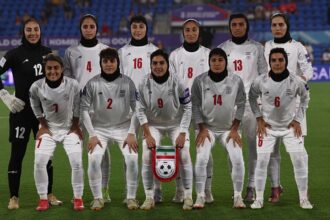
Defection and Defiance: Iranian Women’s Soccer Team Caught in Geopolitical Storm
The beautiful game is often a refuge from the world’s turmoil, but for the Iranian women’s national soccer team, the pitch has become a stage for a high-stakes geopolitical and human drama. A shocking report of defection has thrust the team into an international spotlight, highlighting the precarious intersection of sport, politics, and personal freedom. Amid the escalating conflict in the Middle East, five members of the team have reportedly chosen not to return home following the Women’s Asian Cup in Australia, leaving their teammates in limbo and igniting a firestorm of condemnation from Tehran. This incident is not an isolated act of rebellion but the latest, most drastic chapter in a long saga of silent protest and overt pressure faced by Iranian athletes, particularly women, on the global stage.
A Defection Amidst Escalating Conflict
The team’s journey to Australia for the continental championship coincided with a dangerous escalation in regional hostilities. Shortly after their arrival, the United States and Israel initiated military actions against Iranian interests, fundamentally altering the context of their sporting mission. Stranded far from home as war clouds gathered, the players found themselves in a uniquely vulnerable position. Following their final match on Sunday, the reported defection of five players unfolded—a decision that carries immense personal risk and profound political ramifications.
The Iranian government’s response was swift and severe. State media outlets labeled the players “wartime traitors,” a loaded term that underscores the regime’s view of the act as one of national betrayal during a period of perceived external threat. An accompanying statement warned, “Anyone who takes a step against the country under war conditions must be dealt with more severely.” This rhetoric signals the potential for harsh reprisals against the players’ families or any future attempts at reconciliation, framing a personal choice for asylum as an act of treachery. The rest of the squad now faces an uncertain and likely anxious return, caught between their duty to their country and the chilling message sent to them and their teammates.
A History of Silent Protest and Overt Pressure
To understand the gravity of this defection, one must view it as the culmination of years of quiet resistance. The Iranian women’s team has consistently used international tournaments as a platform for subtle, yet powerful, statements against the constraints imposed upon them by their government.
- World Cup Solidarity: At the 2022 Men’s World Cup in Qatar, the Iranian men’s team refused to sing their national anthem in their opening match, in solidarity with the nationwide “Woman, Life, Freedom” protests following the death of Mahsa Amini. This act of defiance resonated globally.
- Echoed Silence, Then Enforced Conformity: In a clear show of unity, the women’s team mirrored this protest during their first Asian Cup match, standing silent during the Iranian anthem. However, the subsequent matches told a different story. Under reported pressure from Iranian officials, the team not only sang the anthem but also offered a military salute—a stark image of compelled patriotism that contradicted their initial stance.
This sequence reveals the intense scrutiny and coercion Iranian athletes operate under. Their initial silence was a rare, public moment of alignment with a protest movement led by women. The forced reversal that followed is a textbook example of the state’s mechanism to reassert control, using athletes as symbols of national unity and compliance on the world stage.
The Global Response and a Team in Limbo
The international sports community is now grappling with the fallout. FIFA, world soccer’s governing body, issued a carefully worded statement, emphasizing that “the safety and security of IR Iran’s women’s national team are FIFA’s priority.” They confirmed being in close contact with the Asian Football Confederation (AFC) and Australian authorities. This diplomatic language highlights the organization’s delicate position: it must navigate a humanitarian crisis while avoiding overt political entanglement.
The immediate practical questions are daunting:
- Where will the remaining team members and staff go? Their immediate future is unclear, with the safety of their return journey and their reception in Iran a major concern.
- What is the legal status of the defected players in Australia? They are likely to seek asylum, a process that will unfold away from the public eye.
- How will this impact Iran’s future participation in FIFA and AFC events? While sanctions are unlikely, the incident will undoubtedly strain relations.
Football Australia now finds itself at the center of an international asylum case, balancing its hosting duties with complex immigration and human rights protocols. The situation is a live test of the often-repeated principle that sports and politics should not mix—a principle that consistently crumbles under the weight of reality.
Analysis and Predictions: The Fallout and the Future
As a sports journalist, analyzing this situation requires looking beyond the pitch. This defection is a symptom of a deep fracture. For the players who left, the combination of a life under sporting and social restrictions, the fear of returning to a nation at war, and the inspiration of the ongoing protest movement likely created an irreversible breaking point. Their act is arguably the most definitive form of protest available to them.
Looking ahead, several outcomes seem probable:
- Stricter Controls on Traveling Teams: The Iranian government will almost certainly impose even more severe restrictions and surveillance on athletes traveling abroad, particularly women’s teams. “Minders” from the state will become more prevalent, and pre-travel pressures will intensify.
- A Chilling Effect or a Spark for More? Within Iran, this event could deter other athletes from speaking out, fearing the “wartime traitor” label. Conversely, it could embolden others who see the defection as a ultimate act of courage, further eroding the state’s ability to use sports for propaganda.
- Long-Term Isolation Risk: If Iran feels its athletes cannot be trusted to represent the state’s image abroad, it may begin to withdraw from international competitions more frequently, leading to a sporting isolation that mirrors its political one.
- Humanitarian Pathway for Athletes: This incident will pressure global sports bodies like FIFA to develop clearer, more robust protocols for protecting athletes who face persecution, moving beyond statements of “priority” to actionable policies.
Conclusion: More Than a Game
The reported defection of five Iranian women soccer players is a story that transcends sports. It is a stark narrative about the cost of principle, the crushing weight of state pressure, and the desperate search for autonomy. These women are more than athletes; they are individuals making an unimaginably difficult choice between homeland and freedom, between team and self, under the shadow of war and repression. Their silent protest during the anthem was a cry for change; their decision to defect is the consequence of that cry going unanswered. As the rest of the team faces an uneasy return and the defectors begin a new life in uncertainty, the world is reminded that for some, playing the game is the easiest part. The real struggle begins when the final whistle blows, and the political realities waiting off the field can no longer be ignored. This episode will be remembered not for the scorelines, but for the lines it forced these brave women to cross.
Source: Based on news from Deadspin.
Image: CC licensed via government.ru