The Calculated Gamble: Liam Rosenior Explains Chelsea’s Radical Rotation Policy
The final whistle at Stamford Bridge brought relief more than rapture. Chelsea had booked their place in the FA Cup quarter-finals, but the path there—a nervy, extra-time victory over a resilient, 10-man Wrexham—was far from convincing. In the aftermath, the spotlight fell not on the scorers, but on the team sheet. Head coach Liam Rosenior, the architect of a season-long rotation policy, faced the inevitable questions. His response was a masterclass in calm conviction, acknowledging the elephant in the room with a phrase that will define Chelsea’s season: “Yeah, that’s the risk that you take.”
A Philosophy Forged in the Modern Game
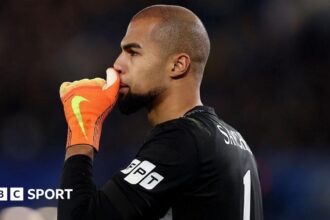
Liam Rosenior’s approach is not mere tinkering; it is a foundational philosophy. With an average of five changes per match, a never-repeated back four, and even a rotating door between goalkeepers Rob Sanchez and Filip Jorgensen, Rosenior is conducting a high-stakes experiment in squad management. In an era defined by relentless schedules and heightened physical demands, his strategy is a deliberate attempt to future-proof his team.
“The data is unequivocal,” Rosenior has often stated in press conferences. “The intensity of the modern calendar, especially for a club competing on multiple fronts, demands a proactive approach to player load.” This isn’t about resting players for the sake of it. It’s about:
- Maintaining Peak Physical Intensity: Ensuring every player who steps onto the pitch is at or near their maximum physical capacity, avoiding the cumulative fatigue that leads to injuries and performance dips.
- Building Squad Cohesion Under Fire: Forcing different combinations of players to develop understanding in competitive situations, theoretically creating a deeper, more adaptable unit.
- Eliminating Complacency: Creating an environment where no starting position is guaranteed, fostering internal competition at every training session.
The victory over Wrexham, however, laid bare the inherent tension in this model. Nine changes from a brilliant 4-1 league win at Aston Villa disrupted rhythm and fluency, a price nearly paid with an early cup exit.
The Wrexham Warning: Risk vs. Reward in Real Time
The FA Cup fifth-round tie served as the perfect case study. Chelsea, brimming with individual talent but lacking collective synergy, laboured against a disciplined and passionate Wrexham side. The extra-time goals from Alejandro Garnacho and Joao Pedro were ultimately required, with Wrexham’s momentum only truly broken by George Dobson’s late red card at the end of normal time.
This was the risk you take manifest. The lack of consistent partnerships, particularly in defence and midfield, was evident in Chelsea’s disjointed build-up and occasional defensive scrambles. Rosenior’s rotated side played like individuals for large spells, not a tuned collective. Critics will point to this performance as evidence that consistency in selection breeds consistency in performance—a footballing axiom Rosenior is boldly challenging.
Yet, within his post-match defence lies the counter-argument. “We found a way to win, and we’re in the hat for the next round,” Rosenior noted. “Players who needed minutes got them, we managed the load of key individuals, and we advanced. In a long season, these are all positive outcomes.” The ends, however narrow, justified the means.
Strategic Depth or Tactical Fragmentation?
The most scrutinized aspect of Rosenior’s policy is the constant rotation of the back four and goalkeepers. Defensive solidity is traditionally built on predictability—knowing your partner’s movement, communication style, and instincts. Rosenior is betting that high-level coaching and tactical clarity can transcend the need for fixed partnerships.
This approach has yielded mixed results. Chelsea have shown spectacular resilience at times, followed by periods of baffling disorganization. The goalkeeper rotation, in particular, is a bold move. While it keeps both Sanchez and Jorgensen engaged, it prevents either from establishing the commanding presence and relationship with their defenders that top keepers rely on.
Expert analysis suggests Rosenior is playing a long game. The immediate trade-off of occasional instability is, in his view, worth the prize of a fully fit, deeply integrated squad for the decisive final months of the season. The question is whether the Premier League and FA Cup allow for such a patient build-up, or if points and progress will be dropped before this grand plan comes to fruition.
The Road Ahead: Predictions for Chelsea’s Rotating Revolution
As Chelsea enter the business end of the season—with a deep FA Cup run now confirmed and a tight race for European places in the league—Rosenior’s rotation will face its ultimate test. The predictions from within the sport are polarized.
- The Optimistic View: Chelsea, with a squad fresher and less injury-ravaged than their rivals, will hit a powerful stride in April and May. The shared burden of minutes will pay dividends, and the team’s tactical flexibility will become a weapon against more predictable opponents.
- The Pragmatic Concern: The lack of a settled core, especially defensively, will continue to cost them in big moments. The FA Cup quarter-finals and crucial league fixtures demand consistency, and Rosenior may be forced to abandon his principles to field his perceived “strongest eleven,” potentially undermining his entire season-long project.
- The Likely Middle Ground: Rosenior will subtly shift from radical rotation to strategic management. The core of his team for the biggest games will become clearer, but he will continue to utilize his squad depth intelligently around those fixtures. The philosophy will adapt, not disappear.
The ultimate success metric is silverware. Having not won the FA Cup since 2019, the competition represents a tangible target. If Rosenior’s rotated side can navigate two more high-pressure ties, his method will gain powerful validation.
Conclusion: A Manager Betting on Himself
Liam Rosenior’s Chelsea are a fascinating work in progress, a deliberate departure from convention. His frank admission about the risk you take is refreshing; it is the acknowledgment of a manager fully committed to his vision, aware of the perils but convinced of the prize. The victory over Wrexham was not pretty, but it was informative. It showed the flaws in the system but also its potential resilience.
In a results-driven industry, Rosenior is asking for time and trust. He is betting that short-term turbulence will lead to long-term gain, that a squad fully empowered is more valuable than a star-studded eleven running on fumes. The coming months will determine if this is a stroke of genius or a gamble that cost Chelsea dearly. One thing is certain: at Stamford Bridge, the rotation will continue, and every match will be another chapter in one of the season’s most compelling tactical stories.
Source: Based on news from BBC Sport.