Russell’s “Selfish” Accusation: The F1 Start-Line Safety Row Ignited by Ferrari’s Veto
The afterglow of a season-opening victory is usually reserved for celebration and optimistic forecasts. For Mercedes’ George Russell, his triumph at the Australian Grand Prix has been swiftly overshadowed by a pointed, public accusation that strikes at the heart of Formula 1’s perennial tension between competitive advantage and collective safety. In a dramatic post-race revelation, Russell has labeled Ferrari’s opposition to a proposed start procedure rule change as “selfish” and “silly,” igniting a firestorm that questions whether one team’s performance edge is being prioritized over driver welfare.
The Melbourne Near-Miss That Sparked the Controversy
While the battle at the front between Russell and Ferrari’s Charles Leclerc captured headlines, a terrifying moment further back on the grid in Melbourne laid bare the issue. As the lights went out, a significant and dangerous performance delta emerged between the fastest and slowest accelerating cars. The most severe incident involved Alpine rookie Franco Colapinto, who was forced to take extreme evasive action to avoid a catastrophic high-speed collision with the crawling Racing Bull of Liam Lawson. This near-miss, captured by onboard cameras, sent a shockwave through the paddock.
The root cause, as identified by the FIA, is the current start procedure protocol. Drivers are permitted a specific, and highly sophisticated, “clutch mapping” setting for the race start—a pre-programmed configuration that manages how power is delivered from the standing position. Teams have developed these systems to a razor’s edge, but the performance gap between the best and worst has become alarmingly pronounced. The FIA, concerned that the Melbourne incident was a precursor to a major accident, moved quickly to propose a modification to homogenize these start procedures and reduce the risk.
Russell’s Accusation and Ferrari’s Glaring Advantage
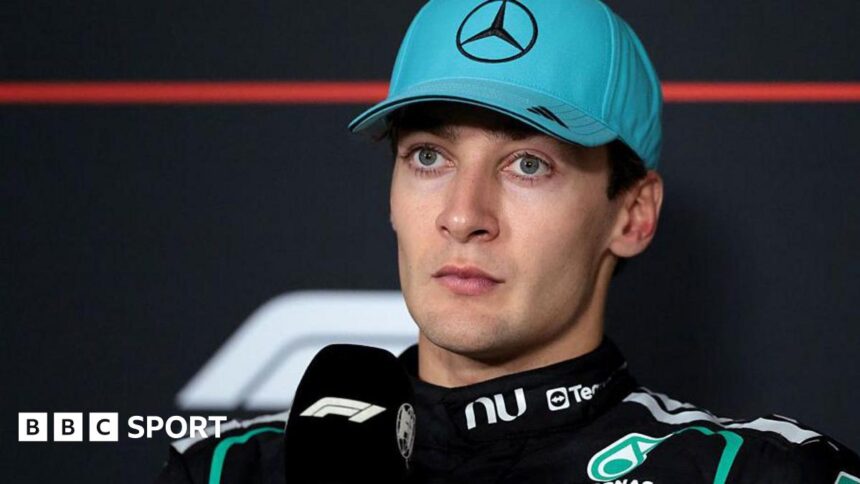
Enter George Russell, a director of the Grand Prix Drivers’ Association (GPDA), who revealed the roadblock. “The FIA brought something to us drivers to improve the start procedure for safety,” Russell stated. “But it got blocked by a couple of teams, selfishly, because they have a competitive advantage.” While he did not name them, the target was unmistakable. His comments were underscored by the on-track evidence in Melbourne itself, where Charles Leclerc’s explosive start from fourth to first was the talk of the weekend, showcasing what rivals believe is a clear and potentially dangerous Ferrari superiority.
Russell’s use of the word “selfish” is a deliberate and powerful charge in the F1 lexicon. It frames Ferrari’s resistance not as a technical disagreement, but as a moral failing. His perspective is dual-hatted: as a winning driver for Mercedes, and as a GPDA representative tasked with safeguarding driver safety. “When you’ve got a competitive advantage, you don’t want to give that up,” Russell conceded, before adding the critical caveat: “But when we’re talking about safety, it’s really quite silly to be blocking something like that.”
- Ferrari’s Start-Line Prowess: Leclerc’s leap in Australia was not an anomaly. Data suggests Ferrari has invested heavily and successfully in perfecting their clutch bite point and torque delivery.
- The Veto Power Problem: F1’s technical regulations often require unanimous team agreement for in-season changes, giving any single team, like Ferrari, the power to stall modifications.
- The Safety vs. Performance Dichotomy: This incident highlights the constant battle between engineering innovation for speed and the governing body’s mandate to manage risk.
Expert Analysis: The Technical and Ethical Gridlock
From a technical standpoint, Ferrari’s position, while controversial, is rational within the cut-throat world of F1. A standout start performance is a monumental strategic weapon, capable of transforming race outcomes, as Leclerc nearly demonstrated. Sacrificing a hard-earned, legal performance differentiator is anathema to any top team’s competitive instincts.
However, the ethical imperative for the FIA is clear. Their primary role is as the sport’s regulator and safety custodian. The near-miss in Australia was a classic “low-probability, high-consequence” event. The risk is not of minor contact, but of a stationary or slow-moving car being struck at over 150 km/h by a driver blinded by the cars ahead—a scenario with potentially grave consequences. The FIA’s desire to act preemptively, rather than reactively after a disaster, is the very essence of modern motorsport safety pioneered by the lessons of history.
The stalemate reveals a flaw in the regulatory process. When a safety-oriented change can be vetoed for competitive reasons, the system itself is called into question. It places the onus on the objecting team to publicly defend its position against a backdrop of peer pressure and potential public backlash, framing them as putting wins before welfare.
Predictions and Ramifications for the 2024 Season
This controversy will not dissipate quietly. The coming races will be scrutinized under a new lens, with every start analyzed for dangerous deviations. We predict several key developments:
1. Increased Scrutiny on Starts: The FIA will monitor start performance data even more closely. Any further close calls will amplify the pressure on Ferrari to relent, potentially forcing the FIA to explore alternative regulatory pathways to implement change.
2. Driver Unity vs. Team Loyalty: Russell has thrown down the gauntlet. It will be telling if other drivers, including those from Ferrari, publicly support the rule change. The GPDA could become a unified front demanding action, creating an internal conflict for drivers whose team opposes it.
3. A Political Battle Brewing: This issue will move from the technical delegates to the highest levels of F1 governance. Expect the FIA and Formula One Management (FOM) to engage in behind-the-scenes negotiations, possibly offering Ferrari concessions elsewhere in exchange for their agreement on the start rule.
4. The Shadow Over Ferrari’s Success: Every stellar Ferrari start this season will now be met with a narrative caveat. Their competitive advantage will be contextualized by the safety debate, a public relations challenge the storied team may not have anticipated.
Conclusion: A Line in the Sand for Safety
George Russell’s “selfish” accusation is more than just post-race gamesmanship; it is a line in the sand. It forces the entire F1 community—teams, drivers, and fans—to confront an uncomfortable question: at what point does a legitimate performance advantage become an unacceptable safety risk? The start procedure debate is a microcosm of Formula 1’s eternal struggle.
Ferrari finds itself in an unenviable position, defending a technical achievement that is both brilliant and, in the eyes of its competitors, perilous. The FIA is tasked with navigating the political minefield to fulfill its safety mandate. And the drivers, led by voices like Russell’s, are left to hope that a solution is found before luck runs out and a near-miss becomes a tragedy. The true test in the coming weeks won’t just be on the stopwatch, but in the meeting rooms where the sport must decide if its competitive spirit can coexist with its collective conscience. The verdict will define not just the 2024 season, but the sport’s priorities for years to come.
Source: Based on news from BBC Sport.