The Five-Hour Commute: How Mo Salah’s Childhood Journey Forged a Football Legend
The origin stories of footballing icons are often painted in broad, mythical strokes: the dusty favela streets, the concrete cages of inner-city Europe, the pristine academy pitches. But for Mohamed Salah, the spark that ignited a global phenomenon was lit on a bus. Not a team coach heading to a Champions League final, but a crowded, public bus carrying a determined 12-year-old boy on a daily, ten-hour round trip from his rural village to the nearest training ground. This is the untold prologue to the Salah we know today—a testament not to raw talent alone, but to a pre-teen’s staggering resilience that would define a career.
The Gruelling Grind: A Child’s Unthinkable Sacrifice
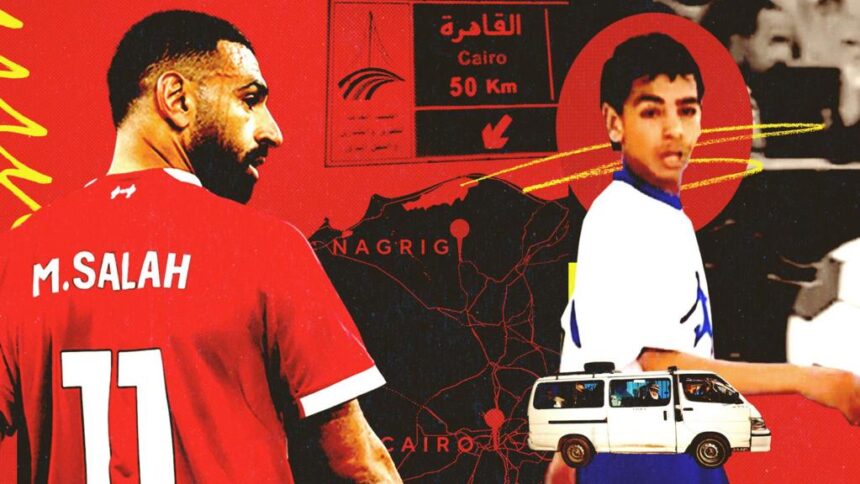
Long before the roar of Anfield, Salah’s world was Nagrig, a small agricultural village in the Nile Delta region of Gharbia. Footballing infrastructure here was, and largely remains, sparse. For a boy with a dream, opportunity was a distant city light. At the age of 12, Salah’s talent was identified, but it came with a colossal logistical hurdle. The journey to his club, Al Mokawloon’s (Arab Contractors) training base in Cairo, was a five-hour trek each way.
Imagine the routine: finish school, grab belongings, and embark on a marathon commute involving multiple forms of public transport. This was not a once-a-week commitment; this was his daily reality for years. While his peers rested or played locally, Salah was mastering the art of perseverance on wheels. This period instilled in him a unique discipline:
- Time Management & Sacrifice: His entire adolescence was structured around this commute, forfeiting casual leisure for a singular goal.
- Mental Fortitude: The boredom, the discomfort, the sheer length of the journey required a focus beyond his years.
- Fueling the Dream: Every kilometer traveled was a physical investment, a tangible proof of his commitment that few could ever claim.
This wasn’t just training; it was a daily act of defiance against geographical and socioeconomic odds. As sports psychologist Dr. Elena Rodriguez notes, “This level of early sacrifice creates a unique neural pathway. The association between effort and reward is deeply hardwired. For Salah, every sprint, every match, every trophy likely carries the subconscious echo of that bus ride—making success feel earned in the most fundamental way.”
From Bus to Ballon d’Or Contender: The Psychology of Resilience
The Salah journey from Nagrig to Liverpool is often framed as a fairytale, but its core is psychological warfare. The boy who endured those commutes didn’t just become a fast winger; he became a player almost uniquely equipped to handle pressure, setbacks, and the relentless scrutiny at the pinnacle of the game.
Consider his career inflection points: being deemed surplus to requirements at Chelsea. Many prodigies fade after such a high-profile rejection. Salah, however, treated it not as a terminus, but as a detour. He rebuilt himself in Italy, at Fiorentina and then Roma, adding tactical nuance and ruthless efficiency to his blistering pace. This was the resilience forged on those Egyptian buses—the understanding that the path to your destination is rarely a straight line, and that stamina is as crucial as speed.
His playing style mirrors this. Salah’s game is built on relentless repetition. The same cutting inside, the same clinical finishes, executed under extreme defensive pressure, season after season. It’s the footballing equivalent of making that trip, day after day, trusting that the cumulative effort will yield the desired result. His legendary physical conditioning and low injury rate are not accidental; they are the product of a body and mind taught from age 12 to endure and recover.
Legacy and Prediction: The “Never Give Up” Doctrine
The documentary, Mo Salah: Never Give Up, available on BBC iPlayer, promises to delve into this formative chapter. Its title is not a cliché but the literal codex of his career. This narrative does more than humanize a global star; it provides a blueprint for aspiring athletes everywhere, particularly in underserved regions. Salah’s legacy is already cemented in Liverpool’s record books, but its greater impact may be in villages from Egypt to Indonesia, proving that geographical isolation cannot quarantine a dream.
Looking ahead, this ingrained resilience dictates his future. As Salah enters the latter stages of his career, the same mindset will guide his trajectory.
- Playing Longevity: His career intelligence and physical care suggest he can perform at the elite level for several more years, potentially evolving into a central forward role.
- Post-Career Influence: One can easily foresee Salah becoming a monumental figure in Egyptian and Arab sports development, focusing on infrastructure to ensure fewer 12-year-olds face his logistical battles.
- Cultural Icon Status: His story transcends sport. He is a symbol of quiet dedication, humble faith, and profound work ethic, values that will keep him relevant long after his final match.
Conclusion: More Than a Journey, A Forging
Mohamed Salah’s five-hour childhood commutes are more than an anecdote; they are the crucible in which his character was formed. In an era of football often criticized for its privilege and detachment, Salah stands as a powerful reminder of the sport’s purest essence: sacrifice. He didn’t just travel to training; he traveled *through* exhaustion, doubt, and immense logistical barriers, carrying with him the hopes of a family and a region.
The bus rides from Nagrig did not just transport a boy to football practice. They transported a mindset to the world stage—a mindset of unwavering persistence. Every time he races past a defender at Anfield, somewhere in that stride is the ghost of a determined child, staring out a bus window, dreaming of a future he was willing to travel ten hours a day to reach. His story isn’t about avoiding the long road; it’s about understanding that the long road is often the only one that leads to greatness. That is the untold foundation of the Egyptian King.
Source: Based on news from BBC Sport.