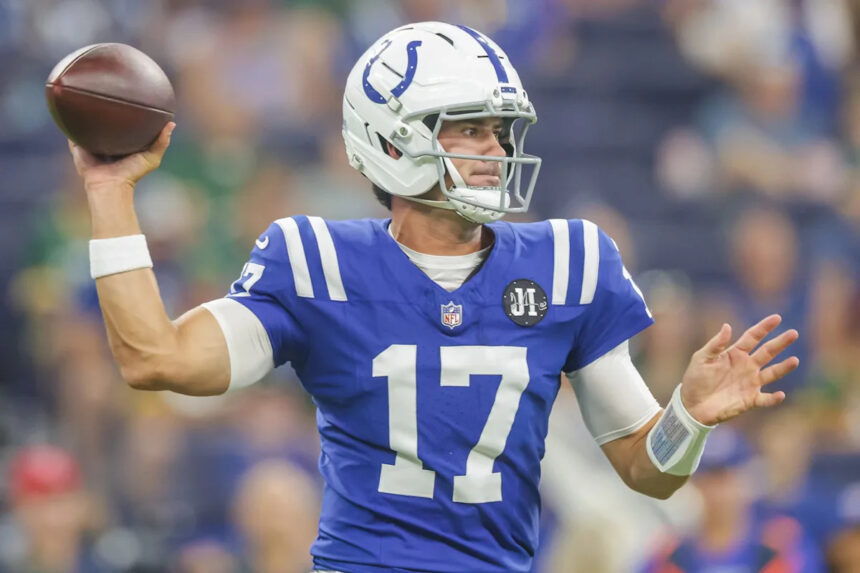
Colts Lock Down Daniel Jones: A Deep Dive into the $88 Million Contract and Salary Cap Implications
The opening days of NFL free agency are a whirlwind of rumors, big numbers, and franchise-altering decisions. For the Indianapolis Colts, a move that had been simmering in the speculation pot finally came to a boil. After applying the transition tag as a placeholder, the Colts and quarterback Daniel Jones agreed to terms on a multi-year contract, securing the veteran’s arm for the foreseeable future. While the headline figure is eye-catching, the true story of this deal—and its impact on the Colts’ competitive window—lies in the intricate salary cap details recently reported by Over the Cap. This isn’t just a simple signing; it’s a calculated financial play with ramifications that will echo through the roster for years.
Deconstructing the Dollars: The Nuts and Bolts of the Jones Deal
On the surface, the agreement is straightforward: a two-year pact worth $88 million. However, the devil, as always, is in the details. The contract’s potential value balloons to $100 million with achievable incentives, a structure that benefits both player and team. The cornerstone of this deal is a massive, upfront $44 million signing bonus. For salary cap purposes, this bonus is prorated evenly over the life of the contract. This means that instead of a crippling $44 million hit in 2024, the Colts will spread it as $22 million against the cap in both 2024 and 2025.
This proration is a classic NFL accounting maneuver, providing immediate cap relief while committing long-term money. But the Colts, under General Manager Chris Ballard, have built in layers of team-friendly flexibility. The deal includes critical future triggers that give the team options down the road.
- Base Salary Structure: While exact yearly base salaries are part of the full breakdown, the prorated bonus forms the cap hit’s backbone.
- 2027 Roster Guarantee: A crucial clause states that if Jones is on the roster in March of 2027, an additional $10 million becomes fully guaranteed, and he earns a $4 million roster bonus.
- Incentive Ladder: Beyond the base $88 million, Jones can earn an extra $12 million in performance incentives, pushing the total maximum value to the reported $100 million mark.
Cap Flexibility and Future Ramifications: A Ballard Masterclass?
Chris Ballard has earned a reputation for constructing contracts that protect the franchise. The Daniel Jones deal is a textbook example. While the average annual value (AAV) of $44 million places Jones among the league’s higher-paid quarterbacks, the short, two-year essential commitment is the key. The Colts are not locked into a debilitating five or six-year mega-deal. They have effectively purchased a two-year evaluation window with a veteran who knows the system.
The 2027 guarantee date is particularly shrewd. It acts as a decision deadline. By the 2026 season, the Colts will have a clear picture of whether Jones, who will be 33 years old at that trigger date, is the long-term answer or a bridge. If he has performed at a Pro Bowl level and led deep playoff runs, exercising that option and extending him further makes sense. If the partnership hasn’t yielded the desired results, the Colts can move on before the guarantee kicks in, avoiding a significant future cap burden.
This structure keeps the Colts’ long-term financial sheet remarkably clean. It allows them to continue building a formidable roster around the quarterback position without the “cap anchor” that often sinks contenders paying a single player over 20% of the total cap. The prorated bonus money will incur “dead cap” charges if Jones is released before 2027, but the short nature of the deal minimizes that risk compared to longer-term contracts.
On-Field Forecast: What This Means for the Colts’ 2024 Season and Beyond
Financially, the deal is a calculated gamble. But what does it mean on the field? Securing Jones provides immediate stability for a team that has been searching for a consistent leader since Andrew Luck’s retirement. Jones is a known quantity to Head Coach Shane Steichen, who coached him previously. His experience, arm talent, and mobility fit the offensive scheme.
However, the contract signals a clear “prove it” mentality from the Colts’ front office. They are paying him like a top-15 quarterback but are not yet convinced he is a top-5 franchise cornerstone. The performance incentives are the proof. That $12 million extra is likely tied to benchmarks like playoff victories, Pro Bowl selections, or statistical thresholds. Jones now has a direct financial motivation to elevate his game and the entire team’s performance.
For the 2024 season, the Colts can now operate with certainty. They have their QB1, allowing them to focus the draft and remaining free-agent capital on other premium positions: perhaps a dynamic wide receiver, secondary help, or trench depth. The pressure is squarely on Jones to justify the faith and the finances, transforming the Colts from a promising, scrappy team into a legitimate AFC South contender and beyond.
Conclusion: A Bridge with a Blueprint
The Indianapolis Colts’ signing of Daniel Jones is far more nuanced than a simple big-money quarterback deal. It is a hybrid contract—part bridge, part investment, with a meticulously planned escape hatch. By utilizing a massive signing bonus prorated over a short term, Chris Ballard has managed to keep the Colts competitive in the quarterback market while preserving the salary cap health necessary to build a complete team.
This deal is a statement of conditional belief. The Colts believe Jones can be the guy, but they are not betting the entire franchise’s future on it. They have bought themselves two critical years to find out, with a clear off-ramp if the answer is no. For Daniel Jones, it’s a lucrative opportunity to cement his status as a franchise quarterback in a city desperate for stability. For the Colts, it’s a financially intelligent gamble that keeps their window open and their options alive. The success of this marriage won’t be judged by the numbers on the contract sheet, but by the numbers in the win column come January.
Source: Based on news from Yahoo Sports.