Pedaling Towards Prosperity: Scotland’s £9.25m Bet on the Tour de France Grand Départ
The world’s greatest cycling race is set to paint the historic streets of Edinburgh yellow. In a landmark announcement, the Scottish Government has committed up to £9.25 million to host the prestigious Grand Départ of the 2027 Tour de France, a move that signals a bold ambition to leverage global sport for long-term economic and cultural gain. This strategic investment, which will cover any financial overruns beyond Edinburgh City Council’s £1.7m contribution from its pioneering visitor levy, places Scotland at the heart of a sporting spectacle watched by hundreds of millions. As cyclists gear up for a historic start that will also traverse Wales and England, the question on everyone’s lips is: what will this monumental event truly mean for the capital and the country?
More Than a Race: The Strategic Calculus of a Global Showcase
Hosting the opening stages of the Tour de France is not merely about three days of racing; it is a meticulously planned economic and tourism catalyst. The Scottish Government’s significant financial backing is a calculated investment in a proven global platform. The Tour de France is a rolling advertisement, a week-long infomercial beaming stunning landscapes, vibrant cities, and enthusiastic crowds into living rooms across 190 countries. For Scotland, this represents an unparalleled opportunity to reposition itself in the minds of international travelers beyond whisky, castles, and golf.
Expert analysis of previous Grand Départs reveals a consistent pattern of substantial returns. When Yorkshire hosted in 2014, the region saw a £128 million boost to its economy. Copenhagen’s 2022 start generated an estimated €100 million in direct economic impact. The Scottish investment, while headline-grabbing, must be viewed through this lens of potential multiplicative return. The government’s commitment to publishing a full post-event cost breakdown, a standard and welcome transparency measure, will provide crucial data for future mega-event strategy.
The funding model itself is telling. Edinburgh’s portion, drawn from its new visitor levy, embodies a “tourist tax” reinvested directly into an event designed to attract more high-value visitors. The government’s role as the financial backstop ensures the event’s viability and mitigates local council risk, a partnership model that could define future collaborations. This is not a simple sponsorship; it is a public sector investment in place branding on a scale rarely seen in Scottish sport.
The Edinburgh Effect: Anticipating the Impact on Scotland’s Capital
For Edinburgh, the Tour’s arrival will be transformative, creating a festival atmosphere that extends far beyond the Royal Mile. The city will need to prepare for an influx of hundreds of thousands of spectators, team personnel, and global media. The immediate impacts will be visceral and electrifying.
- Tourism Surge and Hospitality Boom: Hotels, restaurants, and pubs will experience a windfall. The event typically fills accommodation for miles around, with visitors often extending their stays to explore the region.
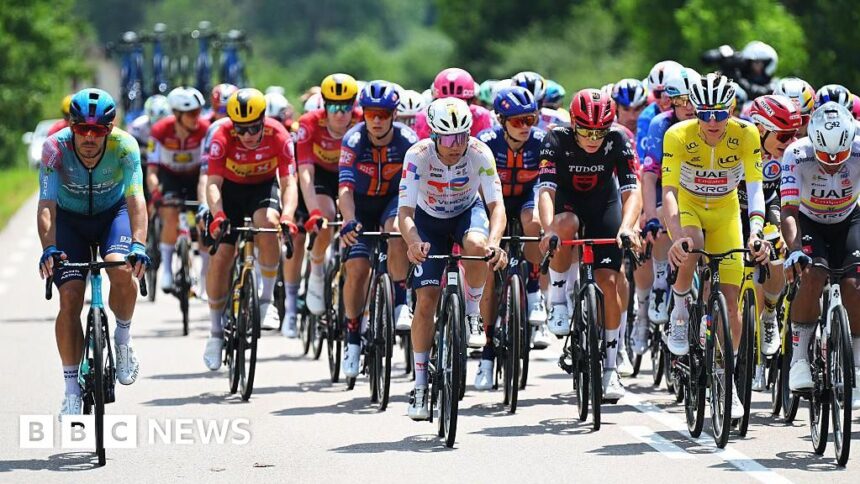
- Global Media Exposure: The aerial shots of pelotons snaking past Edinburgh Castle, over the Forth Bridge, and through the Scottish Borders offer iconic visual postcards worth millions in equivalent advertising value.
- Infrastructure and Legacy: While the race route itself is temporary, the event often accelerates civic improvements—from road surface enhancements to public realm upgrades—that benefit residents long after the last team car departs.
- Community Engagement and Grassroots Cycling: The “race caravan” and associated fan zones create a carnival. Crucially, it inspires a new generation of cyclists, potentially boosting participation and reinforcing active travel initiatives.
However, the disruption will be significant. Traffic logistics, security operations, and pressure on city services present a formidable challenge. The success of the event will hinge on seamless planning and clear communication with residents, ensuring the city embraces the chaos as a once-in-a-generation celebration.
The Long-Term Legacy: Predicting Scotland’s Return on Investment
The true measure of the £9.25m investment will not be calculated in July 2027, but in the years that follow. The smart money is on a legacy that transcends immediate economic metrics. Predictions for the long-term payoff include a sustained uplift in cycling tourism. The North Coast 500 has shown the power of two-wheeled travel; the Tour’s spotlight could establish Scotland as a premier European cycling destination, enticing enthusiasts to ride the very roads of the pros.
Furthermore, the event aligns perfectly with the Scottish Government’s net-zero and active travel ambitions. Showcasing the bicycle as a tool of celebration, athleticism, and transport can shift public perception. We can anticipate increased investment in cycling infrastructure, leveraging the race’s momentum to build safer, more connected routes for commuters and leisure riders alike.
The partnership between national government and city council also sets a powerful precedent. It demonstrates a model for co-funding and risk-sharing on major projects, potentially smoothing the path for bidding on other world-class cultural and sporting events. The confidence gained from successfully managing an operation of this scale is an intangible but critical asset.
Navigating the Peloton of Challenges
No endeavor of this magnitude is without its hurdles. Critics will rightly question the allocation of public funds amidst competing priorities for health, education, and social services. The government’s transparency pledge on costs is a direct response to this, and the final accounting will be scrutinized. The key will be articulating the long-term strategic benefits versus the short-term expenditure.
There is also the challenge of avoiding a “one-off” feel. The event must be integrated into a broader, sustained tourism and marketing strategy. The goal should be to convert the fleeting attention of 2027 into lasting visitor interest and investment. Will there be a dedicated strategy to engage with the Tour’s global broadcast partners beyond the race itself? Can local businesses build partnerships that extend into future seasons? The planning starts now.
The Final Sprint: A Nation Poised for the Global Stage
The decision to invest £9.25m in the Tour de France Grand Départ is a statement of intent from Scotland. It is a bet on the power of global sport to shape perception, drive economic activity, and inspire a nation. While the immediate spectacle in Edinburgh will be unforgettable—a fusion of ancient architecture and modern athleticism—the real race begins when the Tour pack moves south.
The success of this venture will depend on meticulous execution, transparent communication, and a relentless focus on the legacy. If done right, the images of the world’s best cyclists battling against Scotland’s dramatic backdrop will do more than define a sporting moment; they will redefine Scotland for a global audience, fueling tourism, enriching communities, and pedaling the nation towards a more prosperous, active, and confident future. The starting gun has been fired on a project with the potential to be a landmark victory for Scotland, not just on the roads of France, but in the enduring race for global relevance.
Source: Based on news from BBC Sport.