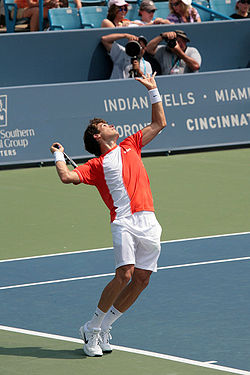
Sinner’s Desert Storm: Italian Phenom Blitzes Into Maiden Indian Wells Final
The California desert air, thick with anticipation for a heavyweight semifinal clash, was instead filled with the sound of a jet engine. On Stadium Court at the BNP Paribas Open, Jannik Sinner didn’t just beat Alexander Zverev; he executed a masterclass in precision power, racing to a commanding 6-2, 6-4 victory to secure his spot in a maiden Indian Wells final. In a performance that felt less like a tennis match and more like a statement of intent, Sinner dismantled one of the tour’s most formidable forces with staggering efficiency, announcing his readiness to claim the coveted desert crown.
A Masterclass in Controlled Aggression
From the first ball struck, the narrative was rewritten. Many predicted a grueling baseline war between two of the game’s biggest hitters. What transpired was a demonstration of Sinner’s evolved, ruthless brand of tennis. His controlled aggression was the cornerstone of victory. Unlike the raw power of years past, every shot from the Italian’s racquet seemed calibrated for maximum damage with minimal risk.
Zverev, a former champion here and recent Australian Open semifinalist, was never allowed to settle. Sinner’s return position, hugging the baseline, cut off Zverev’s serving angles and turned defensive returns into immediate offensive strikes. The German’s potent serve, usually a reliable weapon, was neutralized. Sinner’s movement, a blend of graceful slides and explosive first steps, negated Zverev’s own court coverage.
- Relentless Return Pressure: Sinner attacked Zverev’s second serve mercilessly, winning a staggering 65% of those points and breaking the German’s serve three times.
- Forehand Dominance: The cross-court forehand was a weapon of mass destruction, repeatedly pinning Zverev deep and wide to open the court for clean winners.
- Tactical Serving: Sinner’s serve, often underrated, was pinpoint. He strategically used body serves and sharp slices to disrupt Zverev’s rhythm and cruised through his own service games with ease.
The first set was a blur, secured in just 36 minutes. The second set saw Zverev raise his level, fighting off break points and attempting to impose his will. But Sinner’s mental fortitude, a trait he has cultivated meticulously, shone through. Facing a 4-3 deficit on serve in the second, he didn’t flinch, holding firm and immediately breaking back to love in the next game—a devastating psychological blow from which Zverev couldn’t recover.
The Sinner Evolution: From Prodigy to Predator
This victory is not an isolated event but the latest chapter in the Jannik Sinner evolution. The player who once dazzled with flashy winners but occasionally faltered in consistency has been forged into a complete championship contender. His physical transformation is evident, adding muscle and stamina to his frame. But the more significant changes are tactical and mental.
Under the guidance of coaches Simone Vagnozzi and Darren Cahill, Sinner has learned to harness his firepower with smarter patterns of play. He constructs points with the patience of a veteran, using his blistering groundstrokes not just for winners, but to systematically dismantle an opponent’s game plan. The “first-strike tennis” philosophy is now married to a resilient defensive capability, making him a nightmare matchup for anyone on tour.
His 2024 season, which includes an Australian Open title and now a first Masters 1000 final on hard courts, underscores his arrival at the pinnacle of the sport. Beating a player of Zverev’s caliber—a multiple Masters winner and Olympic gold medalist—with such authority on a big stage confirms that Sinner is no longer just part of the “next generation.” He is the present.
The Dream Final: A Rivalry Forged in Fire
The stage is now set for a final that tennis fans have been craving. Awaiting Sinner is the prospect of a title showdown with his great contemporary and rival, Carlos Alcaraz. This potential matchup is the defining rivalry of the sport’s new era, a clash of styles and personalities that captivates a global audience.
Their history is already rich: epic five-set battles at the US Open and Wimbledon, contrasting Sinner’s metronomic power with Alcaraz’s magical, disruptive creativity. An Indian Wells final would add a new, prestigious chapter. It would be a battle for the “Sunshine Double” lead, for Masters 1000 supremacy, and for the psychological edge heading into the clay season.
Keys to the Final should it be Alcaraz:
- Neutralizing the Alcaraz Drop Shot: Sinner’s improved forward movement will be tested like never before against Alcaraz’s trademark play.
- First-Serve Percentage: Maintaining the high first-serve percentage he displayed against Zverev will be crucial to keeping Alcaraz from attacking second serves.
- Emotional Equilibrium: Both players bring immense fire. The one who better manages the inevitable momentum swings in a final of this magnitude will hold the advantage.
This is more than a final; it’s a glimpse into the future of men’s tennis, played in the present, with one of the tour’s most iconic trophies on the line.
Conclusion: A Champion’s Mentality in the Desert
Jannik Sinner’s performance against Alexander Zverev was a declaration. It declared that his Australian Open triumph was no fluke, that his ascent to World No. 3 is fully justified, and that he possesses the champion’s mentality required to dominate on the biggest stages. He didn’t just race through to the final; he stormed the gates with a performance of breathtaking clarity and force.
Whether the opponent is Carlos Alcaraz or another, Sinner enters the final not as a hopeful challenger, but as a proven force. He has solved the puzzle of powerful baseliners, refined his game to near-perfect efficiency, and carries the unwavering belief that this desert oasis is where his first Masters 1000 hard-court title will be won. The tennis world watched a prodigy for years. In Indian Wells, it is witnessing a predator, poised to claim his throne.
Source: Based on news from Sky Sports.
Image: CC licensed via commons.wikimedia.org