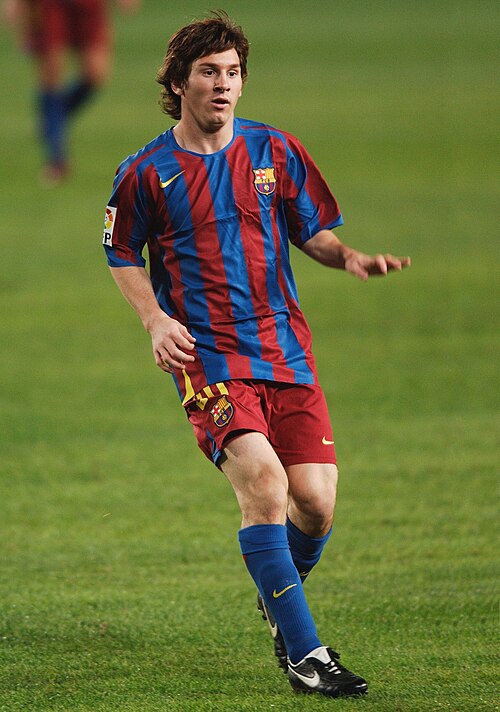
Messi’s Finalissima Frustration: Inside the Cancellation That Left Argentina’s Captain Powerless
The beautiful game is often defined by moments of pure, unscripted brilliance. Yet, sometimes, the most telling stories emerge from the matches that never happen. A cloud of disappointment now hangs over the international football calendar following the abrupt cancellation of the highly anticipated Finalissima, a marquee clash between continental champions. While federations point to logistical hurdles, a source close to the Argentine camp has revealed a more personal narrative: Lionel Scaloni and, crucially, captain Lionel Messi, were sidelined from the decision, with the iconic number 10 viewing the lost match as a critical competitive setback.
A Captain’s Ambition Thwarted: Messi’s Competitive Fire
For Lionel Messi, the twilight of his international career has been a masterclass in legacy-building. After finally lifting the Copa America in 2021 and the World Cup in 2022, his focus has shifted to leading a new generation and competing for every available honor. The Finalissima—pitting his Argentina against the reigning European champions—represented precisely the kind of high-stakes, prestige-filled fixture that now defines his motivations. According to an ESPN source, Messi regarded the match not as a lucrative friendly, but as a vital competitive opportunity. This perspective underscores a fundamental shift in Messi’s post-trophy era: the pursuit of meaningful challenges over ceremonial exhibitions.
The cancellation, therefore, isn’t merely a calendar change; it’s a denial of a champion’s instinct. For a player who meticulously plans his season, the loss of a competitive international fixture in a sparse window is significant. It represents a missed chance to:
- Test tactical evolution against elite European opposition.
- Integrate emerging talents into the squad under high-pressure conditions.
- Solidify team cohesion ahead of upcoming World Cup qualifiers.
- Add another official trophy to Argentina’s resurgent legacy.
The revelation that Messi and coach Scaloni had no say in cancelling Finalissima adds a layer of institutional frustration. It highlights the often-divergent priorities between football administrators, focused on logistics and finances, and footballers, whose currency is competition and legacy.
Behind the Boardroom Door: The Real Reasons for Cancellation
While the official line cites “calendar congestion” and “logistical issues,” the insider’s account pointing to Messi’s disappointment invites a deeper examination. The modern football calendar is undoubtedly a packed beast, but marquee events like the Finalissima are typically locked in years in advance. Their collapse usually signals a failure of negotiation between powerful governing bodies—in this case, CONMEBOL and UEFA—over revenue sharing, broadcasting rights, or venue agreements.
This top-down decision-making process, which excluded the very participants it impacts most, is a microcosm of a larger issue in global football. Players, even icons of Messi’s stature, often find themselves as commodities in a commercial machine, their sporting desires secondary to bureaucratic and financial calculus. The cancellation likely stemmed from one or several of these key factors:
- Financial impasse: A disagreement over the multi-million dollar purse and commercial rights between the federations.
- Player release complications: Clubs, already wary of international duty injuries, may have applied pressure behind the scenes.
- Broadcaster demands: Conflicts with other scheduled events or unsatisfactory TV rights deals.
- Venue and hosting disputes: Inability to secure a neutral venue agreeable to all parties.
The outcome is a lose-lose scenario: fans are deprived of a spectacle, players lose a pinnacle contest, and the sport’s credibility takes a hit when its premier events can vanish by executive fiat.
The Ripple Effect: Implications for Argentina and Scaloni’s Project
The impact of this cancellation extends beyond Messi’s personal frustration. For manager Lionel Scaloni, it represents a significant planning obstacle. The Finalissima was a rare, pressure-laden dress rehearsal ahead of the 2024 Copa America and the ongoing marathon of World Cup qualifiers. These competitive matches are invaluable for assessing player readiness and tactical adjustments against world-class opposition.
Without it, Scaloni’s evaluation process is hampered. He must now rely more heavily on standard friendlies, which rarely replicate the intensity of a final, or wait for competitive matches that offer no room for error. For a squad in a delicate transition phase—balancing its legendary core with exciting new blood—the loss of this high-level test is a genuine setback. It also denies the burgeoning Argentina fanbase worldwide another chance to celebrate their heroes in a competitive setting, a key component of maintaining the team’s incredible momentum and connection with its supporters.
Looking Ahead: What This Means for Football’s “Super Events”
The Finalissima fiasco serves as a cautionary tale for the proliferation of inter-confederation “super matches.” While the concept is exciting for fans, its execution remains vulnerable to the old guard of football politics. This incident may lead to:
- Increased player and coach advocacy for a seat at the table when such events are planned or altered.
- Greater scrutiny on the transparency of agreements between federations.
- A potential cooling effect on creating new similar events, like a proposed UEFA-CONCACAF champion clash.
- Renewed focus on protecting the players’ calendar, even as different entities vie for a piece of it.
Furthermore, for Messi specifically, this episode will only sharpen his focus on the competitions he can control. Expect an even more determined captain leading Argentina into the Copa America, treating every qualifier with final-like intensity. The missed opportunity will be channeled elsewhere.
Conclusion: A Lost Battle in the War for Football’s Soul
The cancelled Finalissima is more than a deleted line on the fixture list. It is a symbol of the ongoing tension at the heart of modern football. On one side stands the athlete’s pure desire for elite competition, exemplified by Lionel Messi’s palpable disappointment at losing a vital competitive opportunity. On the other, the often-opaque machinery of administration, where balance sheets and political maneuvering can override sporting merit. The fact that Messi and Scaloni had no say in cancelling Finalissima is the most damning part of the story, revealing a persistent disconnect between the boardroom and the pitch.
While fans will imagine what might have been—Messi weaving magic against Europe’s best—the real legacy of this non-event will be its echo in future negotiations. The message from the dressing room is clear: the players, the protagonists of this global drama, demand to be heard. Until that happens, the beautiful game will continue to be punctuated not just by glorious goals, but by the frustrating silence of matches never played.
Source: Based on news from ESPN.
Image: CC licensed via kaa.wikipedia.org