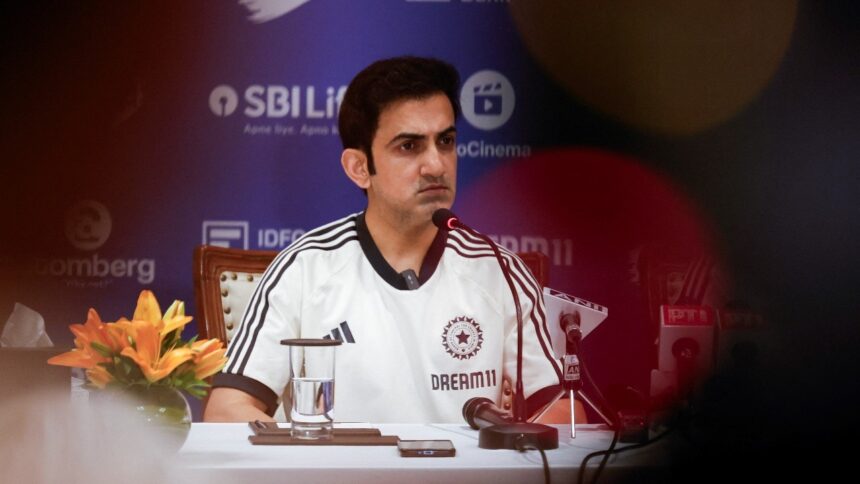
Gautam Gambhir’s Audacious Vision: From World Cup Glory to Chasing 300 in T20s
The champagne corks have popped, the victory parade has wound through Mumbai’s streets, and the ICC Men’s T20 World Cup trophy sits gleaming in the BCCI cabinet. For most, this is the pinnacle, the final scene of a two-year saga. But for newly appointed head coach Gautam Gambhir, the confetti still settling is merely the backdrop for a new, more audacious blueprint. In his first major address since the triumph, Gambhir delivered a message that was equal parts sobering and electrifying: stay humble, but dare to dream bigger. And his dream has a specific, staggering number attached to it: 300.
The Gambhir Doctrine: Humility as Fuel, Not Brakes
Gautam Gambhir has never been one for sentimental platitudes. As a player, his steely gaze and combative style defined some of India’s most iconic wins. That same ethos now permeates his coaching philosophy. In the afterglow of a dominant World Cup final victory over New Zealand, where India successfully defended their crown, Gambhir immediately reframed the narrative. He insisted this win should be seen not as a destination, but as the beginning of a new journey.
“The moment you think you have arrived, you have actually departed from the path of excellence,” Gambhir’s message implied. His call for humility isn’t about downplaying achievement; it’s a strategic imperative. He understands the seductive trap of complacency that can ensnare a champion team. By framing the World Cup win as a foundation, he psychologically unshackles the team from the weight of expectation and redirects their focus forward. This is a coach building a sustained dynasty, not celebrating a fleeting moment of glory.
Smashing Ceilings: The Relentless Pursuit of 300
If humility is the foundation of Gambhir’s philosophy, then ambition is its towering spire. His clear statement that India aims to breach the 300-run mark in T20 internationals is a thunderous declaration of intent. It’s a target that exists on the very frontier of the format’s imagination. While scores in the 240-260 range are becoming more frequent, 300 remains a mythical barrier, a symbol of absolute batting domination.
This goal is not mere fantasy; it’s a calculated challenge that will force a radical evolution in India’s T20 approach. To chase 300, every aspect of the game must be re-examined:
- Powerplay Philosophy: A 300-run innings likely requires 70+ runs in the first six overs without losing more than one wicket. This demands a high-risk, high-reward mindset from the openers from ball one.
- Relentless Aggression: It necessitates at least three batters striking at 180+ and a team strike rate hovering around 200. There is no room for anchor roles; every player must be a potential match-winner.
- Depth as a Weapon: The concept of a “long batting lineup” transforms. Numbers 8 and 9 must be genuine power-hitters, turning 20-over innings into 20-over assaults.
- Tactical Fearlessness: It encourages unprecedented innovation—ramp shots, reverse hits, and constant pressure on every single delivery become the standard, not the exception.
Gambhir, by setting this target, is effectively giving his batters a license to push the limits of T20 batting. He is challenging them to redefine what is possible.
Building on Bridgetown: The Samson Catalyst and a New Template
The World Cup final itself offered a glimpse into the mindset Gambhir wants to institutionalize. While the bowlers sealed the win, a key momentum shift came from the middle order. Sanju Samson’s knock turned the momentum at a critical juncture. His cameo wasn’t about grafting; it was about calculated aggression, seizing the initiative back from New Zealand and demonstrating the “next man up” mentality that Gambhir cherishes.
This is the template moving forward. Gambhir’s India will likely be built on fluid roles rather than rigid positions. Players like Samson, Suryakumar Yadav, and Hardik Pandya embody the multi-dimensional, aggressive cricket required to chase astronomical totals. The focus will shift from preserving wickets to maximizing every over, a fundamental philosophical shift in the Indian T20 setup.
The Road to 2026: Predictions for a New Era
With the next T20 World Cup in 2026 already on the horizon, Gambhir’s declaration sets a thrilling two-year agenda. Here’s what we can predict for Team India under his watch:
- Experimentation will be King: We will see new faces, particularly explosive finishers and multi-skilled all-rounders, as India searches for the perfect balance of power and depth.
- Data-Meets-Instinct: Gambhir’s street-smart cricket brain will combine with advanced analytics to identify match-ups and phases where even greater risk can be taken to boost the run rate.
- Bowling with a Buffer: The quest for 300 will also transform bowling. Bowlers will be trained to defend massive totals and develop even more variations, knowing they have a huge score to back them up.
- A Global Benchmark: This ambition places India as the format’s pace-setter. Other nations will be forced to innovate in response, potentially accelerating the evolution of T20 cricket worldwide.
Conclusion: A Champion’s Mindset, Redefined
Gautam Gambhir has done more than just outline a coaching strategy; he has installed a new operating system for Indian T20 cricket. By marrying the non-negotiable virtue of humility with the breathtaking ambition to smash 300, he has created a powerful and sustainable engine for success. The T20 World Cup 2024 win is proof of concept—a validation of his and the team’s ability to handle pressure and excel. Now, the real work begins.
The message to the players and the world is clear: The trophy is stored, but the journey is just accelerating. India is no longer just playing to win matches; they are playing to push the boundaries of T20 cricket itself. In the Gambhir era, greatness is not a trophy in a case. It is a relentless, humble, and fearless pursuit of the impossible. And the first stop on that road is a scoreboard reading 300.
Source: Based on news from India Today Sport.