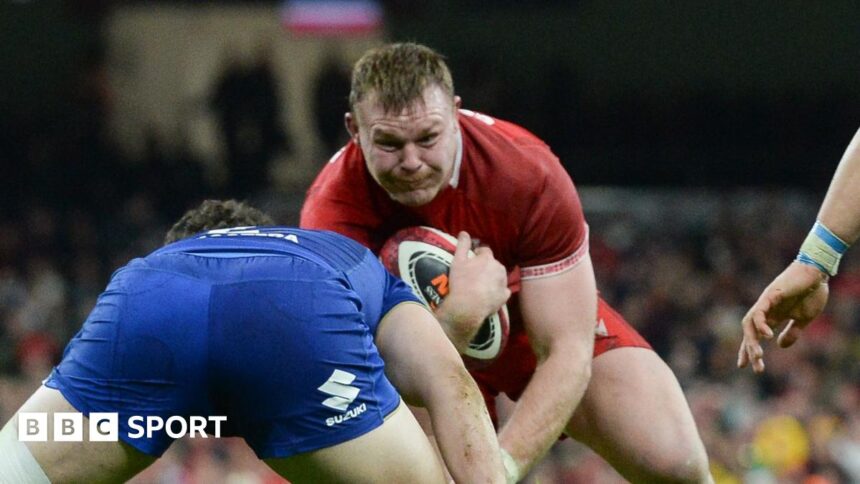
Tandy Overwhelmed with Pride as Wales End Six Nations Drought in Cardiff Catharsis
The roar that erupted from the Principality Stadium on Saturday was more than just celebration for a victory. It was a collective exhalation, a release of three years of pent-up frustration, and the sound of a nation’s rugby heart beating strong once more. As the final whistle confirmed Wales’ 31-17 triumph over Italy, head coach Steve Tandy stood, visibly moved, as the weight of a 15-game Six Nations losing streak finally lifted from his shoulders. In the aftermath, his emotion was palpable: he was, in his own words, “overwhelmed with pride.”
The Long Road: A Drought Ends in Style
For Welsh rugby, the numbers had become an oppressive narrative. Fifteen consecutive championship losses stretched back to March 2021, a period spanning multiple coaches and a painful transition. Under Tandy’s stewardship, the team had shown flickers of promise—spirited, defiant performances in narrow defeats to Scotland and Ireland—but the ultimate prize remained elusive. The visit of an improving Italy side, therefore, was laden with pressure; a must-win game that carried the hopes of a desperate nation.
Wales didn’t just win; they delivered a performance of conviction and, at times, flair. From the outset, there was a palpable intent that had often been missing. The victory was built not on a single moment of magic, but on a cohesive, four-try display that showcased both power and precision. The Principality Stadium, a fortress that had felt besieged in recent years, once again became a cauldron of positive energy, its famous choir in full voice as the scoreboard told a story of renewal.
Architects of Victory: The Try-Scorers Who Made History
While the win was a monumental team effort, several individuals etched their names into the story of the day that Wales finally turned the corner. The scorecard tells the tale of a balanced attack finding its way over the line.
- Aaron Wainwright: The dynamic number eight was simply immense, embodying the team’s relentless physicality. His two tries, both powerful finishes from close range, broke Italian resistance and provided the muscular foundation for the win. He was the game’s dominant forward.
- Dewi Lake: The hooker and captain led from the front. His try, a classic forward’s finish from a driving maul, was a testament to Welsh set-piece efficiency and his own bullish leadership. It set the tone for Welsh dominance up front.
- Dan Edwards: On his first Six Nations start, the young fly-half displayed a maturity beyond his years. A clever, snipping try showcased his game awareness, while his 11 points from the boot (four conversions and a penalty) kept the scoreboard ticking over with unerring accuracy. His composure was a major positive for Wales moving forward.
This spread of scorers—from the engine room, to the leadership core, to the new face in the playmaker’s jersey—symbolized a team clicking into gear across the park.
Tandy’s Touch: Building Belief from Spirited Performances
In the post-match glow, Steve Tandy’s overwhelming pride was directed squarely at his players. He had consistently preached process over outcome, highlighting the incremental improvements in those narrow defeats. The victory over Italy was the tangible fruit of that labor. Tandy’s focus on defensive structure and relentless work ethic, hallmarks of his coaching philosophy, were evident throughout.
Wales’ defence, often stretched in previous campaigns, was largely organized and ferocious, forcing Italian errors. The lineout functioned smoothly, providing a platform, and the breakdown contest was fiercely competitive. Most importantly, the team played with a clear identity and a visible trust in the system and each other. Tandy’s challenge was always to convert spirited performances into a winning result. In Cardiff, his team delivered that conversion in emphatic fashion, validating his long-term project and restoring a fundamental belief in the camp.
The Road Ahead: A Corner Turned or a Single Shining Moment?
The inevitable question now is: what next for this young Welsh side? Ending such a profound drought is one thing; building a consistent, winning culture is another. This victory must be the foundation, not the pinnacle.
Expert analysis suggests the win provides several critical building blocks: the emergence of a reliable goal-kicker in Edwards, the world-class form of Wainwright, and the proven leadership of Lake. The challenge will be to replicate this intensity and accuracy away from home and against the traditional powerhouses. The performance proved that the talent and heart are undoubted. The key for Tandy will be instilling the tactical consistency to compete for 80 minutes against every side in the championship.
Predictions for the immediate future are cautiously optimistic. The cloud of the losing streak has been dispelled, freeing this group to play with less burden. Expect Wales to approach their remaining fixtures with renewed confidence. While development will still have its ups and downs, the Six Nations drought is over. The narrative has irrevocably shifted from *if* they will win again to *how often* they can do so.
Conclusion: A Nation Reunited with Its Winning Feeling
The final whistle in Cardiff signaled more than just a match result. It marked the end of an era of frustration and the birth of a new hope for Welsh rugby. Steve Tandy, overwhelmed with pride, spoke for an entire nation that had stood steadfast through a trying period. The comfortable win over Italy, engineered through power, precision, and fresh faces, was a cathartic release.
Welsh rugby’s identity is intertwined with passion, pride, and the echoing hymns of its home stadium. For three years, that song had a mournful note. Now, the melody has changed. The victory is a testament to resilience, a reward for a coach’s faith, and a launching pad for a new generation. The drought is over. The long wait has ended. And for Wales, the future, once shrouded in doubt, now looks brightly lit with possibility.
Source: Based on news from BBC Sport.