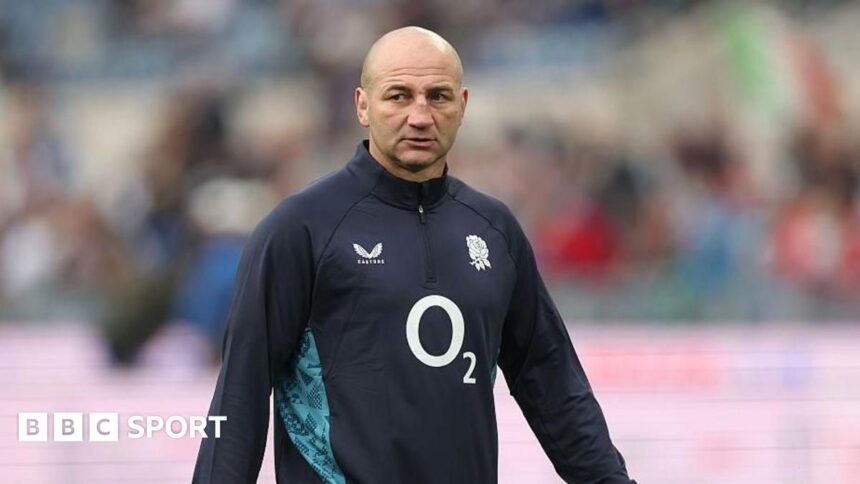
The Anatomy of a Collapse: Analysing the Numbers Behind Borthwick’s Six Nations Nightmare
Four weeks can feel like a lifetime in sport. At 19:00 GMT on 7 February, the narrative surrounding Steve Borthwick’s England was one of burgeoning dominance. Fresh from a 41-point demolition of Wales, England had secured a 12th successive Test victory—the third-longest winning streak in their storied 155-year history. The air was thick with Grand Slam aspirations and talk of a team reborn. Yet, as the final whistle blew on the tournament, those hopes lay in ruins, replaced by a profound sense of crisis and a single, damning question: ‘Something is broken’—so what comes next?
From Record Highs to Crushing Lows: The Statistical Freefall
The precipitous nature of England’s decline is not merely anecdotal; it is etched in cold, hard data. The team that looked imperious in round one underwent a statistical disintegration so severe it demands forensic examination. The shift from a record-equalling run to a tournament collapse is one of the most dramatic in recent Six Nations memory.
Let’s break down the core metrics that defined the nightmare:
- Attack Stagnation: After the initial 40-point outburst, England’s attack spluttered and died. They scored just four tries in their next four games, becoming painfully predictable and easy to defend against. Their average gain per carry plummeted, and they consistently lost the gain-line battle.
- Discipline in Disarray: The penalty count became a chronic, self-inflicted wound. England averaged over 12 penalties conceded per game, often at critical moments, handing opponents easy territory and points, stifling any momentum they briefly generated.
- Set-Piece Erosion: Once a Borthwick hallmark, the lineout disintegrated. A success rate dipping below 80% in key matches led to turnovers in promising positions and completely undermined strategic game plans built on set-piece dominance.
- Second-Half Syndrome Perhaps the most telling stat: England were consistently outscored after halftime. A glaring lack of tactical adaptability and conditioning compared to opponents saw leads evaporate and deficits become chasms.
Expert Analysis: Diagnosing the Systemic Failure
So, what do these numbers tell us beyond the surface-level failures? The statistics point to a systemic breakdown in coaching, selection, and on-field leadership. The initial winning run, built on a pragmatic, kick-pressure game, was found out and ruthlessly dismantled by savvy opponents. The lack of a coherent, alternative plan was startling.
The midfield selection, particularly the Marcus Smith-George Ford-Freeman axis, never settled, leading to a disconnected attack where strike runners were isolated. The decision-making between 9 and 10 was often slow and telegraphed. Defensively, the system showed alarming fragility, with miscommunications in the wide channels becoming a recurring theme.
Most critically, the numbers reveal a team playing without confidence or clarity. The high error rate and penalty count are classic indicators of a side under immense pressure, unsure of its identity. The “something broken” appears to be the link between the coaching box’s instructions and the players’ ability to execute them under fire. The game management in pivotal moments was poor, suggesting a leadership vacuum on the pitch when plans A and B failed.
The Road Ahead: Predictions and Necessary Reforms
The inquest has already begun, and the path forward for Steve Borthwick is fraught. The summer tour to Japan and New Zealand now looms not as an exciting challenge but as a potential referendum on his tenure. Based on this data-driven collapse, several non-negotiable changes must occur.
First, selection must become meritocratic and bold. Loyalty to veterans who are underperforming must end. The form players from the Premiership—the Chandlers, Feyi-Wabosos, and others—need integrated, not just as squad players but as potential starters. The team needs an injection of pace, dynamism, and fearlessness.
Second, the coaching strategy requires an urgent overhaul. The attacking system, currently led by Richard Wigglesworth, has not worked. Bringing in a fresh, innovative attack coach with a proven track record should be a top priority. The philosophy must evolve from one of pure pressure to one that can also construct tries through multi-phase creativity.
Third, leadership must be redefined. With Owen Farrell absent, the team lacked a cool-headed, tactical general. Identifying and empowering that player—whether it’s reinstating Farrell with a clear plan or building around a new captain like Jamie George with greater support—is essential.
Conclusion: A Pivotal Moment for English Rugby
The numbers from this Six Nations are not just bad; they are a stark warning siren. They chart the journey from a historic winning run to a comprehensive system failure. For Steve Borthwick, the goodwill earned during that run has evaporated. The evidence suggests this was more than a simple dip in form; it was an exposure of fundamental flaws in playing style, adaptability, and squad depth.
The phrase ‘something is broken‘ resonates because the statistics prove it. The challenge now is not to paper over the cracks but to undertake a radical rebuild. The coming months will reveal if the England coaching team can diagnose the issues with clear-eyed honesty and implement the painful changes required. If not, the nightmare of this Six Nations will be merely the first act in a longer, more painful decline. The data has spoken. The response will define English rugby for years to come.
Source: Based on news from BBC Sport.