Could Harry Redknapp Really Make a Sensational Return to Tottenham Hotspur?
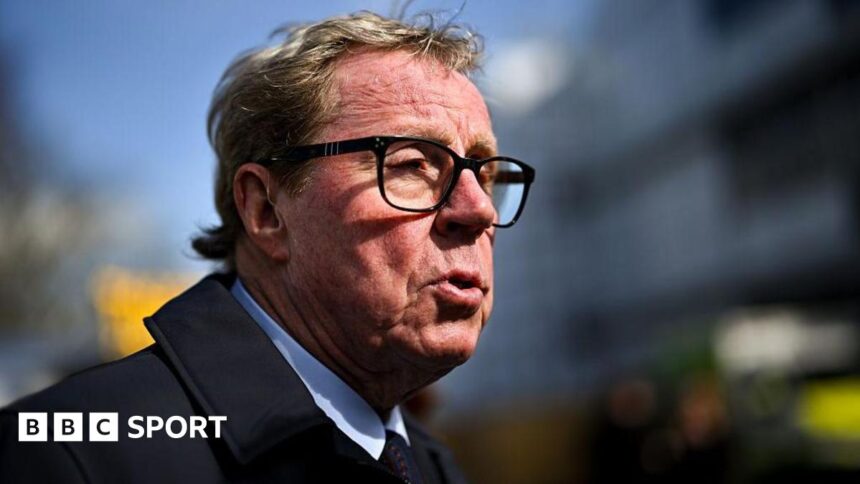
The air around Tottenham Hotspur is thick with crisis. A Champions League humiliation in Madrid, a winless run under interim boss Igor Tudor that has plunged the club towards a relegation battle it never saw coming, and a fanbase united in discontent. In times of such profound turmoil, clubs often look to the past for solace, for a familiar face to steady the ship. And from the sun-soaked studios of his Sandbanks home, a familiar, gravelly voice has thrown his flat cap into the ring. “They know where I am,” said Harry Redknapp. At 79 years old, the man who once orchestrated Tottenham’s ascent to the Champions League quarter-finals has, with one casual phrase, ignited a firestorm of speculation. Could ‘Arry really come back?
A Club in Freefall: The Tudor Disaster Unfolds
To understand the sheer desperation that would fuel such a nostalgic gamble, one must first survey the wreckage of the present. The appointment of Igor Tudor as interim manager after Thomas Frank’s dismissal was a calculated risk that has backfired spectacularly. The numbers are damning:
- Four games in charge, four consecutive defeats.
- A team now hovering just a single point above the Premier League’s relegation zone.
- A 5-2 first-leg deficit against Atletico Madrid in the Champions League, effectively ending their European campaign.
- A palpable loss of confidence and identity on the pitch.
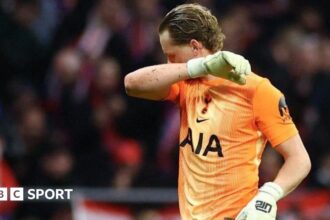
The nadir came in Madrid. Tudor’s decision to substitute goalkeeper Antonin Kinsky after two catastrophic early errors was seen not as decisive management, but as a public humiliation that shattered the remaining squad morale. It was the act of a manager who has lost the dressing room and is clutching at straws. With the season spiraling, Chairman Daniel Levy faces a decision: stick with a failing interim, or make another dramatic change. It is in this vacuum of hope that Redknapp’s comment finds its echo.
The Redknapp Legacy: Why ‘They Know Where I Am’ Resonates
Harry Redknapp’s tenure at Tottenham from 2008 to 2012 represents, for many supporters, a modern golden era. He inherited a team with two points from eight games, staring relegation in the face, and transformed them into a vibrant, attacking force competing with the elite. His record is compelling:
- 71 wins from 144 Premier League games – a win rate of nearly 50%.
- Back-to-back top-four finishes in 2010 and 2012, including a famous run to the Champions League quarter-finals.
- The development of global stars like Gareth Bale and Luka Modrić into world-beaters.
- A team that played with flair, passion, and a clear connection to the fans.
His management style was famously man-motivational, built on simplicity, clear communication, and an unwavering belief in his players’ ability. In the current climate of tactical over-complication and fractured morale, the appeal of that straightforward, charismatic leadership is obvious. His statement isn’t just an offer; it’s a reminder of what once was—a time of progress, excitement, and goals.
The Pragmatic Reality: Age, Ambition, and a Different Tottenham
While the romantic narrative is powerful, the practical hurdles to a Redknapp return to Spurs are immense. Football has evolved dramatically since his last Premier League job in 2015. The analysis is more data-driven, the press conferences more scrutinized, and the physical demands on a manager more intense.
Firstly, at 79, Redknapp would be by far the oldest manager in Premier League history. The game is a relentless, 24/7 pressure cooker. Does he truly have the appetite for the daily grind of rescuing a club in crisis, dealing with a modern squad, and navigating a transfer structure now dominated by committees and data analysts, not a manager’s “little black book”?
Secondly, this is not the Tottenham he left. The training ground is palatial, the stadium is world-class, but the expectations and the internal dynamics are more complex. His previous success was built on a certain autonomy in the transfer market. It is unlikely the current hierarchy would revert to that model. Furthermore, his appointment would be a stark admission from Levy that the club’s modern, data-led project has failed, requiring a return to old-school firefighting.
Expert Verdict: Nostalgia Trip or Masterstroke?
As a sports journalist, the analysis must balance sentiment with cold, hard reality. The idea of Redknapp returning is less a serious football strategy and more a powerful symbol of the club’s current desperation. It is a cry for help.
Could it work in the short term? Possibly. Redknapp’s greatest skill was lifting players, simplifying the game, and making teams hard to beat. He could potentially organize the defense, restore some basic confidence, and use his media charm to deflect pressure—a classic “new manager bounce” amplified by nostalgia. For a 10-game salvage operation to avoid relegation, his personality might be more effective than another tactical philosopher.
Is it a viable long-term solution? Almost certainly not. This would be a pure crisis appointment, a comfort blanket. The fundamental questions about the club’s direction, recruitment, and long-term vision would remain unanswered. It would be a sticking plaster on a gaping wound.
The more likely scenario is that Redknapp’s comments serve two purposes: they apply gentle, public pressure on the Spurs hierarchy to act decisively, and they remind the world of his enduring love for the club. It puts his name in the conversation, but the conversation is likely about who should come in *instead* of Tudor, not necessarily Redknapp himself.
Conclusion: A Ghost of Glory Past Haunts Tottenham’s Present
“They know where I am.” In the end, Harry Redknapp’s quip is less a job application and more a haunting refrain. It is the ghost of Tottenham’s more optimistic past visiting a present mired in fear and failure. It underscores the depth of the current crisis that such a return is even a topic of discussion.
While a sensational return to manage Spurs remains a distant long shot, the very fact it is being debated is the story. It tells you that the club is lost, that the fans are yearning for a time when things made sense, and that the solutions of the past seem more appealing than the uncertain path forward. Daniel Levy’s next move must be decisive. Whether it involves reaching for an old blueprint or finally committing to a new one will define not just Tottenham’s season, but its future. One thing is clear: the man from Sandbanks has, with five simple words, perfectly framed the magnitude of Tottenham’s predicament.
Source: Based on news from BBC Sport.