Rosenior’s Chelsea Rues Relentless Schedule After PSG Champions League Exit
The final whistle at Stamford Bridge signaled not just the end of Chelsea’s Champions League defense, but perhaps the culmination of a punishing physical and psychological marathon. A 3-0 defeat to a clinical Paris Saint-Germain, sealing an emphatic 8-2 aggregate loss, was a stark reality check. In its aftermath, caretaker manager Liam Rosenior offered a poignant, revealing defense of his squad, pointing not to tactics or talent, but to an unyielding calendar that has left his players running on empty.
A Bridge Too Far: Fatigue Meets PSG’s Ruthless Edge
From the outset, the tie felt like a monumental challenge. The 5-2 first-leg deficit in Paris was a mountain to climb, but the manner of the second-leg performance at home was telling. Chelsea, typically known for their energetic press and tactical discipline, looked a step slow. PSG, brimming with world-class talent, exploited this mercilessly. Their movement was sharper, their passing crisper, and their finishing, exemplified by Kylian Mbappé’s brace, was devastatingly precise.
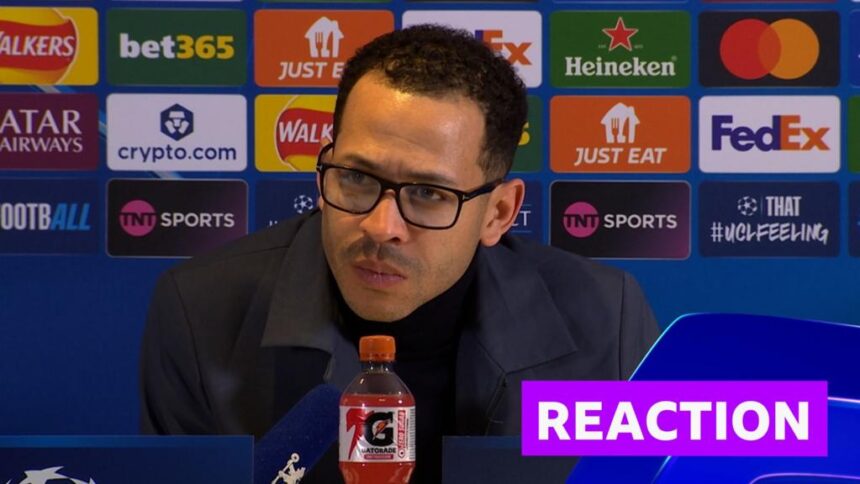
Rosenior, standing in for the absent Mauricio Pochettino, did not shy away from the performance gap. “We were beaten by the better side over two legs, there’s no disputing that,” he stated post-match. However, he quickly framed the context, highlighting a critical factor often overlooked in modern football’s relentless churn: player welfare and cumulative fatigue.
“The players have had no break,” Rosenior emphasized. “When you look at the schedule, not just this season but over the past few years, it’s been constant. That’s not an excuse—PSG were fantastic—but it’s the reality of the situation we’re in.” This admission speaks volumes about the state of elite football, where the demands of multiple competitions, international duties, and truncated summers are pushing athletes to their absolute limit.
Dissecting the “No Break” Conundrum: A Squad Pushed to the Brink
Rosenior’s comments are not mere deflection; they are rooted in a tangible, grueling reality. Let’s examine the schedule he alludes to:
- Back-to-Back Seasons: Many Chelsea players featured deep into multiple competitions last season, followed immediately by a major international tournament in the summer, with minimal off-season recovery.
- Injury Cascade: A packed fixture list directly correlates with muscular injuries. Chelsea’s treatment room has been consistently busy, disrupting rhythm and forcing constant rotation, which itself hinders cohesion.
- Mental Burnout: The psychological toll of competing at maximum intensity every three days is immense. Decision-making wanes, concentration lapses, and the sharpness required against top-tier opponents evaporates.
- PSG’s Contrasting Preparation: While Ligue 1 is competitive, its structure often allows for more manageable scheduling, potentially giving a squad like PSG marginal but crucial physical advantages at this stage of the season.
On the pitch, this fatigue manifested clearly. Chelsea’s press was easily bypassed, their midfield transitions were sluggish, and there was a noticeable lack of the explosive, overlapping runs from their full-backs that usually define their play. They were reactive, not proactive—a classic symptom of a tired team.
Beyond an Excuse: Rosenior’s Nuanced Leadership
It is crucial to note Rosenior’s insistence that this was “not an excuse.” This distinction is what separates a reasoned explanation from sour grapes. He acknowledged PSG’s superiority fully, refusing to diminish their achievement. This balanced approach does two things: it protects his players from excessive criticism while simultaneously issuing a subtle but powerful critique of the sport’s governing bodies and their insatiable appetite for more games.
“We have to be better, we know that,” Rosenior conceded. “The standards at this club are incredibly high. But we also have to be realistic about the human element.” This is the voice of a modern coach who understands that management is as much about physiology and psychology as it is about formations. His defense is likely to resonate deeply within a dressing room feeling the strain, fostering a sense of shared burden rather than blame.
This episode also highlights the broader, unsustainable model of elite football. The proposed expansion of tournaments like the Club World Cup and Champions League only promises to exacerbate this very issue. Rosenior, perhaps unintentionally, has become a spokesperson for a growing concern among managers: the physical breaking point of the player.
What’s Next for a Weary Chelsea?
Elimination from Europe provides a paradoxical form of relief: fewer games. For Chelsea, the remainder of the season must now be a focused push for a top-four Premier League finish to secure Champions League football next year. The immediate predictions are twofold:
First, squad rotation will be paramount. Rosenior and Pochettino will need to strategically manage minutes, leaning on the full breadth of the squad to navigate the final league fixtures. Key players may need to be rested, even in important matches, to preserve their long-term effectiveness.
Second, this summer is non-negotiable. The club and any incoming permanent manager must fiercely guard the players’ off-period. Pre-season tours and commercial commitments will need to be balanced against the absolute necessity of physical and mental recuperation. A failed to do so risks another season of burnout and underperformance.
The PSG defeat is a clear watershed moment. It has exposed a ceiling imposed not by talent or tactics, but by sheer human endurance. The project under Pochettino, or any successor, cannot accelerate if its engine is perpetually overheating.
Conclusion: A Wake-Up Call for Chelsea and the Sport
Liam Rosenior’s post-match analysis transcended the typical platitudes of a defeated manager. By highlighting that his players have “had no break,” he pointed a finger at the relentless, often unforgiving machinery of modern football. Chelsea were outclassed by a superb PSG side deserving of their semi-final place, but they were also defeated by a schedule that offers no respite.
This Champions League exit should serve as a stark warning. For Chelsea, the path forward requires intelligent load management and a protected recovery period. For the sport at large, Rosenior’s words are a reminder that players are not inexhaustible assets. There is a human cost to the endless pursuit of more content, more fixtures, and more revenue. As the final whistle blew on their European campaign, Chelsea didn’t just lose a tie; they provided the latest, clearest evidence that football’s top stars are running out of road. The question now is whether anyone in charge is listening.
Source: Based on news from BBC Sport.