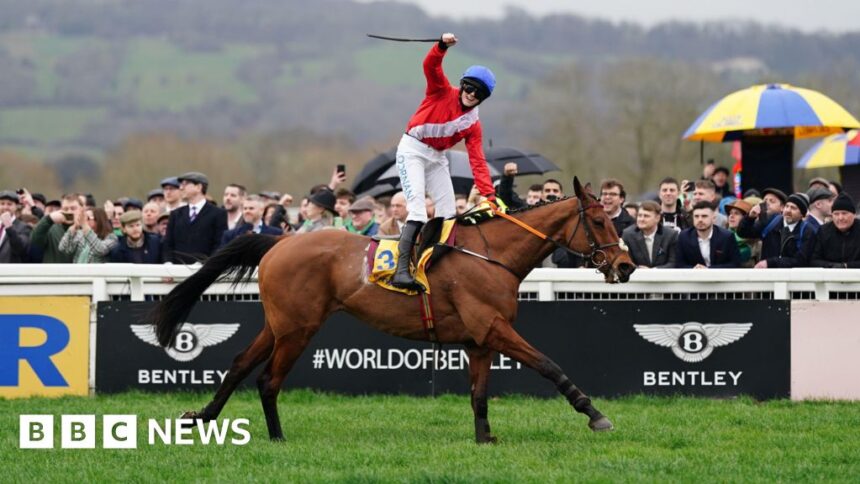
A Third Life Lost: Cheltenham’s Festival of Joy Shadowed by Tragedy as Envoi Allen Dies
The roar of the Cheltenham crowd had barely subsided. The champagne for Gold Cup winner Galopin Des Champs was still being poured. Yet, in the quiet aftermath of the Festival’s climax, a somber reality descended. Envoi Allen, the veteran warrior who had battled to a ninth-place finish, collapsed on his way back to the stables. Despite immediate veterinary intervention, the 12-year-old could not be saved. His death marks a devastating third equine fatality of the 2024 Cheltenham Festival, casting a long, uncomfortable shadow over jump racing’s most celebrated week.
A Grim Tally: A Festival Marred by Loss
The celebration of equine athleticism and human skill that defines Cheltenham has been abruptly punctuated by tragedy. The loss of Envoi Allen follows those of HMS Seahorse, who fell in the Coral Cup on Wednesday, and Hansard, who died after a fall in the Ultima Handicap Chase on Tuesday. Each statistic represents a life, a carefully nurtured athlete, and a profound loss for connections and fans. For the Jockey Club, which operates the prestigious festival, this triad of tragedies presents not just a public relations crisis but a fundamental challenge to the sport’s social license. The juxtaposition of glittering trophies and heartbreaking loss is one the racing industry has long grappled with, but a cluster of deaths at its flagship event forces the issue back into the starkest relief.
Envoi Allen’s case is particularly poignant. As the oldest contender in the Gold Cup field, his presence was a testament to his durability and class—a dual Festival winner earlier in his career. His death did not occur from a dramatic fall at a fence, but post-race, raising different but equally urgent questions about the extreme physical demands of the sport, even on its most experienced competitors.
Beyond the Headlines: The Inherent Risk and Relentless Pursuit of Safety
To the outside world, horse racing deaths can appear as simple, avoidable tragedies. Within the sport, the reality is a complex, daily negotiation with inherent risk. Every stakeholder—from owner to trainer, jockey to vet—understands this. The modern era has seen a relentless, science-driven push to improve equine welfare and safety. The industry points to significant advancements:
- Veterinary Science: On-site veterinary facilities at major courses like Cheltenham are now state-of-the-art, with rapid response teams and advanced diagnostic tools.
- Course Design: Fences are more forgiving, with take-off boards and carefully calibrated drop heights. Ground conditions are meticulously managed.
- Pre-Race Scrutiny: Horses undergo rigorous fitness assessments, and race conditions are structured to try to ensure appropriate competition.
Yet, as this week proves, absolute prevention remains elusive. A 600kg animal, galloping at speeds over 30mph and jumping formidable obstacles, operates at the very edge of its physical capacity. Cardiac events, like the one suspected in Envoi Allen’s case, can be sudden and catastrophic, even in the fittest individuals. The question for the Jockey Club and the British Horseracing Authority (BHA) is not whether they are trying, but whether the current pace and scope of change is sufficient in the face of growing public scrutiny.
Expert Analysis: The Pressure Cooker of Prestige and Public Perception
“The Cheltenham Festival is the ultimate test,” explains Dr. Eleanor Vance, a veterinary surgeon specializing in equine sports medicine. “The fields are the largest, the competition the fiercest, and the pressure—both on horse and human—is immense. While safety protocols are exemplary by historical standards, we are asking these athletes to perform at their absolute peak, often on ground that can be demanding, over longer distances than usual. The cumulative stress factor is enormous. A post-race cardiovascular collapse, while rare, is a stark reminder of the physiological extremes involved.”
The festival’s economic and cultural weight is undeniable. It is a multi-billion-pound betting event and a cornerstone of rural and sporting life. This prestige creates a powerful inertia. Suggestions to reduce field sizes, alter the race program, or further modify iconic fences are often met with concern about diluting the Festival’s unique challenge. However, industry analysts predict this year’s fatalities will accelerate existing review processes. The BHA’s ongoing equine welfare strategy, which has already reduced fatality rates nationally, will likely see its targets tightened. We can expect:
- Enhanced Post-Race Monitoring: Increased use of wearable technology to track vital signs in the critical minutes after a race.
- Review of Race Conditions: Scrutiny of whether certain races, particularly highly competitive handicaps, pose disproportionate risk.
- Transparency Push: More immediate and detailed communication from racing’s authorities when incidents occur, to counter misinformation.
A Crossroads for the Sport: Predictions for a Fractured Future
The death of a horse like Envoi Allen, a beloved and successful campaigner, resonates deeply. It is a loss felt from the stable yard to the betting shop. The Jockey Club‘s response, once formalized, will be parsed for its tone of accountability and its concrete proposals. The sport stands at a familiar, yet increasingly precarious, crossroads.
Looking ahead, the pressure will intensify from both within and outside the industry. Animal welfare groups will rightly demand action. Sponsors, sensitive to public sentiment, will be watching closely. The most likely outcome is not radical, immediate revolution, but a significant ratcheting up of the current evolution. The “win at all costs” narrative will continue to be challenged by a “safety first” imperative, even if that means marginally less competitive racing. The greatest risk to jump racing is not a single tragic week, but a perception that such weeks are an accepted, inevitable cost of doing business. That perception is changing, and the sport must change faster to meet it.
Conclusion: The Unbreakable Bond Under Scrutiny
The Cheltenham Festival exists because of a deep, centuries-old bond between horse and human—a partnership built on trust, courage, and mutual dependence. This week, that bond has been broken three times over. The grief of connections is real and profound. To honor the lives of Hansard, HMS Seahorse, and Envoi Allen, the sport must look beyond the easy narratives. It must confront the uncomfortable physics of speed, weight, and fatigue. It must balance tradition with an unwavering commitment to progress. The gallant jumpers are the heart of the spectacle; protecting that heart is the only way to ensure the Festival’s roar does not fade into a whisper of regret. The race for safety, unlike the Gold Cup, has no finish line.
Source: Based on news from BBC Sport.